Healthify Unveils Ria: Your New AI Health Assistant
Health tracking has entered a new era with innovative AI capabilities, as health technology companies leverage structured and unstructured data to enhance user engagement. The latest milestone in this progression is Healthify’s launch of Ria, a cutting-edge AI health assistant designed to help users seamlessly log their meals and workouts. This engaging tool comes with an AI assistant that provides ongoing guidance in nutrition and fitness.
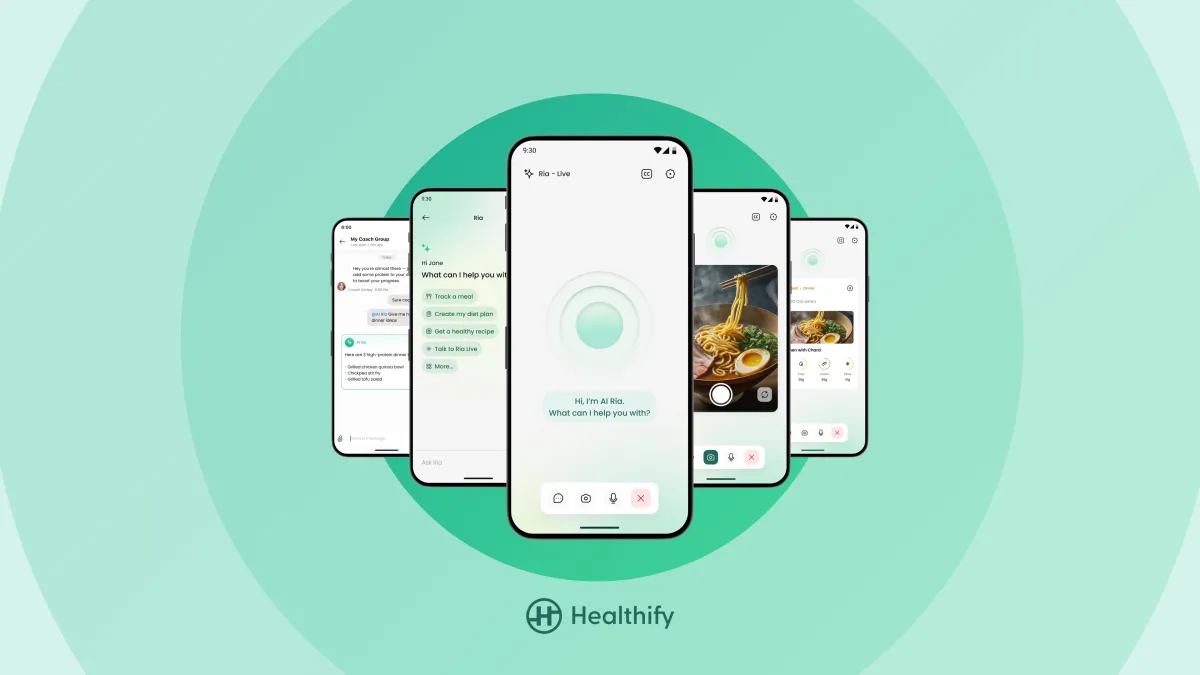
On Tuesday, Healthify, a startup backed by prominent investor Khosla Ventures, rolled out an updated version of Ria. This advanced health assistant allows users to communicate live, both via voice and visually using a camera to input food details, making the tracking process more interactive.
Powered by OpenAI’s technology, the new Ria assistant now boasts support for over 50 languages, including 14 Indian languages. In a groundbreaking feature, it can even handle mixed-language input, such as Hinglish or Spanglish, enhancing accessibility for diverse user groups. While primarily utilizing OpenAI’s models, Healthify has indicated the potential to explore other AI models in the future.
With Ria, users can easily request their health summaries for various time frames—day, week, or month—with detailed insights. By integrating data from fitness trackers, sleep monitors, and glucose readings, Ria provides valuable feedback regarding exercise patterns, sleep quality, and nutritional advice. Users can even point their camera at food items to check nutritional information, similar to Google Gemini’s Live Conversation mode, and log their meals with a simple query.
In a recent demonstration, Healthify showcased how users can interact with Ria through Ray-Ban Meta smart glasses, providing a hands-free experience in which users can log meals in real-time while keeping their hands free for other activities. This interactive approach aims to encourage users to embrace the habit of health tracking by making the process more engaging.
Healthify believes that a conversational AI assistant can enhance user comfort, allowing them to gather insights, create exercise plans, and log goals—all in one seamless experience. For those busy days when users forget to log their meals, they can simply describe their food intake, and Ria will take care of the logging automatically.
Furthermore, Healthify plans to integrate this AI into user onboarding, aiming to collect more insights from unstructured conversations. This strategy echoes contemporary trends seen in dating apps, which have likewise adopted such conversational interfaces for better matching.
The updated AI assistant will feature an advanced memory layer that maintains long-term context regarding user preferences and health changes. This personalization aims to deliver more tailored recommendations in future interactions.
In addition, Ria is evolving to become a partner during conversations with nutritionists or coaches, offering data retrieval and transcribing capabilities during calls. Users can ask Ria questions in real time while engaging with their health professionals.
“We’ve trained Ria on years of conversational data between coaches and users to provide grounded and reliable advice,” said Tushar Vashisht, CEO of Healthify.
Alongside Ria, Healthify is recognizing growing competition in the market, as apps like Alma, Cal AI, MyFitnessPal, and Ladder also provide meal input options through voice, text, or visuals. Healthify believes that its real-time conversation capabilities and extensive data aggregation give it a competitive edge. Additionally, the app can analyze user galleries to automatically identify food photos, simplifying meal logging.
With over 45 million registered users and millions active monthly, Healthify is set to launch a new AI plan in the U.S., featuring Ria and meal planning at $20 per month, following tests of various plans with text-based AI and certified nutritionists.
The startup is also strategizing partnerships surrounding its GLP-1-aided weight loss programs, with future collaborations planned with health tracking device companies. Regarding funding, Vashisht indicated that the company might pursue a new round of funding, tapping into its robust U.S. growth and adoption trends.