Headline: Pat Gelsinger Makes Waves in Semiconductor Landscape with xLight Deal
A year after his exit from Intel, Pat Gelsinger is still an influential player in the semiconductor industry, albeit on a new battleground. Currently serving as a general partner at Playground Global, Gelsinger is collaborating with ten startups, with a particular focus on xLight, a semiconductor venture that recently revealed a potential agreement for up to $150 million from the U.S. Commerce Department. This deal positions the government as a significant stakeholder in the company.
This achievement marks a significant milestone for Gelsinger, who spent 35 years in the industry, including two stints at Intel, before the board opted to part ways with him last year due to doubts about his revitalization plans. However, the xLight deal has also sparked curiosity and concern among Silicon Valley insiders regarding the Trump administration’s strategy of taking equity in strategically important companies.
“What happened to free enterprise?” California Governor Gavin Newsom questioned during a recent speak-out, reflecting the growing anxiety within a sector that has long valued free-market principles.
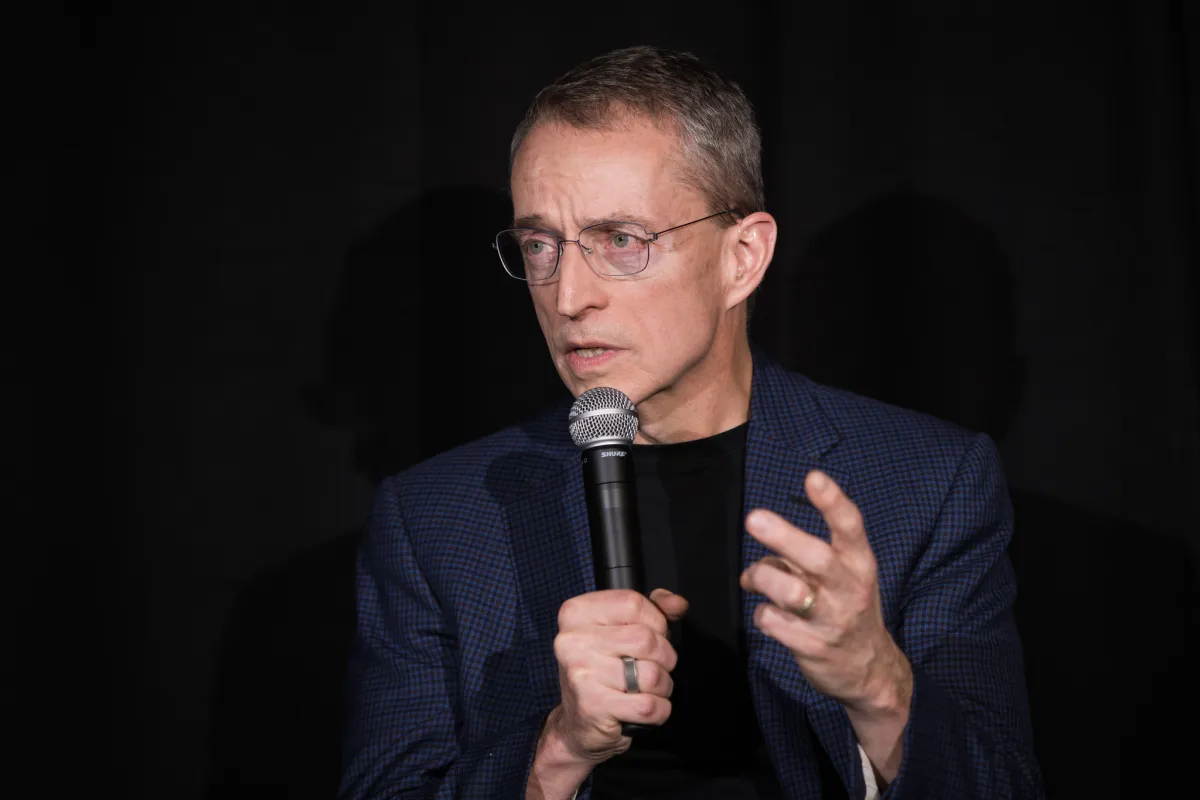
Speaking at TechCrunch’s StrictlyVC event at Playground Global, Gelsinger, who also holds the title of executive chairman of xLight, appears unfazed by the philosophical concerns. Instead, he’s betting on xLight’s ability to tackle a critical challenge in the semiconductor field: lithography. The startup is developing massive free electron lasers powered by particle accelerators that could transform chip manufacturing processes.
“I aim to see Moore’s Law persist in the semiconductor industry,” Gelsinger stated, referencing the principle that computing power doubles approximately every two years. “We believe this technology can reignite Moore’s Law.”
The xLight deal represents the first Chips and Science Act award during Trump’s second administration, utilizing funds allocated for promising early-stage technologies. However, it is important to note that the agreement is still in the letter of intent phase, meaning it has not been finalized and specifics could change. When asked about the possibility of the funding amount doubling—or possibly not materializing—Gelsinger replied candidly, “We’ve agreed in principle on the terms, but there’s still work to be done.”
The technology xLight pursues is ambitious and large-scale. The company intends to construct machines measuring approximately 100 by 50 meters—roughly the size of a football field—to sit outside semiconductor fabrication facilities. These free electron lasers aim to produce extreme ultraviolet light at precise wavelengths of 2 nanometers, significantly more powerful than the 13.5 nanometer wavelengths currently utilized by Dutch company ASML, which leads the EUV lithography market.
“Lithography consumes about half of the capital in the semiconductor industry, with light being the core component,” Gelsinger explained. “Innovating towards shorter wavelengths and higher power light is essential for continuing advancements in semiconductor technology.”
Leading xLight is Nicholas Kelez, who brings a unique perspective to the semiconductor field. Previously, he spearheaded quantum computing initiatives at PsiQuantum and spent two decades managing large-scale X-ray facilities at national labs like SLAC.
So why is xLight’s approach feasible now when similar efforts were abandoned by ASML nearly a decade ago? “The technology wasn’t as developed back then,” Kelez explained, pointing out that few extreme ultraviolet lithography (EUV) machines existed and the industry had invested significantly in existing technology. “It wasn’t the right time to challenge an established method.”
Now, with EUV technology prevalent in advanced semiconductor manufacturing and traditional light sources nearing their limits, the timing appears favorable. Kelez emphasized that their strategy treats light as a utility rather than an integrated part of each machine. “By moving away from building an onboard light source like ASML does now, we can create a more powerful and larger light source, akin to how electrical utilities operate.”
xLight aims to produce its first silicon wafers by 2028, with plans to have its first commercial system operational by 2029.
While there are challenges ahead, competing directly with ASML is not one of them for the time being. Kelez noted, “We are working closely with them to design how we will integrate with ASML’s scanner.”
When inquired about potential commitments from major chipmakers like Intel, Gelsinger stated that no agreements have been finalized. “Discussions are ongoing with expected players, and we’re deeply engaged with all of them.”
As the competitive landscape intensifies, another semiconductor startup named Substrate, backed by Peter Thiel, raised $100 million in October to develop U.S. chip fabs, which includes an approach reminiscent of xLight’s technology. However, Gelsinger sees no direct competition, suggesting, “If Substrate succeeds, they could become a customer for us.”
Gelsinger’s association with the Trump administration adds another dimension to this narrative. He initially pitched xLight to Commerce Secretary Howard Lutnick earlier this year, preceding the startup’s funding, suggesting a proactive approach to bring chip manufacturing back to the U.S. Nevertheless, this arrangement has faced criticism from those who view it as government overreach.
Remaining unapologetic, Gelsinger emphasizes the necessity of such collaborations for national competitiveness. “I judge this based on outcomes,” he said. “Are we achieving the necessary results to rejuvenate our industrial policies? Many global competitors aren’t debating like we are; they’re implementing effective policies to secure their competitive advantages.”
He contextualized his view by contrasting U.S. and Chinese energy policies. “Currently, zero nuclear reactors are being built in the U.S., while China is seeing 39 under construction. In a digital AI era, energy policy directly correlates to national economic capacity.”
For xLight, the government investment comes with minimal stipulations. Kelez clarified that the Commerce Department won’t have veto power or a seat on their board. “No information rights, nothing,” he asserted. Gelsinger confirmed, “It’s a minority investment, ensuring we thrive for national interests.”
xLight has previously raised $40 million from investors, including Playground Global, and plans to pursue another funding round soon. Unlike sectors like fusion or quantum computing that may require billions, Kelez believes xLight’s funding trajectory is more manageable. “This isn’t like fusion or quantum; we don’t need billions.”
Additionally, the company has signed a letter of intent with New York for its first machine to be installed at the CREATE site near Albany, though this agreement also awaits finalization.
For Gelsinger, xLight represents not just a portfolio company, but an opportunity to reaffirm his significance in an industry he has heavily influenced—despite the fact that his strategies might diverge from Silicon Valley tradition.
When addressing the need to maneuver through principles amid the current political atmosphere, Gelsinger adopted a pragmatic view of corporate leadership. “CEOs shouldn’t be tethered to a party. Our goal is to meet business objectives, serve investors and shareholders,” he remarked, stressing the importance of navigating beneficial policies from both sides of the aisle.
He concluded regarding the $150 million investment from the Trump administration, “Taxpayers will ultimately benefit.”
When asked if overseeing ten startups feels like enough for someone who previously led Intel, Gelsinger was adamant. “Absolutely. I can influence a range of technologies now—this is the core of who I am. I’m grateful Playground let me join and contribute as a rookie venture capitalist.”
He paused with a smile, adding, “And I’ve returned my wife’s weekends to her.” While a light-hearted comment, it raises the question of how long Gelsinger, known for his work ethic, will maintain this arrangement.