Space Pharmaceuticals: A Glimpse into the Future of Drug Manufacturing
Imagine standing on the Earth and watching specialized spacecraft dart through the night sky like shooting stars, each carrying pharmaceuticals manufactured in space. This vision, articulated by Varda Space Industries CEO Will Bruey, could become a reality in the next decade. Bruey foresees a future where sending working-class employees into orbit for a month becomes cheaper than keeping them on Earth. What’s behind these bold predictions? Let’s delve into the details.
Current Achievements and Future Aspirations
During a recent TechCrunch Disrupt event, Bruey reflected on his time as an engineer at SpaceX, where he witnessed the astonishing growth of reusable rocket technology. He compared Varda’s mission to that history of progress, noting, “If someone had told me about reusable rockets and flights comparable to daily air traffic, I would have thought that was futuristic—much like what we’re developing right now.”
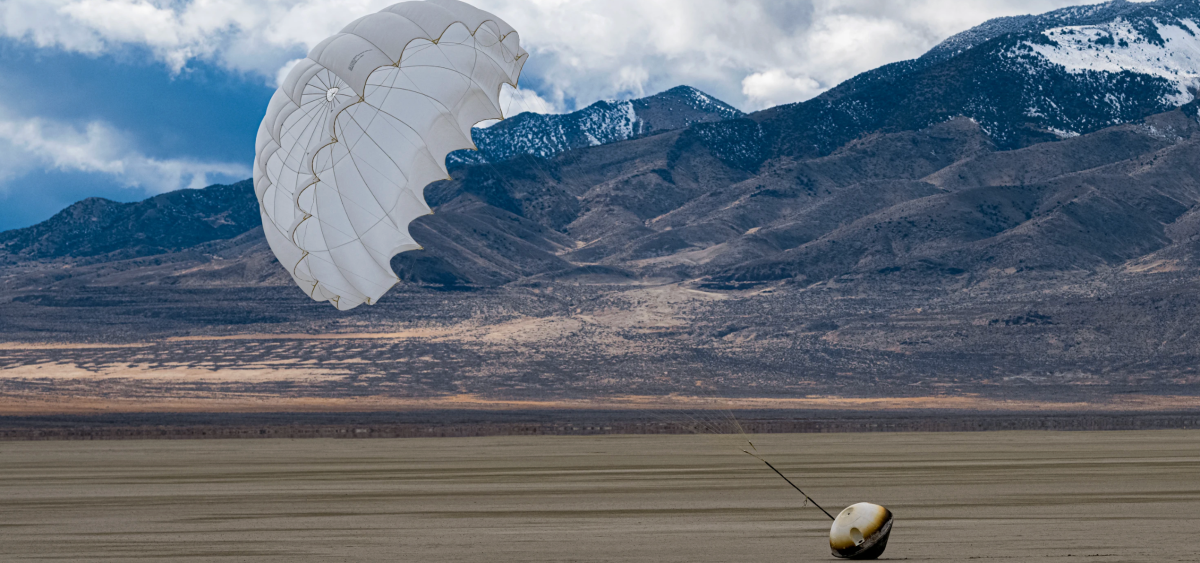
Varda has already made strides as one of the few corporate entities to successfully bring materials back from orbit, notably crystals of ritonavir, an HIV medication. This achievement occurred after navigating a complex regulatory landscape, proving the viability of their concept. Their W-1 capsule, small yet efficient, successfully returned from its latest SpaceX launch, demonstrating Varda’s ability to undertake ambitious space missions.
The Science of Space Manufacturing
So, why manufacture pharmaceuticals in space? The absence of gravity simplifies crystal formation, allowing for enhanced precision in creating drugs with improved stability and longer shelf life. This technology could revolutionize how existing medications are manufactured, potentially leading to better health outcomes worldwide.
The process may be lengthy—taking weeks or even months—but it opens up significant possibilities. As the capsule returns to Earth, it travels at incredible speeds, protected by advanced heat shields, ensuring the safe delivery of its valuable cargo.
Revolutionizing the Pharmaceutical Industry
Bruey’s vision goes beyond mere space exploration; he argues that Varda’s role is not just in the realm of the space industry, but rather in the in-space industry, where existing medications can be leveraged for innovative applications. Unlike many companies that focus on discovering new drugs, Varda aims to enhance the capabilities of already-approved medications.
Pharmaceutical giants like Bristol Myers Squibb and Merck have already conducted crystallization experiments aboard the International Space Station, showing that this concept is more than mere theory. Varda is on a path to make this commercial and repeatable.
The Importance of Timing
With the landscape of space launches evolving, Bruey notes two critical factors that make this venture possible now. First, the ability to book reliable and predictable space launches has significantly improved, making this endeavor financially feasible. Second, the emergence of end-to-end space service companies like Rocket Lab has simplified the integration of Varda’s pharmaceutical capsules with satellite buses.
However, Varda recognizes that only high-value products can justify space transportation costs, which is why they initially focused on pharmaceuticals, where each dose can be worth thousands of dollars.
The Domino Effect
Bruey shares a concept he calls the “seven domino theory,” outlining the interconnected advancements necessary for success. As Varda scales, the demand for its drug formulations could lead to perpetual launches, drastically lowering costs and making space manufacturing accessible to various industries.
An Uncertain Path but Promising Outlook
Despite the promising trajectory, Varda’s commercial viability still hangs in the balance. Currently, no space-manufactured drugs are available on pharmacy shelves, but Bruey’s vision suggests that the near future could bring significant changes to multiple sectors—from pharmaceuticals to semiconductors—if they can solve the cost barriers.
Challenges and Resolutions
Varda’s journey hasn’t been without its hurdles. After launching the W-1 in June 2023, the capsule remained in orbit for six months due to regulatory delays in securing landing approvals. However, after persistent efforts, the capsule successfully returned, marking a significant milestone as the first commercial spacecraft to land on U.S. soil under modern commercial reentry regulations.
Future Prospects
Looking ahead, Varda remains undeterred, having secured a secondary business in hypersonic testing, which holds immense potential for defense applications. The company has plans to expand its pharmaceutical lab and hire specialists in crystallization to explore even more complex drug formulations.
Investors have taken notice, with Varda raising substantial funding recently. As Bruey concludes, the future may be closer than we imagine, and the innovations occurring today could reshape various industries forever.
For more news and updates on technology and space innovation, visit Axom Live.