
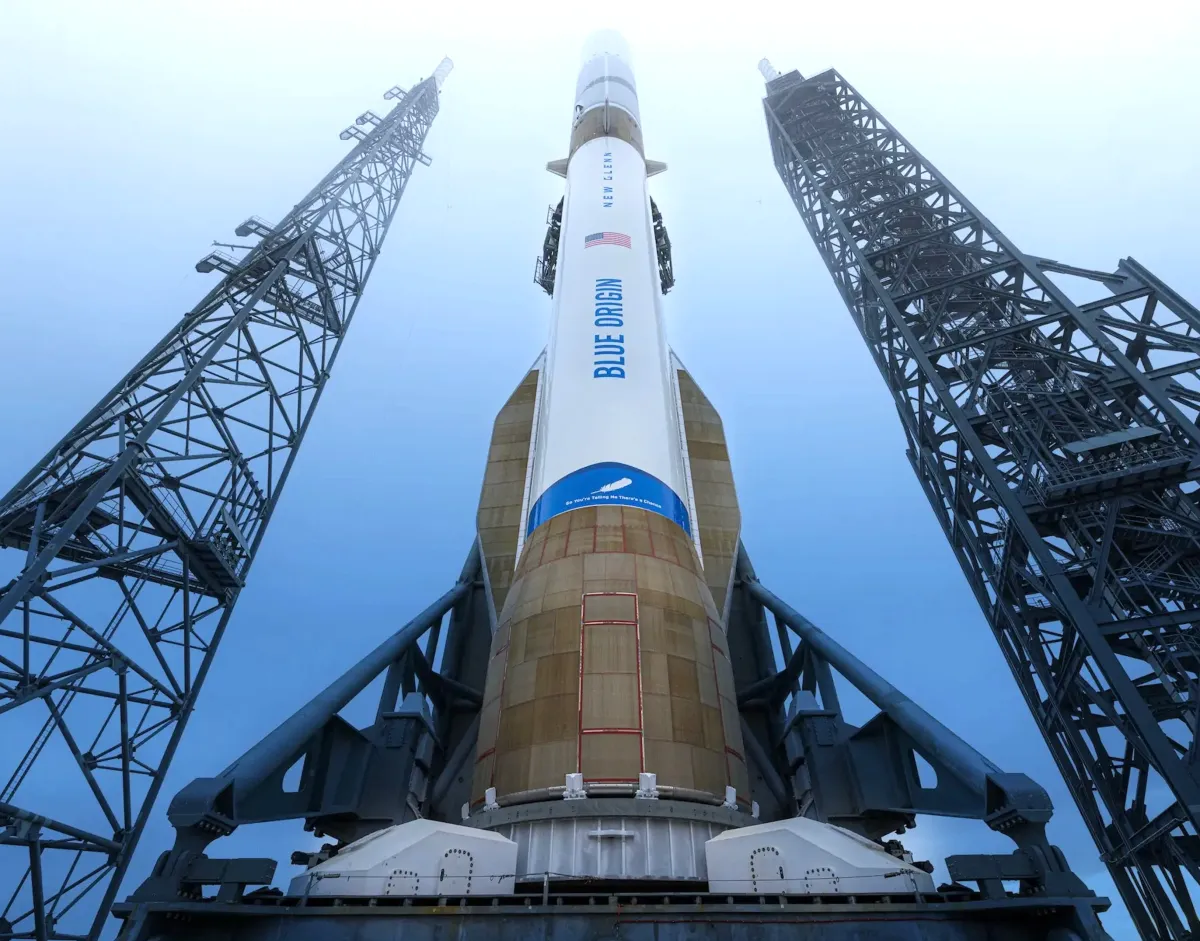
Blue Origin’s New Glenn Mega-Rocket Suffers Devastating Explosion During Testing
In a shocking turn of events, Blue Origin’s New Glenn mega-rocket has exploded during a testing phase at the Cape Canaveral launch site in Florida. Live streams from NASASpaceFlight.com and SpaceFlight Now initially captured the incident, which Blue Origin later confirmed.
This incident occurred during a static fire test ahead of the scheduled fourth launch of the New Glenn rocket, initially set to establish a connection with Amazon’s Leo internet satellites. The rocket was reportedly fully fueled at the time, contributing to one of the largest rocket explosions in U.S. history and marking a significant failure for Blue Origin.
In a post on X (formerly Twitter), Blue Origin assured that “all personnel have been accounted for” after the explosion, with founder Jeff Bezos confirming their safety. However, the company did not specify what triggered the explosion, merely stating that an “anomaly” had occurred. Bezos expressed determination to investigate, stating, “It’s too early to know the root cause, but we’ll rebuild whatever needs rebuilding and get back to flying. It’s worth it.”
NASA Administrator Jared Isaacman pledged to collaborate with partners for a thorough investigation and to assess any immediate impacts on upcoming missions. The Federal Aviation Administration (FAA) has also been notified of the explosion but indicated there was “no impact to air traffic.”
The ramifications of this explosion will likely lead to a pause in the New Glenn rocket program while Blue Origin investigates. The company had ambitious plans to launch as many as 12 missions this year, following nearly a decade of development aimed at competing with Elon Musk’s SpaceX.
In addition to commercial missions, Blue Origin has been slated to support NASA’s Artemis program, which aims to return humans to the Moon. Isaacman mentioned that NASA would keep stakeholders updated regarding any impacts on its Artemis and Moon Base programs.
Blue Origin also sought to secure national security missions for the Pentagon, adding to the importance of the New Glenn rocket project. In a show of support, Elon Musk tweeted, “Most unfortunate. Rockets are hard. I hope you recover quickly.”
The explosion follows a history of challenges for Blue Origin. Just a few weeks prior, during its third mission, the New Glenn upper stage failed to deliver a satellite to orbit, resulting in a total mission loss. The FAA had just cleared the rocket for another flight after Blue Origin completed an investigation into that failure.
A Long Journey to New Glenn
Blue Origin’s development of the New Glenn rocket has been lengthy, overshadowed by its smaller New Shepard program that has successfully transported wealthy individuals and some scientific payloads to the edge of space. The long-awaited debut flight of New Glenn finally took place in early January 2025 and initially displayed promise, achieving orbit before the booster stage exploded during a planned ocean landing.
Success seemed to follow in November 2025 with New Glenn’s second flight, which delivered twin Mars spacecraft for NASA, and notably marked the first successful landing of a booster stage. This achievement allowed Blue Origin to reuse the rocket for its third mission, showcasing an essential milestone in lowering launch costs.
Despite these advancements, the third launch encountered a cryogenic failure that ultimately lost a satellite. The anticipated fourth mission was intended to kick off a series of 24 launches contracted by Amazon to establish a competitor against SpaceX’s Starlink satellite internet service, known as “Leo.” On Thursday, Amazon confirmed that no Leo satellites were aboard the rocket during this static fire test.
In light of the incident, Congressman Mike Haridopolos, representing the Cape Canaveral area, expressed his relief that there were no reported injuries. He acknowledged the quick response from first responders and engineers, emphasizing the safety of Florida’s Space Coast community.
This explosion raises significant questions for the future of Blue Origin’s heavy-lift plans and its commitment to enter the competitive arena of space launches. The company’s next steps will depend heavily on the results of the ongoing investigations and the corrective measures implemented thereafter.