Waabi Secures $1 Billion to Venture into Robotaxi Market with Uber Partnership
Autonomous vehicle startup Waabi has made headlines by raising $1 billion, enabling the company to expand its focus beyond autonomous trucking into the world of robotaxis. This significant funding includes a robust $750 million Series C round, co-led by Khosla Ventures and G2 Venture Partners, along with approximately $250 million in milestone-based capital from Uber. This capital will facilitate the deployment of 25,000 Waabi Driver-powered robotaxis on the Uber ride-hailing platform, marking a pivotal shift in the company’s trajectory.
The timeline for this ambitious deployment remains undisclosed, but the partnership symbolizes a strong belief in Waabi’s advanced AI technology, which aims to succeed where others have faced challenges. Competitors, like Waymo, have struggled to scale across different self-driving sectors but Waabi’s founder and CEO Raquel Urtasun is optimistic. She emphasizes that their capital-efficient approach and adaptable AI architecture provides a unique advantage to navigate both markets effectively.
Innovative Technology Set for Diverse Applications
Urtasun asserts that Waabi’s core technology allows for a single solution capable of tackling multiple sectors at scale. “It’s not about juggling two different programs or stacks,” she remarks. This partnership connects Urtasun’s journey, having previously held a chief scientist role at Uber’s autonomous vehicle division, Uber ATG, before its sale to Aurora Innovation in 2020. Moreover, this collaboration builds on Waabi’s existing relationship with Uber Freight.
Waabi stands out among other autonomous vehicle companies that Uber has partnered with, including Waymo, Nuro, and Avride, among others. The timing aligns with Uber’s recent launch of its Uber AV Labs division, which aims to leverage its fleet to gather crucial data for autonomous vehicle partners.
Groundbreaking Innovations with Waabi Driver
Interestingly, Waabi’s development methodology revolves around its innovative closed-loop simulation environment known as Waabi World. This technology generates digital replicas of real-world scenarios, allowing the Waabi Driver to be trained, tested, and validated in a controlled but realistic setting. According to Urtasun, this system enables the Driver to intuitively navigate its surroundings, drastically reducing the amount of data and human oversight typically required in autonomous system training.
The Road Ahead for Waabi
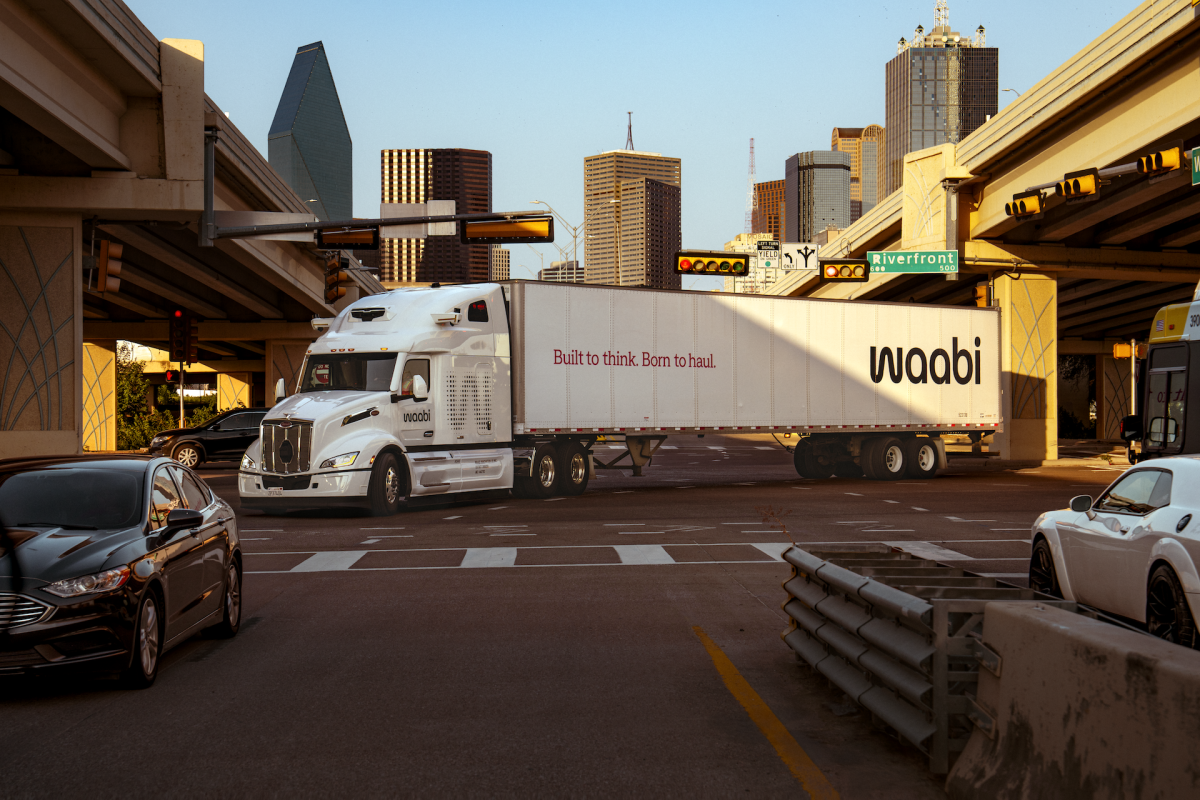
With a focus on both highway and surface street capabilities, Waabi has spent the last four and a half years fine-tuning their technology. Urtasun hints that robotics may be the next venture, indicating that Waabi has always viewed robotaxis as part of their strategic roadmap. Their agile approach to development enables the company to advance more rapidly and cost-effectively than many competitors, as Urtasun explains the reduced need for vast human labor and extensive data centers.
To date, Waabi has raised a total of $1.28 billion, including $200 million from its Series B round in June 2024. In comparison, opponents like Aurora Innovation have raised $3.46 billion while Kodiak Robotics garnered $448 million through various investment routes. Waabi has already initiated several commercial pilots in Texas, albeit delayed from their initial target of launching a fully driverless truck on public highways by the end of last year. Current projections suggest a potential rollout sometime in the upcoming quarters.
Partnership with Volvo and Future Prospects
Additionally, Waabi is collaborating with Volvo to create specialized autonomous trucks, a venture that was revealed at TechCrunch Disrupt last October. Urtasun assures that while the Waabi Driver’s technology is ready for deployment, thorough validation of the trucks remains essential before their public launch.
With the backing of Uber, Waabi is poised to penetrate the market rapidly and efficiently, capitalizing on a direct-to-consumer model that allows shippers to purchase its outfitted trucks directly. “We’re still in the first innings of deployment of robotaxis,” Urtasun states, signifying that significant scalability is still on the horizon.
Although detailed plans regarding specific automaker collaborations for the upcoming Uber rollout are under wraps, Urtasun describes a strategy of vertically integrating sensors and technologies directly into vehicles during manufacturing. “That is how you really build safe and truly scalable technology,” she concludes, setting the stage for a promising future.
Final Thoughts
With a strong funding round and an impactful collaboration with Uber, Waabi is at the forefront of transforming the autonomous vehicle landscape. As they venture into robotaxis, the implications for urban transport and logistics could be substantial. As the company continues to roll out its innovative solutions, industry watchers will be keenly observing its next steps.