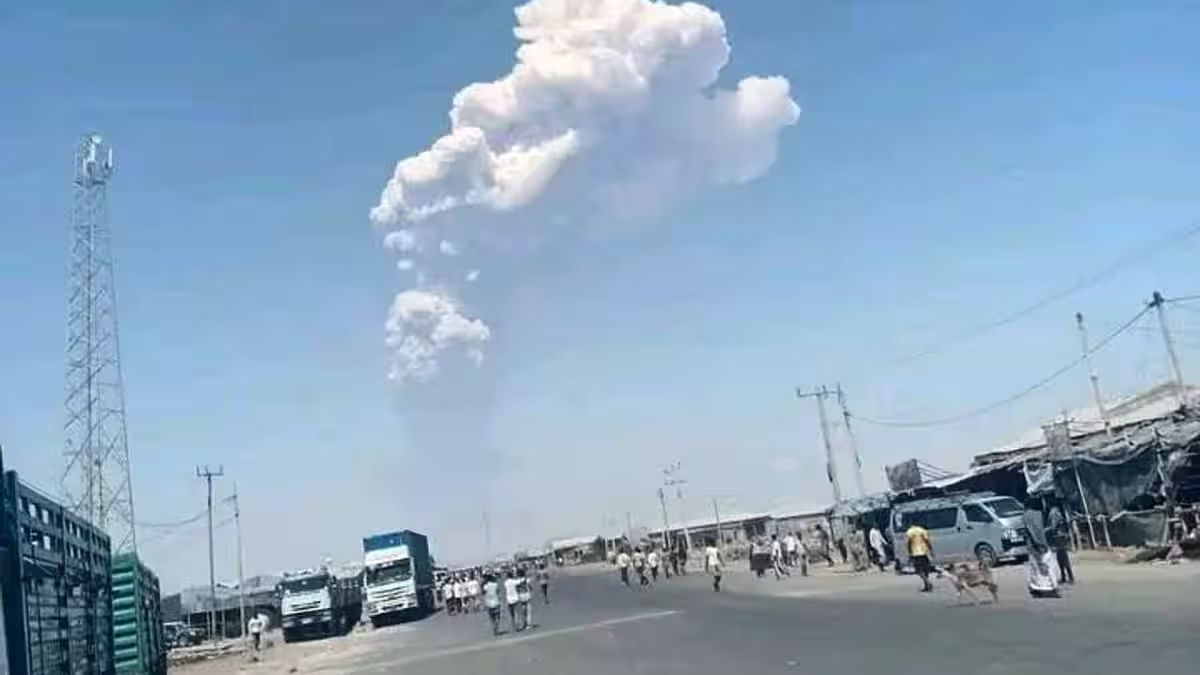
On November 23, a powerful volcanic eruption occurred at the long-dormant Hayli Gubbi volcano in Ethiopia. This natural event has raised significant health concerns across parts of India as volcanic ash traveled thousands of kilometers, impacting air quality and posing potential health risks. The ash cloud, which reached alarming heights of 14 kilometers, made its way over the Red Sea and into the skies above parts of Pakistan and northern India, leading to urgent advisories from health and aviation authorities.
Understanding Volcanic Ash
Volcanic ash is a fine material formed during volcanic eruptions, consisting of small fragments of rock, minerals, and volcanic glass. This ash is hard, abrasive, and notably does not dissolve in water, making it potentially harmful when inhaled. The particles can be dispersed by wind over considerable distances, which is exactly what happened when the eruption in Ethiopia affected air quality as far away as India.
The chemical composition of the ash from the Hayli Gubbi eruption includes harmful substances such as sulfur dioxide and fine rock particles. The ash cloud progressed at speeds of approximately 100-120 km/h over northern India, reaching altitudes between 15,000 and 45,000 feet. Reports indicate that by late Monday, the ash had spread across western Gujarat, Rajasthan, north-west Maharashtra, Delhi, Haryana, and Punjab.
Potential Health Impacts of Volcanic Eruptions
Volcanic eruptions release various harmful particles and gases into the atmosphere. These include toxic elements such as carbon dioxide, fluorine, and several other gases that can have serious health implications for humans. Inhalation of these gases, many of which are invisible or odorless, can lead to a range of symptoms: from mild irritations like eye discomfort and dizziness to severe complications including respiratory distress and even death. The Centers for Disease Control and Prevention (CDC) has highlighted the risks associated with exposure to volcanic gases, noting that prolonged inhalation can significantly harm lung function.
Individuals with pre-existing conditions, such as asthma or heart problems, children, and the elderly are particularly vulnerable to these health risks. Experts warn that with Delhi’s existing air pollution problems, the addition of volcanic ash could provoke a significant spike in harmful particulate matter, exacerbating the already toxic air quality in the city.
Sunil Dahiya, an environmental analyst, remarked on the dangers of the ash cloud, stating that it could worsen pollution levels and pose a direct threat to public health as it blankets urban areas. The harsh particles—comprised of dust, silica, and rocky materials—could lead to increased respiratory issues and other health problems for those exposed.
The Impact on Air Travel
Besides affecting public health, the volcanic ash posed severe risks to aviation. Airlines were advised by the Directorate General of Civil Aviation (DGCA) in India to alter flight paths, avoid regions impacted by the ash, and report any unusual aircraft behavior. The presence of volcanic ash can lead to significant damage to aircraft, including engine failure caused by abrasive particles.
In response to these hazards, Air India and Akasa Air announced the cancellation of multiple flights until necessary safety inspections could be conducted. The DGCA instructed airlines to perform thorough examinations of their aircraft post-flight to ensure no volcanic ash contamination affected their operation. Ground teams were mobilized to monitor and maintain safe conditions at airports affected by the ash.
Looking Ahead
As the ash cloud continues on its trajectory, it is expected to move towards China, with forecasts indicating it may leave Indian skies by the afternoon of November 25. In the meantime, public health authorities are closely monitoring air quality and advising vulnerable populations to take precautions to minimize their exposure.
In conclusion, while volcanic eruptions are natural phenomena, their impact on health and safety can be profound and far-reaching. Understanding the associated risks of volcanic ash and gases is vital for ensuring public safety and health, especially as India grapples with the potential fallout from the Hayli Gubbi eruption. Authorities urge residents to stay informed and take necessary precautions as this situation develops.