
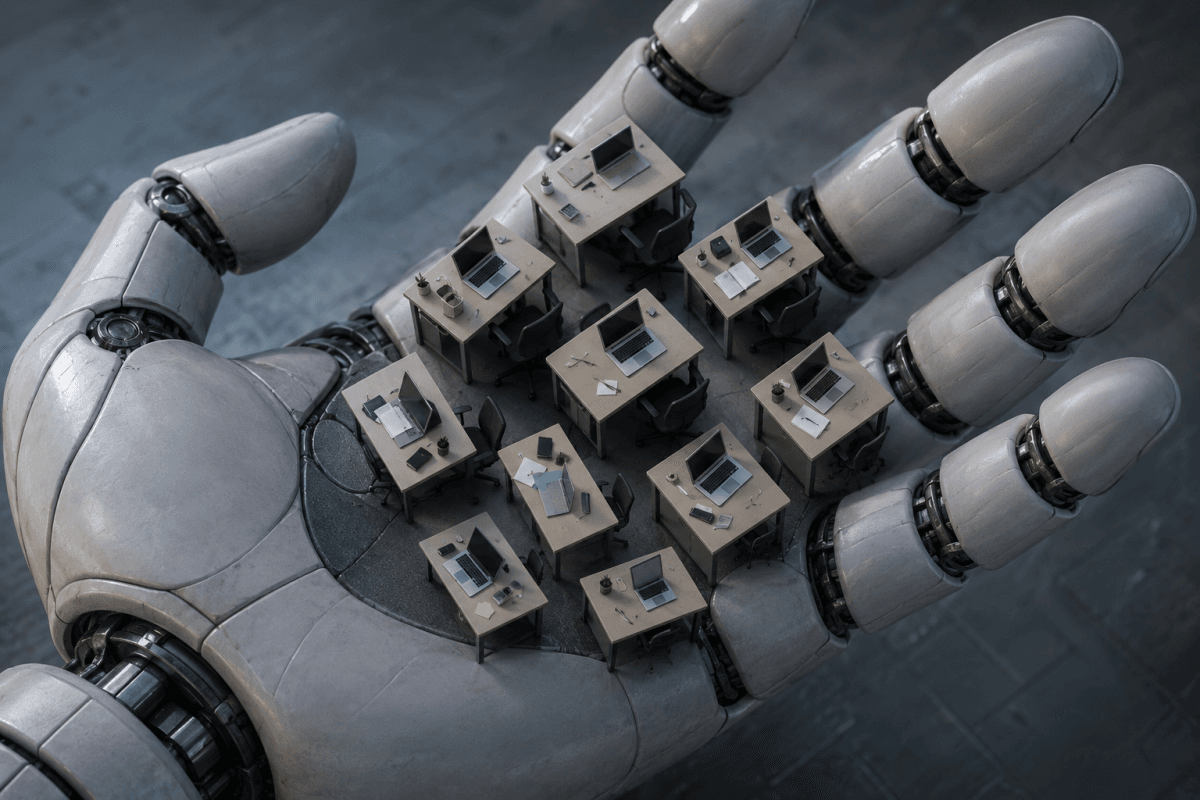
Tech Layoffs Surge as Companies Cut Workforce Amid AI Advancements
In a striking revelation, Oracle revealed on Monday that it has trimmed its workforce by 21,000 employees, reflecting a 13% reduction over the past year. This figure surpasses earlier estimates, attributing a portion of these layoffs to the rise of Artificial Intelligence (AI). The tech giant stated in a financial filing that “the adoption and deployment of AI technologies across our operations have resulted, and may continue to result, in reductions to our workforce.”
This latest announcement adds to a growing concern within the tech sector: companies reporting significant revenues while simultaneously downsizing. A report by the outplacement firm Challenger, Gray & Christmas highlighted that May 2026 saw the highest number of tech layoffs in recent years, with AI frequently cited as a reason for many job cuts.
Key Layoffs Linked to AI Transformations
As businesses adapt to new technologies, numerous tech companies have made substantial cuts this year, often pointing to AI as a driving force behind these decisions. Here’s a breakdown of significant layoffs:
GitLab — June 3, 2026: The company laid off about 350 employees, 14% of its workforce. CEO Bill Staples stated these cuts were necessary to fund AI infrastructure investments and manage increasing traffic due to AI workflows. GitLab’s revenue reached $264 million in the first quarter, a 23% year-over-year increase.
Google — Ongoing through May 2026: Google has quietly reduced its workforce, particularly in its Cloud division, despite a 63% revenue growth to over $20 billion. Estimates suggest cuts may total between 1,500 and 3,000 staff members.
Intuit — May 20, 2026: The financial software company announced plans to eliminate approximately 3,000 jobs, or 17% of its workforce, focusing on reducing complexity and reallocating resources towards AI.
Meta — May 20-21, 2026: Approximately 8,000 employees, or 10% of Meta’s workforce, were laid off, while 7,000 were shifted to new AI-focused roles.
Cisco — May 14, 2026: Cisco announced the reduction of nearly 4,000 jobs, despite reporting strong profits. The layoffs were part of a strategic realignment focusing on AI and security.
Cloudflare — May 7-8, 2026: The company cut 20% of its workforce, stating that many of those laid off were in roles that could be automated by AI.
General Motors — May 12, 2026: The automaker cut 500 to 600 jobs, predominantly in IT, as it reevaluated its workforce amid market changes. AI played a role, albeit not the sole factor.
Coinbase — May 5, 2026: The crypto exchange announced 700 layoffs, 14% of its workforce, citing a need to address market volatility and increase AI efficiency.
PayPal — May 5, 2026: The company revealed plans to eliminate over 4,500 jobs over the next two to three years as part of a major strategy shift focusing on AI.
The Broader Implications of AI on Employment
The ongoing reductions raise essential questions about the future of employment in the tech industry. As companies undergo digital transformation, many jobs are being replaced or redefined, leading experts to suggest that the workforce may not only shift but also diminish in certain areas.
Though companies like IBM and Salesforce have hinted at increasing hiring in AI-related roles, the net effect appears to favor cuts over growth in traditional positions. As AI tools become more capable, businesses may opt for fewer employees who can manage sophisticated software over larger teams performing conventional tasks.
Conclusion: Navigating Change in a Tech-Driven World
As the tech landscape evolves under AI’s influence, navigating these changes will be crucial for both companies and their employees. While the promise of AI offers growth opportunities, it also brings challenges, particularly around job security. The trend suggests a need for continuous adaptation and reskilling, urging both workers and employers to rethink their strategies in an increasingly automated environment.
For further insights into the impact of AI on various industries, explore our blog where we discuss ongoing trends and transformations.