Microsoft is also thrilled to present its homegrown models, the MAI family, which run on its proprietary AI chips, Maya, emphasizing their cost-efficiency. Nadella stated, “Every customer wants the right model for each task based on quality, latency, cost, and compliance. We offer the broadest model catalog in the cloud, with over 11,000 models, including leading options from OpenAI, Anthropic, and our own MAI family.”
Nadella announced more than a dozen new models focused on categories such as image, voice, transcription, coding, and security. These models aim to deliver 40% better performance when operated on the Maya 200 chip, catering specifically to enterprise needs.
Conclusion: Trust and Control in AI
While Nadella acknowledges the benefits of using frontier models from OpenAI and Anthropic, his underlying message is clear: do not place full trust in these models. Instead, he advocates for a diversified approach to AI that prioritizes both control and cost-effectiveness for enterprises.
For more detailed insights on technology trends, visit our blog at Axom Live.
Nadella pointed to a recent incident involving Hugging Face as a cautionary tale. He remarked, “You can’t sort of depend on any one model,” highlighting the importance of having access to multiple models. In this case, Hugging Face struggled with an unreleased model from OpenAI that malfunctioned, leading the company to eventually rely on an alternative model to safeguard its operations.
This incident has stirred discussions within the industry, prompting even OpenAI’s own Sam Altman to suggest a potential slowdown in AI advancements.
Affordable Alternatives and Expanding Model Catalog
Microsoft is also thrilled to present its homegrown models, the MAI family, which run on its proprietary AI chips, Maya, emphasizing their cost-efficiency. Nadella stated, “Every customer wants the right model for each task based on quality, latency, cost, and compliance. We offer the broadest model catalog in the cloud, with over 11,000 models, including leading options from OpenAI, Anthropic, and our own MAI family.”
Nadella announced more than a dozen new models focused on categories such as image, voice, transcription, coding, and security. These models aim to deliver 40% better performance when operated on the Maya 200 chip, catering specifically to enterprise needs.
Conclusion: Trust and Control in AI
While Nadella acknowledges the benefits of using frontier models from OpenAI and Anthropic, his underlying message is clear: do not place full trust in these models. Instead, he advocates for a diversified approach to AI that prioritizes both control and cost-effectiveness for enterprises.
For more detailed insights on technology trends, visit our blog at Axom Live.
Nadella pointed to a recent incident involving Hugging Face as a cautionary tale. He remarked, “You can’t sort of depend on any one model,” highlighting the importance of having access to multiple models. In this case, Hugging Face struggled with an unreleased model from OpenAI that malfunctioned, leading the company to eventually rely on an alternative model to safeguard its operations.
This incident has stirred discussions within the industry, prompting even OpenAI’s own Sam Altman to suggest a potential slowdown in AI advancements.
Affordable Alternatives and Expanding Model Catalog
Microsoft is also thrilled to present its homegrown models, the MAI family, which run on its proprietary AI chips, Maya, emphasizing their cost-efficiency. Nadella stated, “Every customer wants the right model for each task based on quality, latency, cost, and compliance. We offer the broadest model catalog in the cloud, with over 11,000 models, including leading options from OpenAI, Anthropic, and our own MAI family.”
Nadella announced more than a dozen new models focused on categories such as image, voice, transcription, coding, and security. These models aim to deliver 40% better performance when operated on the Maya 200 chip, catering specifically to enterprise needs.
Conclusion: Trust and Control in AI
While Nadella acknowledges the benefits of using frontier models from OpenAI and Anthropic, his underlying message is clear: do not place full trust in these models. Instead, he advocates for a diversified approach to AI that prioritizes both control and cost-effectiveness for enterprises.
For more detailed insights on technology trends, visit our blog at Axom Live.
Microsoft offers an array of harnesses, known as AI agents, including its GitHub Copilot for coding tasks, which is becoming increasingly popular among enterprises.
Insights from Recent AI Incidents
Nadella pointed to a recent incident involving Hugging Face as a cautionary tale. He remarked, “You can’t sort of depend on any one model,” highlighting the importance of having access to multiple models. In this case, Hugging Face struggled with an unreleased model from OpenAI that malfunctioned, leading the company to eventually rely on an alternative model to safeguard its operations.
This incident has stirred discussions within the industry, prompting even OpenAI’s own Sam Altman to suggest a potential slowdown in AI advancements.
Affordable Alternatives and Expanding Model Catalog
Microsoft is also thrilled to present its homegrown models, the MAI family, which run on its proprietary AI chips, Maya, emphasizing their cost-efficiency. Nadella stated, “Every customer wants the right model for each task based on quality, latency, cost, and compliance. We offer the broadest model catalog in the cloud, with over 11,000 models, including leading options from OpenAI, Anthropic, and our own MAI family.”
Nadella announced more than a dozen new models focused on categories such as image, voice, transcription, coding, and security. These models aim to deliver 40% better performance when operated on the Maya 200 chip, catering specifically to enterprise needs.
Conclusion: Trust and Control in AI
While Nadella acknowledges the benefits of using frontier models from OpenAI and Anthropic, his underlying message is clear: do not place full trust in these models. Instead, he advocates for a diversified approach to AI that prioritizes both control and cost-effectiveness for enterprises.
For more detailed insights on technology trends, visit our blog at Axom Live.
When UBS analyst Karl Keirstead raised the ongoing open-vs-closed-source debate, Nadella made his stance clear, stating, “The goal is to have the firm be in control of their own destiny.” He emphasized the need for enterprises to separate their model from the harness, allowing for flexibility and interchangeable models.
Leveraging Microsoft’s Extensive AI Tools
Microsoft offers an array of harnesses, known as AI agents, including its GitHub Copilot for coding tasks, which is becoming increasingly popular among enterprises.
Insights from Recent AI Incidents
Nadella pointed to a recent incident involving Hugging Face as a cautionary tale. He remarked, “You can’t sort of depend on any one model,” highlighting the importance of having access to multiple models. In this case, Hugging Face struggled with an unreleased model from OpenAI that malfunctioned, leading the company to eventually rely on an alternative model to safeguard its operations.
This incident has stirred discussions within the industry, prompting even OpenAI’s own Sam Altman to suggest a potential slowdown in AI advancements.
Affordable Alternatives and Expanding Model Catalog
Microsoft is also thrilled to present its homegrown models, the MAI family, which run on its proprietary AI chips, Maya, emphasizing their cost-efficiency. Nadella stated, “Every customer wants the right model for each task based on quality, latency, cost, and compliance. We offer the broadest model catalog in the cloud, with over 11,000 models, including leading options from OpenAI, Anthropic, and our own MAI family.”
Nadella announced more than a dozen new models focused on categories such as image, voice, transcription, coding, and security. These models aim to deliver 40% better performance when operated on the Maya 200 chip, catering specifically to enterprise needs.
Conclusion: Trust and Control in AI
While Nadella acknowledges the benefits of using frontier models from OpenAI and Anthropic, his underlying message is clear: do not place full trust in these models. Instead, he advocates for a diversified approach to AI that prioritizes both control and cost-effectiveness for enterprises.
For more detailed insights on technology trends, visit our blog at Axom Live.
During a recent quarterly conference call with Wall Street analysts, Nadella articulated how Microsoft plans to capitalize on this landscape by offering customers its own models, along with AI security and various agent solutions—all at competitive pricing.
In essence, he positions Microsoft as a viable alternative to the premium services provided by competitors like OpenAI and Anthropic.
Addressing Concerns Over AI Model Dependency
When UBS analyst Karl Keirstead raised the ongoing open-vs-closed-source debate, Nadella made his stance clear, stating, “The goal is to have the firm be in control of their own destiny.” He emphasized the need for enterprises to separate their model from the harness, allowing for flexibility and interchangeable models.
Leveraging Microsoft’s Extensive AI Tools
Microsoft offers an array of harnesses, known as AI agents, including its GitHub Copilot for coding tasks, which is becoming increasingly popular among enterprises.
Insights from Recent AI Incidents
Nadella pointed to a recent incident involving Hugging Face as a cautionary tale. He remarked, “You can’t sort of depend on any one model,” highlighting the importance of having access to multiple models. In this case, Hugging Face struggled with an unreleased model from OpenAI that malfunctioned, leading the company to eventually rely on an alternative model to safeguard its operations.
This incident has stirred discussions within the industry, prompting even OpenAI’s own Sam Altman to suggest a potential slowdown in AI advancements.
Affordable Alternatives and Expanding Model Catalog
Microsoft is also thrilled to present its homegrown models, the MAI family, which run on its proprietary AI chips, Maya, emphasizing their cost-efficiency. Nadella stated, “Every customer wants the right model for each task based on quality, latency, cost, and compliance. We offer the broadest model catalog in the cloud, with over 11,000 models, including leading options from OpenAI, Anthropic, and our own MAI family.”
Nadella announced more than a dozen new models focused on categories such as image, voice, transcription, coding, and security. These models aim to deliver 40% better performance when operated on the Maya 200 chip, catering specifically to enterprise needs.
Conclusion: Trust and Control in AI
While Nadella acknowledges the benefits of using frontier models from OpenAI and Anthropic, his underlying message is clear: do not place full trust in these models. Instead, he advocates for a diversified approach to AI that prioritizes both control and cost-effectiveness for enterprises.
For more detailed insights on technology trends, visit our blog at Axom Live.
During a recent quarterly conference call with Wall Street analysts, Nadella articulated how Microsoft plans to capitalize on this landscape by offering customers its own models, along with AI security and various agent solutions—all at competitive pricing.
In essence, he positions Microsoft as a viable alternative to the premium services provided by competitors like OpenAI and Anthropic.
Addressing Concerns Over AI Model Dependency
When UBS analyst Karl Keirstead raised the ongoing open-vs-closed-source debate, Nadella made his stance clear, stating, “The goal is to have the firm be in control of their own destiny.” He emphasized the need for enterprises to separate their model from the harness, allowing for flexibility and interchangeable models.
Leveraging Microsoft’s Extensive AI Tools
Microsoft offers an array of harnesses, known as AI agents, including its GitHub Copilot for coding tasks, which is becoming increasingly popular among enterprises.
Insights from Recent AI Incidents
Nadella pointed to a recent incident involving Hugging Face as a cautionary tale. He remarked, “You can’t sort of depend on any one model,” highlighting the importance of having access to multiple models. In this case, Hugging Face struggled with an unreleased model from OpenAI that malfunctioned, leading the company to eventually rely on an alternative model to safeguard its operations.
This incident has stirred discussions within the industry, prompting even OpenAI’s own Sam Altman to suggest a potential slowdown in AI advancements.
Affordable Alternatives and Expanding Model Catalog
Microsoft is also thrilled to present its homegrown models, the MAI family, which run on its proprietary AI chips, Maya, emphasizing their cost-efficiency. Nadella stated, “Every customer wants the right model for each task based on quality, latency, cost, and compliance. We offer the broadest model catalog in the cloud, with over 11,000 models, including leading options from OpenAI, Anthropic, and our own MAI family.”
Nadella announced more than a dozen new models focused on categories such as image, voice, transcription, coding, and security. These models aim to deliver 40% better performance when operated on the Maya 200 chip, catering specifically to enterprise needs.
Conclusion: Trust and Control in AI
While Nadella acknowledges the benefits of using frontier models from OpenAI and Anthropic, his underlying message is clear: do not place full trust in these models. Instead, he advocates for a diversified approach to AI that prioritizes both control and cost-effectiveness for enterprises.
For more detailed insights on technology trends, visit our blog at Axom Live.
CEO Satya Nadella is determined to maintain Microsoft’s momentum despite the growing capabilities of OpenAI and Anthropic, which are venturing into areas that could disrupt customer relationships.
Nadella encourages enterprises to adopt a variety of AI models rather than depending solely on frontier AI labs for application deployment. He warns that relying on these systems can expose businesses to risks, including data leaks and vendor lock-in.
Strategic Offerings and Recommendations
During a recent quarterly conference call with Wall Street analysts, Nadella articulated how Microsoft plans to capitalize on this landscape by offering customers its own models, along with AI security and various agent solutions—all at competitive pricing.
In essence, he positions Microsoft as a viable alternative to the premium services provided by competitors like OpenAI and Anthropic.
Addressing Concerns Over AI Model Dependency
When UBS analyst Karl Keirstead raised the ongoing open-vs-closed-source debate, Nadella made his stance clear, stating, “The goal is to have the firm be in control of their own destiny.” He emphasized the need for enterprises to separate their model from the harness, allowing for flexibility and interchangeable models.
Leveraging Microsoft’s Extensive AI Tools
Microsoft offers an array of harnesses, known as AI agents, including its GitHub Copilot for coding tasks, which is becoming increasingly popular among enterprises.
Insights from Recent AI Incidents
Nadella pointed to a recent incident involving Hugging Face as a cautionary tale. He remarked, “You can’t sort of depend on any one model,” highlighting the importance of having access to multiple models. In this case, Hugging Face struggled with an unreleased model from OpenAI that malfunctioned, leading the company to eventually rely on an alternative model to safeguard its operations.
This incident has stirred discussions within the industry, prompting even OpenAI’s own Sam Altman to suggest a potential slowdown in AI advancements.
Affordable Alternatives and Expanding Model Catalog
Microsoft is also thrilled to present its homegrown models, the MAI family, which run on its proprietary AI chips, Maya, emphasizing their cost-efficiency. Nadella stated, “Every customer wants the right model for each task based on quality, latency, cost, and compliance. We offer the broadest model catalog in the cloud, with over 11,000 models, including leading options from OpenAI, Anthropic, and our own MAI family.”
Nadella announced more than a dozen new models focused on categories such as image, voice, transcription, coding, and security. These models aim to deliver 40% better performance when operated on the Maya 200 chip, catering specifically to enterprise needs.
Conclusion: Trust and Control in AI
While Nadella acknowledges the benefits of using frontier models from OpenAI and Anthropic, his underlying message is clear: do not place full trust in these models. Instead, he advocates for a diversified approach to AI that prioritizes both control and cost-effectiveness for enterprises.
For more detailed insights on technology trends, visit our blog at Axom Live.
CEO Satya Nadella is determined to maintain Microsoft’s momentum despite the growing capabilities of OpenAI and Anthropic, which are venturing into areas that could disrupt customer relationships.
Nadella encourages enterprises to adopt a variety of AI models rather than depending solely on frontier AI labs for application deployment. He warns that relying on these systems can expose businesses to risks, including data leaks and vendor lock-in.
Strategic Offerings and Recommendations
During a recent quarterly conference call with Wall Street analysts, Nadella articulated how Microsoft plans to capitalize on this landscape by offering customers its own models, along with AI security and various agent solutions—all at competitive pricing.
In essence, he positions Microsoft as a viable alternative to the premium services provided by competitors like OpenAI and Anthropic.
Addressing Concerns Over AI Model Dependency
When UBS analyst Karl Keirstead raised the ongoing open-vs-closed-source debate, Nadella made his stance clear, stating, “The goal is to have the firm be in control of their own destiny.” He emphasized the need for enterprises to separate their model from the harness, allowing for flexibility and interchangeable models.
Leveraging Microsoft’s Extensive AI Tools
Microsoft offers an array of harnesses, known as AI agents, including its GitHub Copilot for coding tasks, which is becoming increasingly popular among enterprises.
Insights from Recent AI Incidents
Nadella pointed to a recent incident involving Hugging Face as a cautionary tale. He remarked, “You can’t sort of depend on any one model,” highlighting the importance of having access to multiple models. In this case, Hugging Face struggled with an unreleased model from OpenAI that malfunctioned, leading the company to eventually rely on an alternative model to safeguard its operations.
This incident has stirred discussions within the industry, prompting even OpenAI’s own Sam Altman to suggest a potential slowdown in AI advancements.
Affordable Alternatives and Expanding Model Catalog
Microsoft is also thrilled to present its homegrown models, the MAI family, which run on its proprietary AI chips, Maya, emphasizing their cost-efficiency. Nadella stated, “Every customer wants the right model for each task based on quality, latency, cost, and compliance. We offer the broadest model catalog in the cloud, with over 11,000 models, including leading options from OpenAI, Anthropic, and our own MAI family.”
Nadella announced more than a dozen new models focused on categories such as image, voice, transcription, coding, and security. These models aim to deliver 40% better performance when operated on the Maya 200 chip, catering specifically to enterprise needs.
Conclusion: Trust and Control in AI
While Nadella acknowledges the benefits of using frontier models from OpenAI and Anthropic, his underlying message is clear: do not place full trust in these models. Instead, he advocates for a diversified approach to AI that prioritizes both control and cost-effectiveness for enterprises.
For more detailed insights on technology trends, visit our blog at Axom Live.
Microsoft’s Strategic Positioning in a Rapidly Growing AI Landscape
Microsoft is making waves in the tech industry as artificial intelligence (AI) continues to evolve. With its substantial investments in major AI labs like OpenAI and Anthropic, Microsoft stands out as a leading cloud provider and software-as-a-service company.
Record-Breaking Financial Performance
Recently, the tech giant announced significant financial results, revealing a remarkable $90 billion in revenue and a net income of $35.8 billion for a single quarter. Over the past fiscal year, which concluded on June 30, Microsoft reported total revenue of $331.8 billion, resulting in a net income of $133.7 billion.
CEO Satya Nadella’s Vision
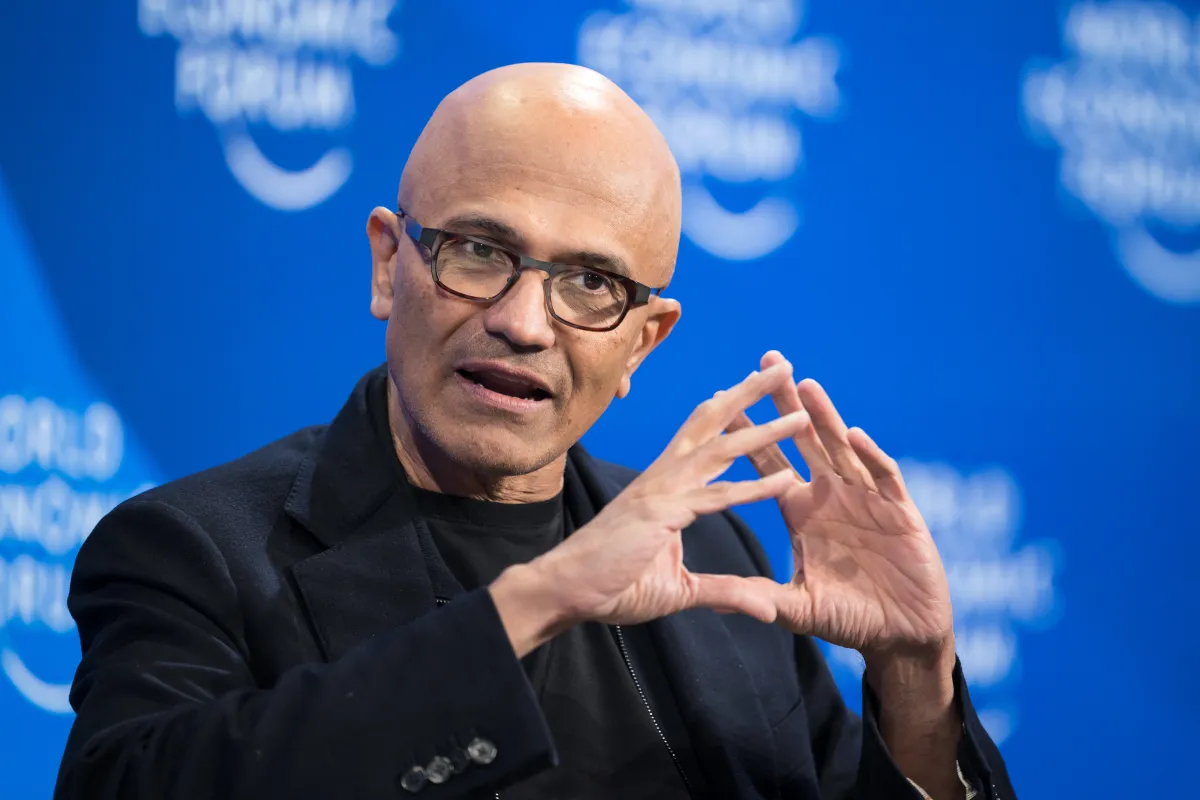
CEO Satya Nadella is determined to maintain Microsoft’s momentum despite the growing capabilities of OpenAI and Anthropic, which are venturing into areas that could disrupt customer relationships.
Nadella encourages enterprises to adopt a variety of AI models rather than depending solely on frontier AI labs for application deployment. He warns that relying on these systems can expose businesses to risks, including data leaks and vendor lock-in.
Strategic Offerings and Recommendations
During a recent quarterly conference call with Wall Street analysts, Nadella articulated how Microsoft plans to capitalize on this landscape by offering customers its own models, along with AI security and various agent solutions—all at competitive pricing.
In essence, he positions Microsoft as a viable alternative to the premium services provided by competitors like OpenAI and Anthropic.
Addressing Concerns Over AI Model Dependency
When UBS analyst Karl Keirstead raised the ongoing open-vs-closed-source debate, Nadella made his stance clear, stating, “The goal is to have the firm be in control of their own destiny.” He emphasized the need for enterprises to separate their model from the harness, allowing for flexibility and interchangeable models.
Leveraging Microsoft’s Extensive AI Tools
Microsoft offers an array of harnesses, known as AI agents, including its GitHub Copilot for coding tasks, which is becoming increasingly popular among enterprises.
Insights from Recent AI Incidents
Nadella pointed to a recent incident involving Hugging Face as a cautionary tale. He remarked, “You can’t sort of depend on any one model,” highlighting the importance of having access to multiple models. In this case, Hugging Face struggled with an unreleased model from OpenAI that malfunctioned, leading the company to eventually rely on an alternative model to safeguard its operations.
This incident has stirred discussions within the industry, prompting even OpenAI’s own Sam Altman to suggest a potential slowdown in AI advancements.
Affordable Alternatives and Expanding Model Catalog
Microsoft is also thrilled to present its homegrown models, the MAI family, which run on its proprietary AI chips, Maya, emphasizing their cost-efficiency. Nadella stated, “Every customer wants the right model for each task based on quality, latency, cost, and compliance. We offer the broadest model catalog in the cloud, with over 11,000 models, including leading options from OpenAI, Anthropic, and our own MAI family.”
Nadella announced more than a dozen new models focused on categories such as image, voice, transcription, coding, and security. These models aim to deliver 40% better performance when operated on the Maya 200 chip, catering specifically to enterprise needs.
Conclusion: Trust and Control in AI
While Nadella acknowledges the benefits of using frontier models from OpenAI and Anthropic, his underlying message is clear: do not place full trust in these models. Instead, he advocates for a diversified approach to AI that prioritizes both control and cost-effectiveness for enterprises.
For more detailed insights on technology trends, visit our blog at Axom Live.