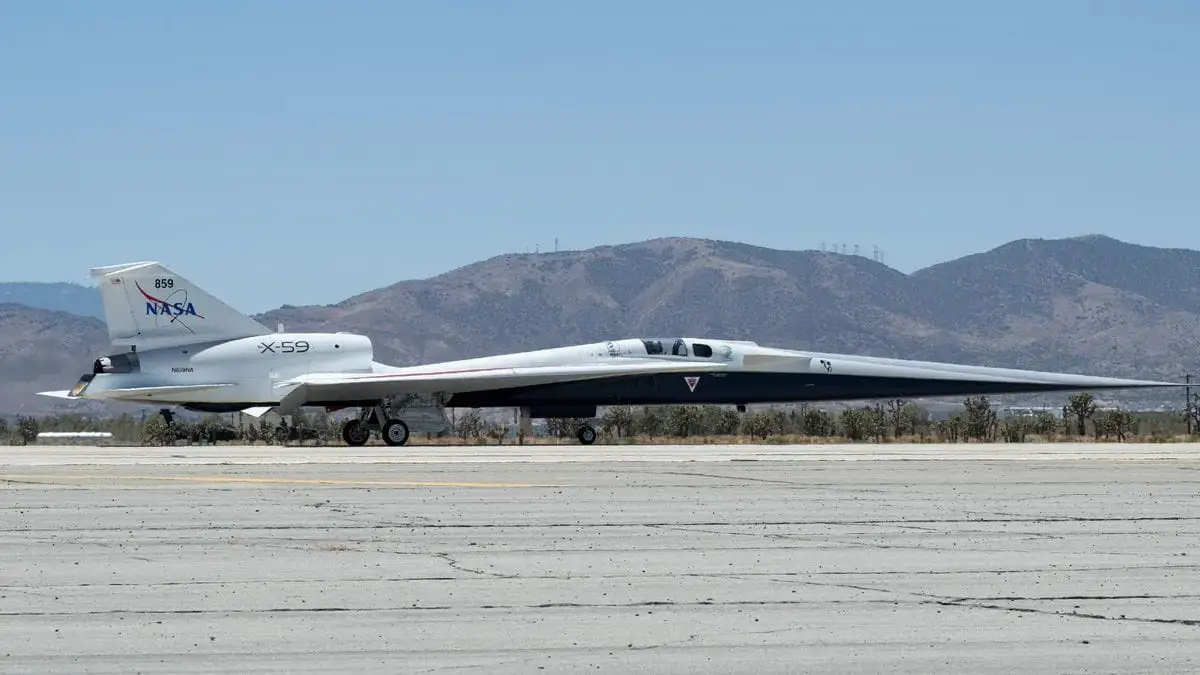
NASA X-59, a groundbreaking supersonic jet, is designed to fly faster than the speed of sound without producing the disruptive sonic booms typically associated with such speeds. Developed in collaboration with Lockheed Martin’s Skunk Works at the U.S. Air Force’s Plant 42 in Palmdale, California, this 99-foot aircraft features an innovative elongated design and an External Vision System (XVS) that replaces the traditional front windscreen with an augmented reality (AR) enabled camera system. In July 2025, NASA conducted low-speed taxi tests to evaluate the jet’s steering and braking systems, marking a critical step toward its first flight.
This article explores the X-59’s design, testing phases, historical context, and its potential to reshape aviation, while addressing the risks of misinformation surrounding such cutting-edge projects.
X-59’s Innovative Design: Quiet Supersonic Flight
The NASA X-59 QueSST (Quiet SuperSonic Technology) aims to redefine supersonic travel by minimizing sonic booms, which have long restricted such flights over land due to noise regulations. The jet’s elongated, needle-like shape, spanning 99 feet with a 29.5-foot wingspan, is engineered to shape shockwaves into gentler “sonic thumps.” This design reduces the noise footprint, potentially allowing commercial supersonic flights over populated areas. According to NASA’s official X-59 page, the aircraft cruises at 1.4 times the speed of sound (approximately 925 mph) at 55,000 feet, powered by a General Electric F414 engine.
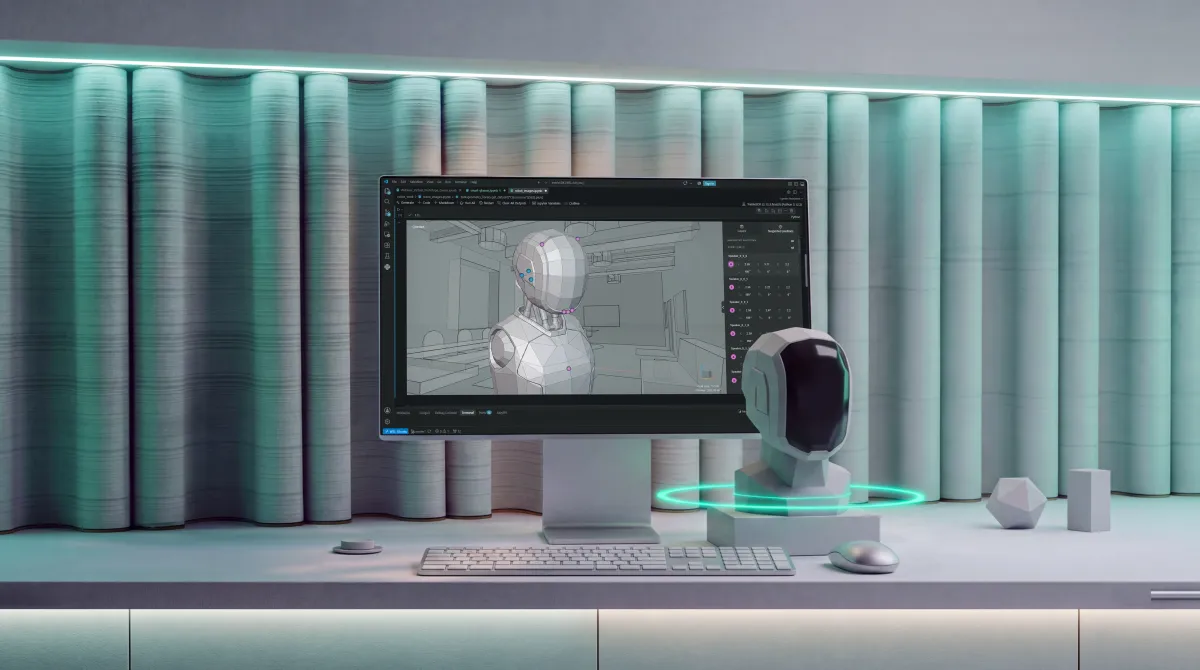
A standout feature is the External Vision System (XVS), a high-resolution camera system that provides pilots with a 4K augmented reality view of the environment, compensating for the absence of a front windscreen. This innovation enhances safety and visibility, addressing the aerodynamic constraints of the jet’s sleek design. The X-59’s development aligns with NASA’s mission to advance aviation technology, as detailed in their work on the SPHEREx infrared space telescope, which also pushes the boundaries of scientific innovation.
| Feature | Description |
|---|---|
| Length | 99 feet |
| Wingspan | 29.5 feet |
| Cruise Speed | Mach 1.4 (925 mph) |
| Altitude | 55,000 feet |
| Engine | General Electric F414 |
| Vision System | External Vision System (XVS) with 4K AR-enabled cameras |
Taxi Tests at Plant 42: Preparing for First Flight
In July 2025, NASA conducted low-speed taxi tests on the X-59 at Plant 42 in Palmdale, California, a hub for advanced aerospace projects. Test pilot Nils Larson maneuvered the jet Taxi tests are a standard procedure to verify the functionality of critical systems like steering and braking before high-stakes flights. The low-speed tests in July confirmed the X-59’s ground handling capabilities, ensuring the jet’s wheels, brakes, and steering systems perform as expected. According to a NASA press release, the next phase involves high-speed taxi tests, where the aircraft will accelerate to near-takeoff speeds to simulate real-world conditions.
Plant 42, operated by the U.S. Air Force and home to Lockheed Martin’s Skunk Works, is a historic site for aerospace innovation. The facility has been instrumental in developing iconic aircraft like the B-2 Spirit, F-22 Raptor, and RQ-170 Sentinel. For more on cutting-edge technology development, explore this article on ultra-thin semiconductor materials, which highlights advancements in material science for aerospace applications.
| Test Phase | Purpose | Status |
|---|---|---|
| Low-Speed Taxi | Verify steering and braking systems | Completed (July 2025) |
| High-Speed Taxi | Simulate near-takeoff speeds | Planned |
| First Flight | Full operational test in flight | Upcoming |
Historical Significance of Plant 42
Plant 42 has a storied legacy in U.S. aerospace history. Beyond the X-59, it has been a development site for advanced military aircraft, including the B-2 Spirit stealth bomber and the F-22 Raptor fighter jet. The facility also housed the assembly and testing of NASA’s Space Shuttle, the world’s first reusable spacecraft, and the now-retired SOFIA airborne observatory, a modified Boeing 747SP that served as a flying telescope. This rich history underscores Plant 42’s role as a cornerstone of aerospace innovation, making it a fitting location for the X-59’s development.
The facility’s significance extends beyond aircraft. It has supported projects that push technological boundaries, much like the mysteries of pulsar signals, where scientific advancements drive new discoveries. Plant 42’s secure environment ensures that sensitive projects like the X-59 remain protected from external threats, a concern echoed in discussions about crypto scammers posing as recruiters, highlighting the need for vigilance in high-tech industries.
Collaboration with Japan Aerospace Exploration Agency
NASA’s partnership with the Japan Aerospace Exploration Agency (JAXA) has been crucial for the X-59’s development. JAXA conducted wind tunnel tests on a scale model of the X-59 to measure noise levels under supersonic conditions. These tests, performed in a supersonic wind tunnel, confirmed the aircraft’s ability to produce quieter sonic thumps, aligning with the project’s goal of enabling regulatory changes for supersonic flight over land. This international collaboration mirrors global efforts in other fields, such as Japan’s increased JGB sales, showcasing how partnerships drive progress.
The data from these tests will inform future flight tests, expected to begin later in 2025 or early 2026. The X-59’s performance will be evaluated over populated areas to gather community response data, which NASA will present to regulators to demonstrate the feasibility of quiet supersonic flight.
Potential Impact on Commercial Aviation
The X-59’s success could revolutionize commercial aviation by enabling faster-than-sound travel without the noise disruptions that led to bans on supersonic flights over land. If regulators approve changes based on the X-59’s data, airlines could develop new supersonic aircraft, reducing transcontinental and transoceanic flight times significantly. For instance, a flight from New York to London could be completed in under four hours, compared to the current seven-hour duration.
This potential aligns with broader technological advancements, such as Dell’s AI-powered devices, which aim to enhance efficiency in their respective fields. However, challenges remain, including fuel efficiency, environmental concerns, and the high costs of developing supersonic aircraft. NASA’s focus on public perception through community overflights will be critical to gaining regulatory and societal acceptance.
| Impact Area | Potential Benefit | Challenges |
|---|---|---|
| Flight Time | Reduced to under 4 hours for transatlantic | High fuel consumption |
| Noise Regulation | Enables overland supersonic flight | Requires regulatory approval |
| Commercial Viability | Faster travel for premium passengers | High development and operational costs |
Risks of Misinformation and Cybersecurity
As with any high-profile project, the X-59 has attracted attention on platforms like X, where misinformation can spread rapidly. Some posts have exaggerated the jet’s capabilities, claiming it can “eliminate sonic booms entirely,” which oversimplifies the technology. The X-59 reduces sonic booms to softer thumps, not eliminates them. Such misinformation can skew public expectations, a concern also seen in discussions about drone sightings, where unverified claims can distort reality.
Cybersecurity is another concern, given Plant 42’s role in sensitive projects. The facility’s secure environment protects against threats like those described in Microsoft’s patched vulnerabilities, ensuring the X-59’s proprietary technology remains safeguarded. NASA and Lockheed Martin maintain strict protocols to counter such risks, reflecting the need for robust security in aerospace development.
Future Testing and Timeline
Following the low-speed taxi tests in July 2025, NASA and Lockheed Martin plan to conduct high-speed taxi tests to simulate takeoff conditions. The first flight is expected by late 2025 or early 2026, with community overflight tests to follow. These tests will collect noise data from ground sensors and public feedback, which NASA will use to petition regulators like the Federal Aviation Administration (FAA) for updated rules on supersonic flight.
The timeline aligns with other scientific milestones, such as the tornado science essentials, where rigorous testing precedes real-world application. The X-59’s success hinges on these tests, which will determine whether its technology can be adopted by commercial aviation.
| Milestone | Expected Timeline | Objective judgement |
|---|---|---|
| High-Speed Taxi Tests | Late 2025 | Simulate takeoff speeds |
| First Flight | Late 2025/Early 2026 | Test full operational capabilities |
| Community Overflights | 2026 | Gather noise and public response data |
Broader Context in Aerospace Innovation
The X-59 is part of NASA’s broader mission to advance aviation technology, building on decades of innovation at Plant 42. The facility’s history with the Space Shuttle and SOFIA underscores its role in pushing boundaries, much like the X-59’s aim to redefine supersonic travel. This project also reflects global trends in aerospace, as seen in North Korea’s ballistic missile launches, which highlight the competitive nature of advanced technology development.
Public engagement will be key to the X-59’s success. NASA plans to conduct outreach to educate communities about the jet’s quieter profile, addressing concerns about noise pollution. This approach mirrors efforts in other fields, such as health-focused public campaigns, where education drives acceptance.
Why the X-59 Matters
The NASA X-59 represents a bold step toward making supersonic travel viable over land, with implications for commercial aviation, global connectivity, and economic growth. Its innovative design, from the External Vision System to its noise-reducing aerodynamics, sets a new standard for aerospace engineering. While challenges like cost and environmental impact persist, the X-59’s testing phases are critical to proving its feasibility.
For more insights into technological innovation, visit Axom Live’s technology blog or explore their science section for related advancements.