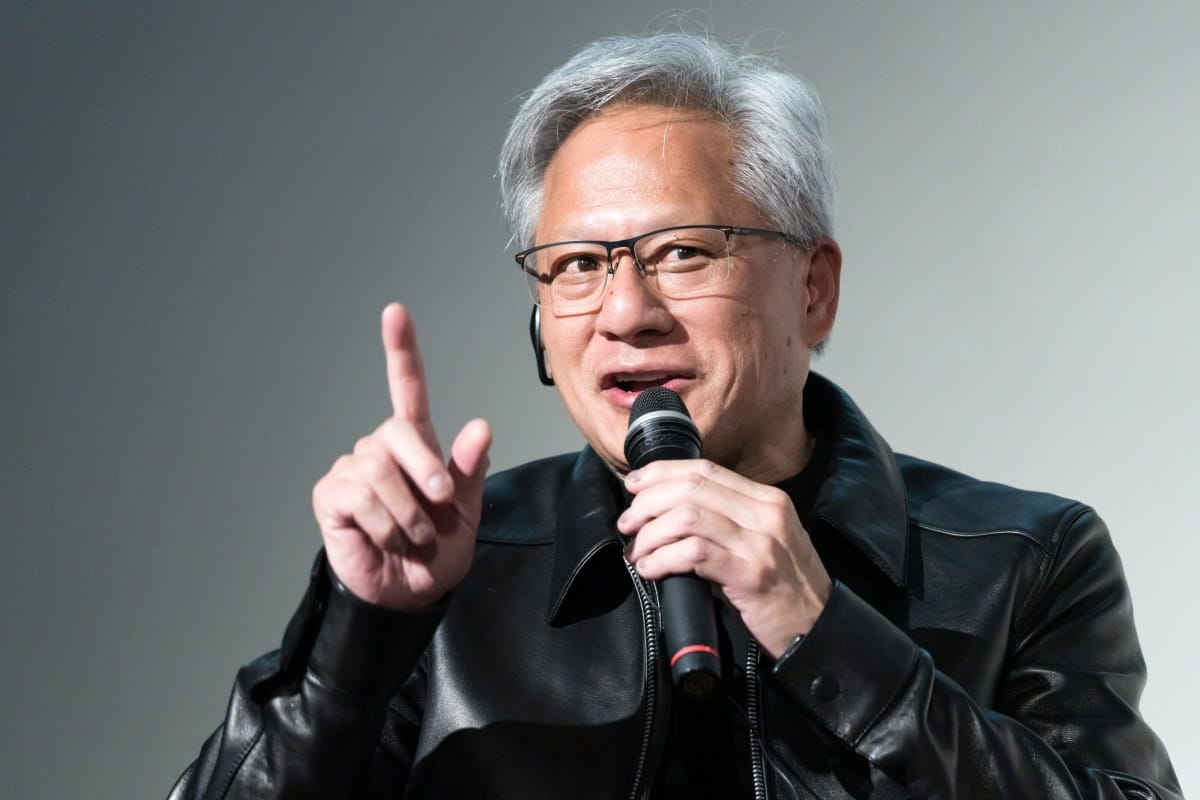
Jensen Huang’s departure as Nvidia’s chief executive changed the leadership of one of the most important companies in artificial intelligence infrastructure. It did not automatically change the company’s chips, software, cloud partnerships or customer contracts. The practical question for customers, developers, suppliers and investors is whether Nvidia can keep delivering its product roadmap and commercial commitments under a new leadership structure.
Nvidia appointed chief financial officer Colette Kress as interim CEO after Huang resigned as president, CEO and a board member, effective 11 November 2026. Harvey C. Jones became the company’s first-ever board chair, and the board began searching for a permanent chief executive. Nvidia says it expects operations, customer commitments and the product roadmap to continue. That is the company’s stated position, so customers and investors should still check actual delivery, support, financial disclosures and any formal changes to plans.
This guide focuses on practical implications rather than predicting who will become the next CEO. For the succession discussion, read our separate guide to possible successors to Jensen Huang. For the board investigation and export-control scrutiny, see our report on Nvidia’s governance and export-control oversight.
What changed at Nvidia after Jensen Huang’s departure?
- Jensen Huang: Resigned as president, CEO and a member of Nvidia’s board, effective 11 November 2026.
- Colette Kress: Appointed interim CEO while continuing as executive vice president and CFO.
- Harvey C. Jones: Appointed the first chair of Nvidia’s board.
- Permanent CEO search: The board said it would consider internal and external candidates. Board chair Jones confirmed that executive search firm Heidrick & Struggles was hired to assist.
The company has not announced a permanent successor. The interim appointment is not the same as a permanent CEO decision, and the board has not publicly confirmed a final shortlist. The board chair has also said it does not intend to reinstate Huang.
Nvidia said the existing leadership team would support Kress and that it expected operations, customer commitments and the product roadmap to continue without interruption. This is a company statement about its plans, not proof that every product launch, delivery date or customer arrangement is risk-free.
What Nvidia’s first results after the leadership change show
Nvidia announced its third-quarter fiscal 2027 results on 17 November 2026, the first quarterly results presentation since Huang’s departure took effect. The reported quarter ended on 25 October, before the leadership change. The results therefore show the scale of Nvidia’s business entering the transition, not a full quarter of operating performance under the new interim CEO.
| Metric | Q3 fiscal 2027 |
|---|---|
| Total revenue | $115.8 billion, up 103% year over year |
| Data Centre revenue | $107.6 billion, up 110% year over year |
| Edge Computing revenue | $8.2 billion, up 42% year over year |
| GAAP gross margin | 74.8% |
| GAAP diluted earnings per share | $2.70 |
| Net income | $65.3 billion |
The company forecast fourth-quarter fiscal 2027 revenue of $130 billion, plus or minus 3%. Its outlook did not assume any Data Centre compute revenue from China. Nvidia also guided to GAAP gross margin of 71% to 72% for the quarter. That lower projected margin range is worth watching alongside revenue growth because new system configurations, supply costs and product mix can affect profitability.
The fourth-quarter outlook includes an additional week. Investors should compare the forecast with that calendar detail and should not treat guidance as revenue already earned. The next results will offer more evidence about execution during the interim leadership period.
Will Nvidia’s products and roadmap change?
A CEO departure does not automatically change products that are already designed, qualified, ordered or in production. Semiconductor programmes involve engineering teams, manufacturing partners, software developers and customers working across multiple quarters. A new CEO can change budgets, priorities or launch timing, but those changes require decisions across the organisation.
In its 17 November results announcement, Nvidia said it had ramped production and begun shipping its Vera Rubin NVL72 platform. The company listed cloud and infrastructure partners including CoreWeave, Google Cloud, Microsoft Azure, Oracle Cloud Infrastructure and Nebius. It also announced general availability of Vera Rubin NVL72 systems and Vera CPUs on Oracle Cloud Infrastructure, and Google Cloud’s Vera Rubin-powered A5X instances.
These are company-reported product and partner updates. Availability can differ by provider, region, configuration and customer eligibility. A buyer should verify the actual service listing and delivery terms instead of assuming that every announced platform is immediately available in every market.
For customers evaluating an upgrade, ask:
- Is the required system available in the intended region now, or is it still planned?
- What GPU, CPU, memory, networking and rack configuration is included?
- What delivery date is contractually committed?
- Which software stack, driver versions and support period are covered?
- What happens if a component, installation or deployment milestone is delayed?
What the transition means for cloud providers and AI startups
Cloud providers and specialised AI infrastructure companies plan data-centre capacity, power, cooling, networking, financing and customer reservations around accelerator supply. A leadership change can prompt questions about investment approvals, commercial priorities and long-term commitments, even when day-to-day operations continue.
In the earnings discussion, Nvidia’s interim CEO said the company had made no changes to how it supports its commitments to specialised AI cloud providers, while noting that conditions apply to its investments. This is useful evidence of the company’s stated approach, but it does not replace the terms of any individual agreement.
Cloud buyers and AI startups should check the following before making a large infrastructure commitment:
- Capacity confirmation: Get written confirmation of accelerator type, quantity, region, deployment window and reservation conditions.
- Service availability: Check whether the required GPU instance is generally available, in limited preview or only planned.
- Pricing and financing: Understand minimum usage, reserved-capacity fees, discounts, deposits, financing support and termination charges.
- Reliability: Review service-level commitments, maintenance windows, outage credits and escalation procedures.
- Migration options: Keep deployment scripts and data pipelines portable enough to move between supported providers if capacity or pricing changes.
- Support contacts: Identify technical, commercial and escalation contacts responsible for the account.
A CEO transition is a reason to review dependencies, not a reason to assume that a provider will cancel an order or that a promised system will be delayed. Contract terms, current capacity and written delivery updates matter more than speculation about leadership.
What AI developers and software teams should watch
Nvidia’s influence extends beyond the physical GPU. Developers also rely on CUDA, drivers, libraries, frameworks, networking tools, deployment software and documentation. These components shape how applications are built, tested and moved into production.
Nvidia has not announced that CUDA or its existing developer platforms will be discontinued because of the leadership change. Software platforms are maintained by specialist engineering teams and must support installed systems and customer workloads. The practical uncertainty is whether future priorities, release timing, support commitments or product integrations evolve under the new leadership.
Teams operating production workloads can reduce uncertainty with a few straightforward steps:
- Record the CUDA, driver, framework and library versions required by each production application.
- Keep tested container images, dependency manifests and deployment instructions rather than relying on undocumented workstation setups.
- Run compatibility and performance tests before adopting a new GPU generation or software release.
- Track end-of-life notices, security advisories, driver updates and support policies through Nvidia’s official developer channels.
- Benchmark critical workloads on alternative supported hardware where practical, especially when a service has strict availability or cost requirements.
- Keep a rollback plan for driver, framework and model changes so a rushed upgrade does not become an outage.
This is good infrastructure practice regardless of who leads Nvidia. A resilient application needs tested dependencies, reproducible environments, monitoring and a realistic recovery plan.
What suppliers and manufacturing partners should monitor
Nvidia depends on a complex supply chain that includes semiconductor fabrication, advanced packaging, memory, printed circuit boards, networking, power systems and complete server integration. A CEO transition does not remove these dependencies. Partners should understand who can approve forecasts, capacity reservations, engineering changes and commercial commitments during the transition.
In its fiscal 2027 third-quarter announcement, Nvidia named supply-chain partners including Amkor Technology, IBIDEN, King Yuan Electronics, Samsung Electro-Mechanics, Siliconware Precision Industries and Unimicron Technology as part of efforts to scale manufacturing capabilities. The announcement signals the importance of capacity expansion, but it is not a guarantee of a specific order volume for every supplier.
For suppliers, the most useful signals are purchase orders, forecast revisions, qualification schedules, payment terms, capacity plans and engineering-change notices. A general company statement about continuity is not a substitute for an updated forecast or an agreed contract. Keep written records of approvals and escalate any mismatch between forecast demand and confirmed orders.
What enterprise buyers should do before purchasing Nvidia infrastructure
Enterprise buyers should evaluate the system and service they are actually purchasing, not the personality of the company’s CEO. The leadership change is relevant to long-term vendor risk, but procurement decisions should still be based on measurable requirements.
| Area | Questions to ask |
|---|---|
| Hardware | Which GPU generation, memory capacity, interconnect, networking and server configuration are included? |
| Availability | Is capacity available now? What is the committed delivery date and what happens if it slips? |
| Software | Which drivers, CUDA libraries, frameworks and enterprise support services are covered? |
| Operations | Who handles installation, monitoring, repairs, firmware updates and security patches? |
| Commercial terms | Are pricing, renewal, support, cancellation and service-credit terms documented? |
| Exit strategy | Can workloads and data move to another cloud or hardware platform without unreasonable cost? |
For critical projects, consider a phased deployment. Start with a representative workload, measure real performance and operating costs, validate support response times, and expand only after the system meets acceptance criteria. This limits exposure to delivery, compatibility and utilisation risks.
What Nvidia investors should monitor
Investors should separate company performance from uncertainty about the leadership transition. Strong demand, a large order pipeline or a rising share price does not settle governance questions. Equally, a change in CEO does not by itself prove that financial performance will deteriorate.
- Revenue and segment mix: Track Data Centre revenue, other business segments, growth rates and customer concentration disclosures.
- Gross margins: Watch for changes in product mix, manufacturing costs, memory prices, system complexity and pricing pressure. Compare the current 74.8% GAAP gross margin with the company’s 71% to 72% Q4 guidance.
- Product delivery: Compare stated launch and ramp plans with actual availability and customer deployments.
- Management depth: Look for retention of experienced engineering, operations, finance and commercial leaders.
- Customer commitments: Read disclosures about cloud-provider financing, strategic investments and long-term commercial arrangements.
- Supply-chain capacity: Monitor manufacturing, advanced packaging, memory and system-level constraints.
- Regulatory and governance disclosures: Review company filings and official updates for material developments, rather than treating unverified claims as established facts.
- Permanent CEO appointment: Assess the appointed leader’s experience and whether the board clearly explains the role, responsibilities and succession process.
Nvidia’s next quarterly reports will be particularly useful because they will show more of the business operating under the interim leadership structure. Compare reported results with company guidance and read the accompanying commentary. A single trading session or market rumour is not a reliable measure of whether the transition is succeeding.
This is general information, not investment advice. Nvidia shares can be affected by valuation, competition, AI infrastructure spending, export rules, supply conditions and broader market movements as well as company leadership.
Why Nvidia’s board oversight matters
The CEO manages the company, while the board oversees management, major risks and the appointment of the permanent chief executive. Nvidia’s appointment of its first board chair and its search for a permanent CEO make the division of responsibilities important to watch.
Nvidia also announced a standing National Security and Export Control Oversight Committee. The company said the committee would oversee national-security policies, export-control compliance and global trade risk management. Its existence does not establish that a violation occurred. It is a board-level oversight structure, distinct from the separate independent investigation reported by the company.
The detailed allegations, investigation timeline and regulatory questions are covered separately in our Nvidia governance crisis report. Keeping those subjects separate helps readers distinguish business continuity from legal and governance scrutiny.
What is confirmed and what remains uncertain?
| Confirmed information | Still uncertain |
|---|---|
| Colette Kress is interim CEO and continues as CFO. | Who will become permanent CEO. |
| The board has started a search and will consider internal and external candidates. | The final shortlist and appointment date. |
| Nvidia says it expects operations, customer commitments and the roadmap to continue. | Whether every future product, delivery or commercial plan will remain unchanged. |
| Nvidia reported fiscal Q3 2027 results for the quarter ended 25 October. | How the business will perform over multiple quarters under the interim leadership arrangement. |
| Nvidia announced Vera Rubin shipments and expanded cloud and supply-chain partnerships. | Whether every planned deployment will meet each customer’s schedule and capacity needs. |
Company announcements establish what management and the board have committed to publicly. Actual delivery, future results and the permanent leadership decision still need to be assessed as new information becomes available.
Frequently asked questions
Will Nvidia stop making GPUs after Jensen Huang left? No such change has been announced. Nvidia says its product roadmap is continuing, and its latest results announcement said Vera Rubin systems had begun shipping. Customers should check product availability and delivery commitments for their specific configuration.
Will CUDA continue to be supported? Nvidia has not announced any discontinuation of CUDA because of the leadership change. Developers should use official release notes, compatibility documentation and support policies when planning upgrades.
Who is running Nvidia now? Colette Kress is interim CEO and continues as CFO. Harvey C. Jones is the board chair while the board searches for a permanent chief executive.
Does Jensen Huang’s departure mean Nvidia’s contracts are cancelled? No general cancellation has been announced. Customers should check their own agreements, written delivery commitments and provider updates.
How did Nvidia perform in its first results presentation after Huang’s departure? Nvidia reported fiscal Q3 2027 revenue of $115.8 billion, up 103% year over year, and Data Centre revenue of $107.6 billion. The quarter ended before the leadership change took effect.
What is Nvidia forecasting for its next quarter? Nvidia forecast Q4 fiscal 2027 revenue of $130 billion, plus or minus 3%, and GAAP gross margin of 71% to 72%. The outlook assumes no Data Centre compute revenue from China and includes an additional week.
Should investors sell Nvidia shares because Huang left? A leadership change alone is not a complete investment decision. Investors should assess valuation, financial performance, product execution, competition, supply, regulation and their own risk tolerance. This article is not investment advice.
Sources and official updates
- Nvidia: CEO transition announcement
- Nvidia: Third-quarter fiscal 2027 financial results, 17 November 2026
- Nvidia Form 8-K filed with the US Securities and Exchange Commission
- Nvidia Developer: software, documentation and tools
Nvidia’s leadership transition is important, but the practical test is execution. Customers should verify contracts and availability, developers should maintain tested software environments, suppliers should rely on written forecasts and orders, and investors should compare actual results with guidance and official disclosures.