Tesla’s Autonomous Cybercab to Hit the Market, but Regulatory Hurdles Loom
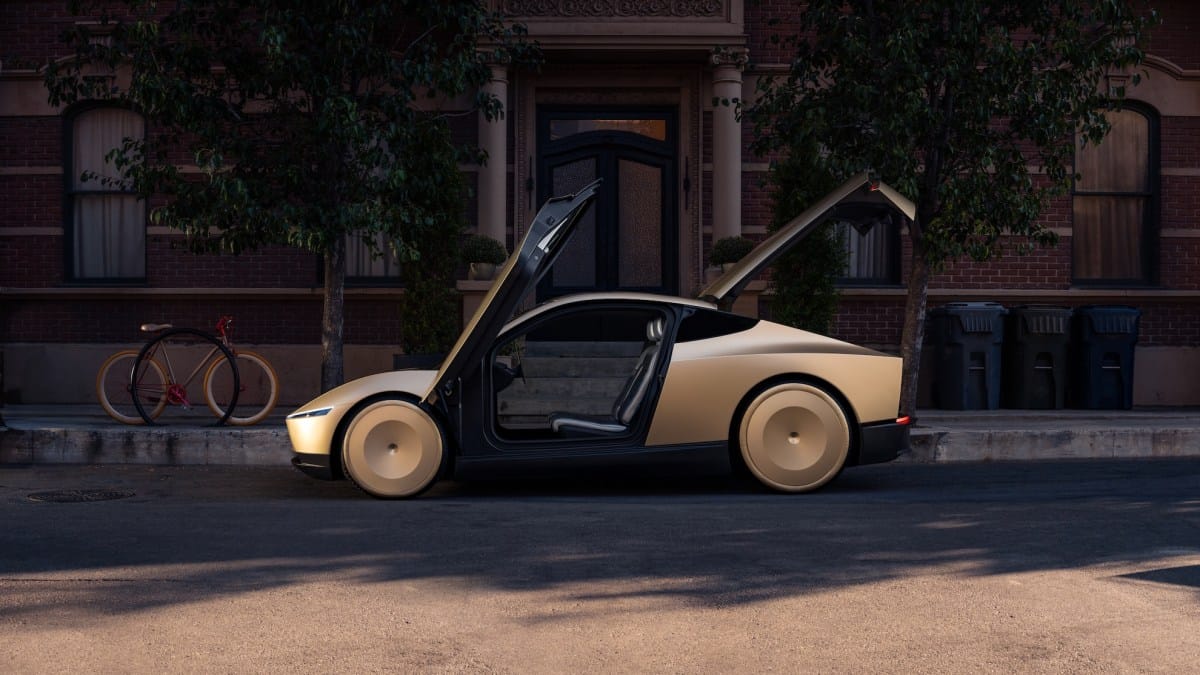
Tesla has announced that it will begin offering its innovative Cybercab to customers by the end of this year, even as federal regulators probe its compliance with vehicle safety standards. This gold-hued two-seater, which operates without a steering wheel or conventional controls, is stirring excitement in the automotive community.
Key Updates on the Cybercab
During Tesla’s third-quarter earnings call, Vice President of Engineering Lars Moravy confirmed that the initial units of the Cybercab will mainly serve the company’s own robotaxi fleet. Moravy emphasized a cautious approach, stating that they’ll start small, gradually scaling up as they learn about delivery, ownership, and fleet management of these autonomous vehicles.
The possibility of selling Cybercabs to third parties was first mentioned during Tesla’s Cybercab event in Austin last month, which generated considerable interest. A form for potential buyers was even made available, although doubts lingered regarding how seriously Tesla would pursue this venture.
Elon Musk’s Vision for Autonomous Transport
Elon Musk’s aspirations for a vast fleet of low-cost robotaxis have been part of his narrative for years. Initially, these plans revolved around transforming privately owned Tesla vehicles into self-driving taxis through software updates. However, recent commentary suggests a shift in strategy, focusing on manufacturing dedicated robotaxis instead.
At present, Tesla owners can subscribe to Full Self-Driving (Supervised), an advanced driver-assistance system that automates several driving functions, yet requires human input. The company continues to roll out software updates aimed at enhancing system capabilities, although the need for driver engagement remains a crucial element—evidenced by numerous videos depicting users stretching these boundaries.
Future Timeline for Self-Driving Features
Musk has mentioned that an unsupervised version of Full Self-Driving, which would allow complete autonomy, is targeted for release in the second quarter of next year. However, this introduces yet another delay for Tesla owners who have been eagerly waiting for these capabilities.
If both timelines are accurate, third-party fleet operators could potentially acquire the Cybercab and commence robotaxi services prior to existing Tesla owners receiving similar autonomy features in their vehicles.
The Cybercab: A New Era of Ride-Hailing
Musk clarified that the Cybercab is intended for use as a ride-hailing vehicle rather than a privately owned car. “The Cybercab is primarily going to be something that is offered as transport as a service,” Musk stated, differentiating it from Tesla’s traditional offerings like the Model 3 and Model Y, which are designed for ownership.
He further noted that most Cybercabs would be utilized as Tesla-owned transport services, emphasizing a service-oriented approach to this new vehicle.
Regulatory Challenges Ahead
Despite the excitement, Tesla’s plans for the Cybercab are not without challenges. The National Highway Traffic Safety Administration (NHTSA) has recently opened an investigation into the vehicle’s safety, just as it commenced operations on public streets in Austin.
Federal Motor Vehicle Safety Standards (FMVSS) necessitate the inclusion of manual controls such as brake pedals, along with features like rearview and side mirrors. Automakers typically self-certify compliance with these regulations, which Tesla has done. However, current rules do not account for vehicles that lack manual controls, although recent proposals from the Department of Transportation aim to relax these requirements for fully autonomous vehicles.
The ongoing investigation by the NHTSA will scrutinize the processes and technical data Tesla used to certify the Cybercab, potentially impacting the vehicle’s future operations.
Conclusion: A New Frontier in Transportation
As Tesla approaches the launch of the Cybercab, both anticipation and skepticism are in the air. With the potential to redefine transportation through autonomous ride-hailing services, the company is at the forefront of an evolving automotive landscape. However, regulatory scrutiny may prove to be a significant hurdle that Tesla will need to navigate in its ambitious journey toward an autonomous future.