
Venture capital fund strategy determines which startups a fund backs, how much it invests, when it reserves money for follow-on rounds and how it aims to return capital to its investors. Understanding that strategy is useful not only for institutional investors, but also for founders deciding which venture firms to approach and how to assess an investment offer.
A venture capital fund usually pools commitments from limited partners (LPs). A general partner (GP) and its investment team manage the fund, select startups and oversee investments. The fund may invest over several years, hold shares while companies grow and eventually return money through acquisitions, public listings or secondary share sales. The details vary by fund, and the partnership agreement sets the rules.
This guide explains how VC funds work, what LPs evaluate before committing capital, how fund managers make portfolio decisions, which performance numbers matter and what founders should ask a potential investor. It also looks at why AI investment concentration, faster deployment and secondary transactions have become important parts of the venture conversation.
What is a venture capital fund strategy?
A venture capital fund strategy is the written and practical plan that guides a fund’s investment decisions. It describes the kinds of companies the fund wants to back, the stages it targets, the markets it understands, the size of its investments and how it expects to generate returns.
A clear strategy helps the fund avoid chasing every popular deal. It also gives LPs a way to judge whether the manager has a credible advantage in finding, evaluating and supporting the companies it chooses.
A fund strategy normally covers:
- Investment stage: Pre-seed, seed, Series A, later-stage growth or a combination of stages.
- Sector focus: Areas such as enterprise software, AI, fintech, healthcare, climate technology, cybersecurity or consumer products.
- Geography: A local market, a country, a region or a global mandate.
- Initial investment size: The usual first cheque and the ownership stake the fund wants to achieve.
- Portfolio construction: The number of companies, target ownership, concentration limits and diversification approach.
- Follow-on reserves: How much capital is kept available for later rounds in companies already backed.
- Exit approach: How the fund expects to realise value through acquisitions, public listings, secondary sales or other transactions.
How venture capital funds work: LPs, GPs and startups
Most traditional VC funds are structured as private investment vehicles. The fund pools money from investors and deploys it according to its agreed mandate. The two central roles are the limited partners and the general partner.
| Participant | Main responsibility |
|---|---|
| Limited partners (LPs) | Commit capital to the fund. They may include pension funds, endowments, foundations, family offices, institutions and eligible private investors. |
| General partner (GP) | Controls and manages the fund under its governing documents. The GP and investment team source deals, conduct due diligence, make investment decisions and manage the portfolio. |
| Management company | Typically employs the investment team and handles the operating work of the VC firm. It commonly receives management fees under the fund documents. |
| Portfolio companies | Startups that receive investment capital, usually in exchange for equity or another agreed security. |
The LP normally does not select each startup or run the fund’s daily operations. Those decisions are delegated to the GP within the limits of the fund agreement. LPs receive reports and distributions according to the fund’s terms and may have specific consent or advisory rights for certain matters.
How money moves through a VC fund
VC investors usually make a capital commitment rather than transferring the entire amount to the fund on the first day. The GP calls capital as the fund needs it for investments, fees and expenses, subject to the partnership agreement.
- Fundraising: The GP presents its strategy, team, track record, target fund size and legal documents to potential LPs.
- Commitments: LPs agree to contribute a specified amount over the fund’s life, subject to the contract.
- Capital calls: The fund requests portions of committed capital when money is needed. LPs must meet valid calls within the notice period set out in the documents.
- Investments: The GP uses the called capital to purchase stakes in startups and may reserve money for follow-on rounds.
- Portfolio support: The fund may help companies with hiring, strategy, customer introductions, governance and later fundraising.
- Exits and distributions: When investments are sold or otherwise generate distributable proceeds, the fund allocates money under its agreed distribution waterfall.
Venture funds are generally long-term and illiquid. LPs should not assume that they can withdraw their commitments whenever they want. The U.S. Securities and Exchange Commission explains that venture funds typically invest in private, illiquid businesses, call capital over time and limit investors’ ability to withdraw. The precise legal treatment depends on the fund’s jurisdiction and documents.
What do LPs look for before investing in a VC fund?
LP due diligence is not simply a review of the GP’s most impressive startup investment. Investors need to understand whether the fund manager can repeat its process, manage conflicts and return capital over a full investment cycle.
1. The investment team and decision-making process
LPs examine the experience of the partners, how responsibilities are divided and who actually makes investment decisions. They may ask how the team handles disagreements, whether key partners are expected to remain involved and what happens if a senior decision-maker leaves.
A strong individual track record is useful, but it is important to know whether the returns came from the same team, strategy and access that the new fund will use. A person’s success at a previous firm does not automatically prove that a new fund can reproduce it.
2. Track record: realised returns versus paper gains
LPs should separate cash already returned from estimates of what remaining startup shares might be worth. A portfolio company can raise a new round at a higher valuation without providing cash to the fund. That valuation is not the same as a completed exit.
Ask for deal-by-deal attribution, including the partner responsible, entry date, investment amount, ownership, follow-on capital, current valuation method and realised proceeds. Review both successful investments and write-offs. A fair track record explains the losses as well as the winners.
3. Fund strategy and portfolio construction
The fund size must make sense for its stated investment stage. A large fund that says it will lead very early seed rounds may need a different portfolio and ownership model from a fund that writes large growth-stage cheques.
LPs should understand how many companies the GP expects to back, how much ownership it targets, how many follow-on rounds it can support and what happens if the best companies need more capital than expected. A strategy that depends on a few unusually large winners should be evaluated with that concentration risk in mind.
4. Fees, expenses and carried interest
Management fees pay for operating the investment business, while carried interest gives the GP a share of profits under the fund’s distribution rules. The familiar “2 and 20” description refers to a 2% management fee and 20% carried interest, but actual arrangements vary. The fee base may change over time, and the agreement may include fee offsets, hurdles, preferred returns, catch-up provisions and expense limits.
LPs should read exactly which costs are charged to the fund, which are paid by the management company, how broken-deal expenses are treated and whether fees are reduced by transaction or monitoring income. The headline percentage does not tell the whole story.
5. Governance, conflicts and transparency
Potential conflicts include investments made across multiple funds managed by the same firm, allocation of scarce shares between funds, transfers of assets between related vehicles, co-investment opportunities and transactions with affiliates. LPs should ask how these situations are disclosed, approved and recorded.
The Institutional Limited Partners Association (ILPA) identifies alignment of interests, fund governance and transparency as central principles for private fund partnerships. Its guidance also addresses fund economics, key-person provisions, reporting and cross-fund investments.
6. Liquidity and the fund’s time horizon
Startup shares can take many years to become liquid. A manager may expect a company to list publicly or be acquired, but those events are uncertain and may take longer than planned. LPs should understand the fund term, extension rights, distribution policy and circumstances in which the GP may sell a position in a secondary transaction.
VC fund performance metrics: IRR, DPI, TVPI and MOIC
One performance number is never enough to assess a venture fund. Different metrics answer different questions, and unrealised valuations can make an early-stage fund look stronger than the amount of cash it has actually returned.
| Metric | What it measures | What to watch |
|---|---|---|
| IRR | Annualised return that accounts for the timing of cash flows. | Can be affected by the timing of capital calls and distributions. Compare funds with similar vintages and methodology. |
| DPI | Cash distributed to LPs divided by capital paid in. | Shows realised cash returned, not the estimated value of shares still held. |
| RVPI | Remaining unrealised portfolio value divided by paid-in capital. | Depends on valuation assumptions and is not guaranteed cash. |
| TVPI | Distributions plus remaining portfolio value, divided by paid-in capital. | Combines realised and unrealised value, so review the quality of portfolio valuations. |
| MOIC | Value returned or attributed to an investment divided by the capital invested. | Often reported gross of fund fees and carry. Check whether the figure is gross or net. |
Simple illustration: Imagine LPs have paid $80 million into a fund. The fund has distributed $24 million and reports that its remaining holdings are worth $56 million. In this simplified example, DPI is 0.30x ($24 million divided by $80 million), RVPI is 0.70x ($56 million divided by $80 million), and TVPI is 1.00x. The fund has returned some cash, but the remaining value is still based on holdings that have not yet been sold.
When comparing funds, check whether the numbers are gross or net of fees, expenses and carried interest. Compare funds from similar vintage years and investment stages, and review how much of the reported value has actually been distributed. Carta’s guides explain the differences between DPI, TVPI, RVPI, IRR and MOIC in more detail.
What does a 2-and-20 VC fee structure mean?
Under a simplified 2-and-20 arrangement, a fund may charge an annual management fee equal to 2% of a specified fee base and allocate 20% of eligible profits to the GP as carried interest. The agreement determines how those calculations work.
For example, if a $100 million fund charged a 2% annual management fee on the full committed capital for a particular year, the fee for that year would be $2 million. This is an illustration only. Many agreements change the fee base after the investment period, apply offsets or calculate fees using different definitions.
Carried interest is also not necessarily paid as soon as one investment makes a profit. The distribution waterfall may require return of capital, a preferred return or other conditions first. Some funds calculate carry deal by deal, while others use a whole-fund approach. LPs should examine the exact waterfall, clawback and escrow provisions with qualified advisers.
Why venture capital funds are concentrating on AI companies
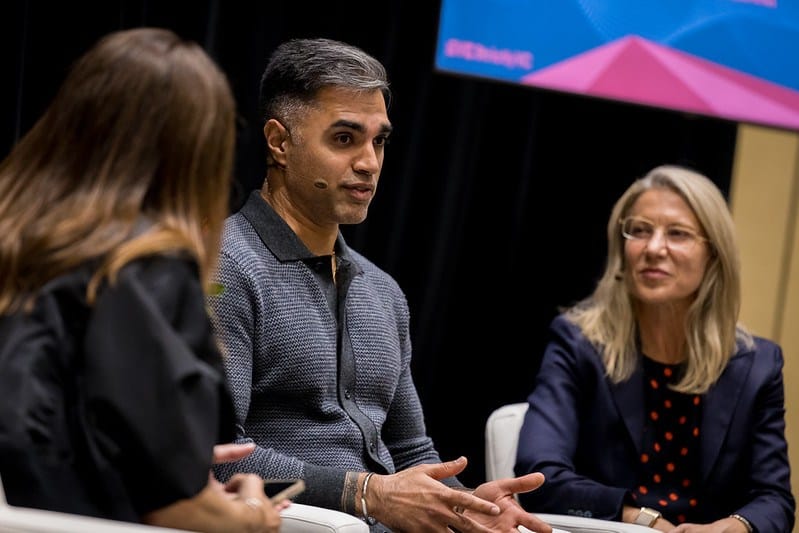
AI investment has intensified the debate about portfolio concentration. In an October 2026 interview, TechCrunch spoke with Beezer Clarkson of LGT Capital Partners and Amit Bhatti of TrueBridge about the way limited partners are responding to the AI funding cycle.
The investors described how multiple venture funds can end up holding stakes in the same highly valued companies, including OpenAI and Anthropic. They noted that venture returns often follow a power-law pattern, where a small number of successful investments can account for a large share of a fund’s returns. However, they also cautioned that the speed of investment and concentration can create risks.
The interview described some funds returning to LPs for new capital after only 12 to 18 months, compared with a more typical two-to-three-year deployment pace discussed by the interviewees. Larger funding rounds and bigger seed cheques can accelerate a fund’s deployment. This is a description of the managers interviewed, not a universal rule for every VC fund.
Concentration is not automatically wrong. It can reflect a manager’s conviction and the economics of venture investing. The relevant questions are whether the exposure fits the fund mandate, whether follow-on capital is reserved, how valuations are assessed and what happens if one or two major holdings disappoint.
What is fund pacing, and why does it matter?
Fund pacing is the speed at which a manager calls capital and makes investments. A GP that deploys capital too slowly may struggle to build the intended portfolio or may face pressure from market conditions. A GP that invests too quickly may have less time to compare opportunities, negotiate terms or reserve enough money for follow-on rounds.
LPs should ask the GP to show a deployment schedule with realistic assumptions. The plan should explain the expected number of new investments each year, cheque sizes, follow-on reserves, target ownership and the amount of capital held back for fees and expenses.
A faster deployment pace is not automatically evidence of a weak strategy. It should be judged against the size of the fund, investment stage, quality of opportunities, concentration limits and the team’s ability to source and support companies.
How venture capital secondary markets work
A secondary transaction involves the sale of an existing private-company share or fund interest rather than the company issuing new shares in a primary fundraising round. In venture capital, this can provide liquidity before an IPO or acquisition.
Common examples include:
- Employee share sales: A company may run a tender offer that lets employees sell some vested shares, subject to the programme’s terms.
- Founder liquidity: A founder may sell a limited portion of their holdings, although investors may scrutinise the timing and amount.
- VC stake sales: A venture fund may sell part of an existing holding to another investor.
- LP interest sales: An LP may seek to sell its interest in a private fund to a secondary buyer, subject to transfer restrictions and GP consent.
Secondary sales can return cash earlier and reduce exposure, but they may involve discounts, consent requirements, transfer restrictions and limited buyer demand. A quoted valuation is not proof that a transaction can be completed at that price. The fund agreement and company documents may impose important conditions.
What emerging VC managers need to prove
New managers do not always need to launch a large fund. The LPs interviewed by TechCrunch described backing emerging managers with differentiated theses, relevant networks and evidence that they can identify promising companies. Some start with relatively small funds to establish a track record before raising larger vehicles.
For a first-time GP, the strongest fundraising case usually explains:
- Why this fund should exist: A focused thesis or market access that is meaningfully different from existing firms.
- Where deal flow comes from: Evidence of founder relationships, sourcing channels and access to the target market.
- How decisions are made: A repeatable evaluation process, investment committee responsibilities and conflict controls.
- What the fund can realistically support: A target fund size that matches cheque sizes, ownership goals and the number of investments.
- How the GP is aligned: A meaningful personal commitment where feasible, clear fee terms and transparent reporting.
- What happens when a company needs more capital: A follow-on reserve plan and a policy for deciding which investments receive additional support.
LPs may prefer a smaller fund with a credible and differentiated strategy over a larger fund that lacks clear access or investment discipline. The manager should be able to explain the fund’s purpose without relying only on the popularity of AI or another fashionable sector.
What startup founders should ask a VC before accepting investment
Founders should understand the investor’s fund structure and time horizon, not just the valuation and cheque size. A VC firm can manage several funds with different mandates, reserves and investment periods. The person leading your round may not have the same authority or capital available as the wider firm.
Before accepting an offer, founders can ask:
- Which specific fund will make the investment, and what stage or sector does that fund target?
- How much capital remains available for new investments and follow-on rounds?
- Does the fund have a dedicated reserve for existing portfolio companies?
- Who makes the final investment decision, and what is the expected decision timeline?
- What support can the partner realistically provide beyond the money?
- How does the firm handle conflicts if two portfolio companies compete in the same market?
- What reporting, board representation, information rights and consent rights are included in the proposed documents?
- Are there any unusual liquidation preferences, anti-dilution terms, veto rights or founder restrictions?
Founders should have qualified legal and financial advisers review the term sheet and definitive investment documents. A high valuation may look attractive, but governance rights, liquidation preferences, dilution and future fundraising flexibility can matter just as much over the life of a startup. For the operating side of the journey, see our practical guide on how startups can win customers without going viral.
VC fund due diligence checklist for LPs
Before signing a commitment, LPs can use this checklist to organise questions for the GP and professional advisers.
- Strategy: Is the fund mandate specific, credible and consistent with the manager’s experience?
- Track record: Are returns attributable to the current team? Are realised and unrealised results clearly separated?
- Portfolio: Are fund size, cheque sizes, concentration limits and follow-on reserves aligned?
- Economics: Are management fees, carry, expenses, offsets, hurdles and the distribution waterfall clear?
- Governance: Are key-person events, conflicts, affiliated transactions and cross-fund allocations addressed?
- Reporting: Will investors receive regular financial statements, portfolio updates, valuation explanations and audited accounts where required?
- Operations: Are fund administration, cybersecurity, data protection and record keeping adequate?
- Legal documents: Have the limited partnership agreement, private placement memorandum and subscription documents been reviewed?
- Liquidity: Can the LP meet capital calls and hold the investment for the full fund term without relying on a quick exit?
- Risk: What happens if key companies fail, the market closes or the GP cannot raise its next fund?
Common warning signs when evaluating a venture fund
No single warning sign automatically proves that a fund is unsuitable, but several issues deserve deeper investigation:
- Performance claims focus on the highest paper valuations but do not show realised cash returned to LPs.
- The manager cannot explain how investment decisions are attributed to individual partners or how losses are handled.
- The fund size is inconsistent with its stated stage, cheque sizes or portfolio target.
- There is no clear plan for follow-on rounds or the manager assumes every future round will be funded by another investor.
- Fees and fund expenses are hard to understand, or related-party transactions are not clearly disclosed.
- The team depends on one individual but has no workable key-person or succession provisions.
- The GP repeatedly changes its strategy to follow fashionable sectors without explaining how the change fits the original mandate.
- The fund presents unrealised valuations as if they were cash proceeds available for distribution.
Are venture capital funds suitable for every investor?
No. VC fund investments are generally private, high risk and illiquid. Startups can fail, valuations can fall, exits may be delayed and investors may lose some or all of their capital. LPs usually cannot redeem their interests whenever they choose, and capital calls may arrive over time.
Private fund access is also restricted by the laws of the relevant jurisdiction and by the fund’s own eligibility conditions. The SEC’s materials describe U.S. private-fund structures and U.S. securities rules; they should not be treated as a guide to eligibility or legal requirements in India or another country. Anyone considering a private fund should obtain jurisdiction-specific legal, tax and investment advice.
Frequently asked questions about venture capital fund strategy
What is the difference between an LP and a GP in venture capital?
An LP commits capital to a VC fund but generally does not manage its day-to-day investments. The GP manages the fund, selects startups and oversees the portfolio according to the fund agreement.
How does a venture capital fund make money?
A VC fund aims to generate returns by buying equity or other securities in startups and later realising value through acquisitions, IPOs or secondary sales. The fund distributes proceeds to investors under its legal waterfall, after applicable fees, expenses and carried interest.
What is a capital call?
A capital call is a formal request by the fund for an LP to contribute part of its committed capital. The notice period and consequences of failing to fund a valid call are set out in the fund documents.
What does 2 and 20 mean in VC?
It commonly describes a 2% management fee and 20% carried interest, but the exact fee base, timing, hurdles, expenses and distribution rules vary by fund.
What is DPI in venture capital?
DPI means distributions to paid-in capital. It measures how much cash a fund has returned to LPs compared with the capital they have paid in. It excludes the estimated value of investments that the fund still holds.
Why do VC funds reserve money for follow-on investments?
Reserves allow a fund to invest additional capital in portfolio companies during later funding rounds. Without reserves, the fund may be unable to maintain its ownership or support companies that need more capital.
What is a secondary sale in venture capital?
A secondary sale transfers existing shares or fund interests from one holder to another. It can provide liquidity before an IPO or acquisition, but it may require approvals and may occur at a discount.
Can a VC fund lose all its money?
Yes. Startups can fail, and a fund can lose its entire investment in an individual company. A diversified portfolio can reduce dependence on one company, but it does not eliminate the risk of losing capital.
Official guidance and further reading
- U.S. SEC: Private Funds – explains how private funds pool LP capital and how venture funds generally invest in private companies.
- U.S. SEC: Starting a Private Fund – outlines fund commitments, capital calls, private-fund structures and fundraising considerations under U.S. rules.
- Institutional Limited Partners Association: ILPA Principles – guidance on alignment, governance, fund economics and transparency.
- Carta: Fund Economics Report 2025 – data on venture fund fees, carried interest, GP commitments and capital deployment.
- Carta: Venture capital fund performance metrics – explains IRR, MOIC, DPI, RVPI and TVPI.
- TechCrunch: The investors behind the VCs discuss concentration, payouts and fund pacing – interviews with Beezer Clarkson and Amit Bhatti about current venture capital trends.
- Carta: Private fund management – an overview of fund management and the lifecycle of a private fund.
Conclusion
A strong venture capital fund strategy is more than a list of popular startups or a promise to invest in the next big technology trend. It connects the manager’s experience to a clear investment mandate, realistic portfolio construction, disciplined capital deployment, transparent economics and a credible plan for returning money to LPs.
LPs should look beyond headline valuations and focus on realised performance, fees, governance, concentration and liquidity. Founders should understand which fund is investing, how much follow-on capital may be available and what rights come with the term sheet. These questions help both sides build a more informed relationship and make better decisions in a market where opportunities and risks often rise together.
This article is for general education and is not investment, legal or tax advice. Private fund terms, eligibility and regulations vary by jurisdiction and by individual fund documents.