Diarrhoea can lead to dehydration when the body loses more water and salts than it can replace. The most important first step is to start replacing those losses early. Oral rehydration solution (ORS) is designed for this purpose and is recommended for diarrhoea-related dehydration in children and adults.
For families in India, ORS sachets are widely available through pharmacies and public health facilities. Correct preparation matters: the amount of water required can differ between packet sizes, so always read the instructions printed on the specific sachet. This guide explains how to prepare ORS safely, what to do after vomiting, how to continue food and breastfeeding, and when diarrhoea needs medical care.
What is diarrhoea and why can it cause dehydration?
The World Health Organization defines diarrhoea as passing three or more loose or liquid stools in a day, or passing stools more frequently than is normal for that person. A change in a breastfed baby’s stool pattern needs to be judged against that baby’s usual pattern; naturally soft stools alone do not automatically mean diarrhoea.
Diarrhoea is often caused by infections from viruses, bacteria or parasites. These can spread through contaminated food or drinking water, unclean hands, unsafe storage or contact with infected stool. During diarrhoea, the body loses water and electrolytes such as sodium and potassium through stools and sometimes vomiting. If these losses are not replaced, dehydration can develop.
Most short episodes are acute, but bloody diarrhoea and diarrhoea lasting 14 days or longer need medical assessment. The cause cannot be identified reliably from stool colour or frequency alone.
What is ORS and how does it work?
Oral rehydration solution is a carefully balanced mixture of clean water, glucose and salts. The glucose helps the intestine absorb sodium and water, replacing fluid and electrolytes lost in diarrhoea. ORS does not necessarily stop diarrhoea immediately; its main purpose is to prevent or treat dehydration while the illness runs its course or receives other medical care.
ORS is useful for children and adults. It is especially important for young children, older adults and people who are losing substantial fluid through frequent watery stools or vomiting. Severe dehydration, shock or inability to drink may require urgent hospital treatment and intravenous fluids.
How to prepare an ORS packet correctly
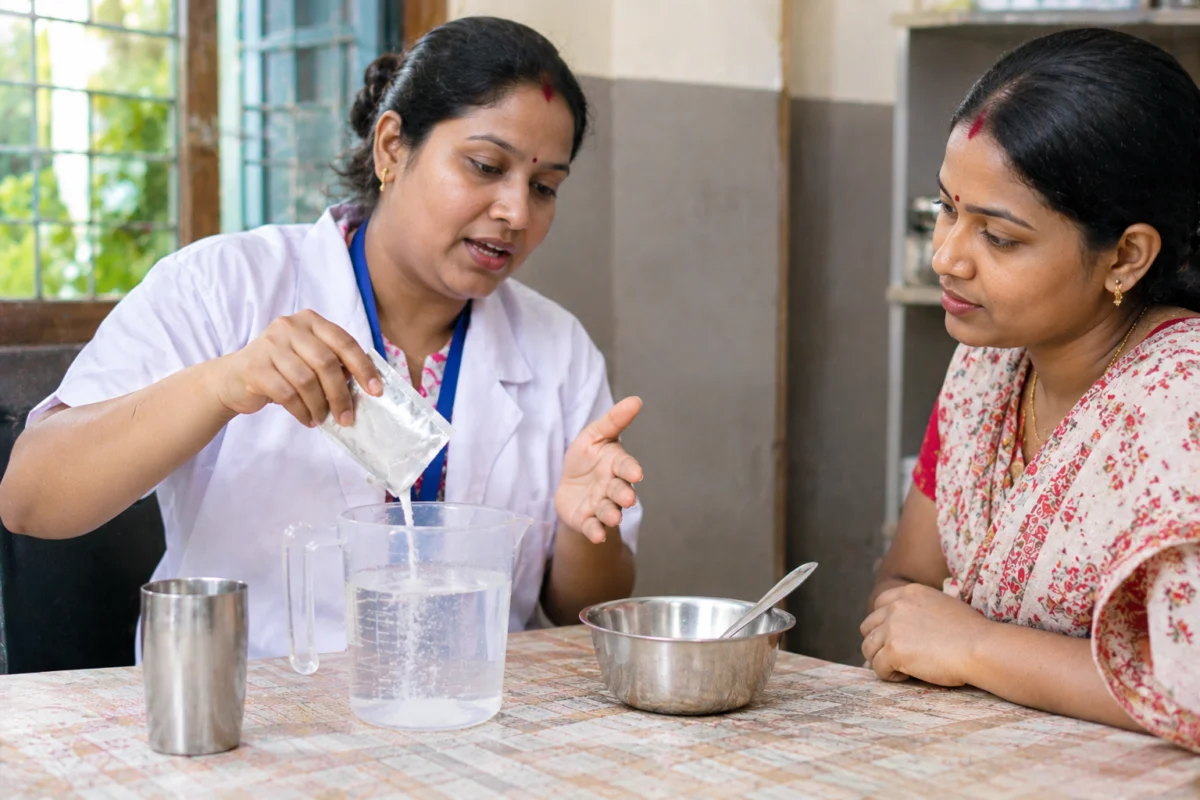
Use a commercially prepared ORS sachet whenever possible. Follow the exact water volume printed on the packet. Many standard household ORS sachets are designed for one litre of water, but smaller packets may be intended for a different volume. Do not assume that every sachet is for one litre.
- Wash your hands: use soap and safe water before handling the packet or mixing container.
- Read the packet: check the instructions and identify the exact quantity of water required for that sachet.
- Measure safe water: use clean drinking water. When the safety of tap or stored water is uncertain, boil it and allow it to cool before mixing.
- Empty the whole sachet: pour all the powder into a clean container large enough for the required amount of water. Do not estimate half a packet or save part of the dry powder for later.
- Add the measured water: use exactly the amount stated on the label. Too little or too much water changes the salt concentration.
- Stir until dissolved: mix with a clean spoon until the powder has dissolved, then keep the solution covered in a clean container.
Important: do not add extra salt, sugar, juice, milk or flavouring. Do not mix the powder into less water to make it stronger. Do not boil the prepared ORS solution. If you are unsure about the sachet size or measurement, ask a pharmacist or health worker before preparing it.
How long can prepared ORS be used?
Prepare ORS in a clean container and keep it covered. The Indian National Health Mission’s child-health guidance says to discard any prepared ORS remaining after 24 hours. Do not keep yesterday’s solution for another day. Make a fresh batch using a new sachet and the correct volume of water when needed.
Use a clean cup or spoon to give the solution. Avoid repeatedly dipping used spoons, feeding bottles or hands into the storage container, as this can contaminate the ORS.
What if an ORS packet is not available?
As a temporary option, the World Health Organization gives a home-made sugar-salt solution recipe for situations where ORS sachets are unavailable:
- 1 litre of safe drinking water
- 6 level teaspoons of sugar
- Half a level teaspoon of salt
Stir until the sugar and salt dissolve. Use level measuring teaspoons, not heaped household spoons. Too much salt can be dangerous, so do not guess the quantities. This home recipe is a temporary alternative, not a reason to delay obtaining a standard ORS sachet or seeking medical care when danger signs are present.
How much ORS should you give?
For an adult who is awake and able to drink, offer frequent small sips and continue replacing fluid after each watery stool. Drink according to thirst and ongoing losses. People with heart failure, advanced kidney disease or a prescribed fluid restriction should seek individual medical advice because their fluid needs may differ.
For children, India’s National Health Mission IMNCI guidance recommends extra fluids after each loose stool, in addition to the child’s usual intake. The guidance gives the following approximate amounts for children who are being managed at home:
| Child’s age | Extra fluid after each loose stool |
|---|---|
| Up to 2 months | About 5 spoonfuls |
| 2 months to under 2 years | 50–100 ml |
| 2 years and older | 100–200 ml |
Offer more if the child wants and can drink. These are home-care amounts, not a substitute for clinical assessment. A child with signs of dehydration may need supervised ORS treatment at a health centre; severe dehydration requires urgent referral.
What should you do if the person vomits ORS?
Vomiting once does not mean ORS has failed. If a child vomits, India’s IMNCI guidance advises waiting about 10 minutes and then restarting more slowly, with small spoonfuls or sips every minute or two. If the person keeps vomiting and cannot retain fluids, seek medical care promptly. Do not force large amounts at once.
For a child who is repeatedly vomiting, becoming sleepy or unable to drink, do not keep trying home treatment instead of getting urgent help.
Continue breastfeeding, milk and food
Do not stop breastfeeding during diarrhoea. Breastfeed more frequently and for longer if the baby wants, and give ORS in addition when there are frequent watery stools. Continue the child’s usual age-appropriate food. Offer small, frequent meals if appetite is reduced and return to the normal diet as the child improves.
For older children and adults, continue nourishing food as tolerated rather than fasting. Rice, dal, khichdi, curd or other familiar foods may be easier to manage, depending on the person’s tolerance. Safe water and other appropriate fluids can support hydration, but they do not replace ORS when significant salt and fluid losses are occurring.
Avoid relying on soft drinks, energy drinks or very sweet packaged juices to treat dehydration. High-sugar drinks can worsen diarrhoea in some situations and do not have the balanced electrolyte composition of ORS.
Does a child with diarrhoea need zinc?
Indian National Health Mission IMNCI guidance includes a 14-day course of zinc supplementation for children with acute diarrhoea. The guideline specifies age-based amounts for children aged 2 months to 59 months. A parent should confirm the appropriate product and dose with a doctor, ASHA, ANM or other qualified health worker, particularly for an infant or a child with another medical condition. Do not give adult zinc tablets or guess a child’s dose.
Zinc is an additional part of child-diarrhoea care; it does not replace ORS, continued feeding, breastfeeding or medical assessment when danger signs occur. Zinc is not a routine self-treatment recommendation for every adult with diarrhoea.
Warning signs of dehydration
Watch the person closely, especially a baby, young child or older adult. Possible signs of dehydration include:
- More thirst than usual or eagerly drinking fluids
- Dry mouth or tongue
- Passing less urine than usual, or urine becoming unusually dark
- Sunken eyes
- Unusual tiredness, weakness, irritability or restlessness
- Dizziness, particularly on standing
In children, health workers assess several signs together. The WHO and Indian IMNCI guidance classify severe dehydration when at least two key findings are present, such as lethargy or unconsciousness, sunken eyes, inability to drink or drinking poorly, or a skin pinch that returns very slowly. Do not wait to count signs if the child looks seriously unwell.
When should you seek urgent medical care?
Seek urgent medical help for any of the following:
- Severe dehydration: confusion, fainting, unusual drowsiness, very little urine, inability to drink, marked weakness, sunken eyes or a very slow skin-pinch return.
- Unable to keep fluids down: repeated vomiting that prevents the person from drinking enough, or a child who vomits everything.
- Blood in the stool: visible red blood or black, tar-like stool needs medical assessment.
- Severe or worsening illness: severe abdominal pain, high fever, fast deterioration, or signs of shock such as cold extremities and collapse.
- High-risk person: a very young infant, older adult, pregnant person, someone with kidney or heart disease, diabetes, weakened immunity or another serious medical condition who is becoming dehydrated or cannot maintain fluid intake.
- Persistent diarrhoea: diarrhoea lasting 14 days or more requires medical assessment. Do not wait this long if there is blood, dehydration or another danger sign.
For children, the Indian IMNCI guidance also treats inability to drink or breastfeed, vomiting everything, lethargy or unconsciousness, and convulsions as general danger signs requiring urgent assessment. A child with blood in the stool or diarrhoea lasting 14 days or more should be referred for medical evaluation.
Do you need antibiotics or anti-diarrhoea medicine?
Not usually. Many acute episodes are caused by viruses or organisms that resolve without antibiotics. The ICMR Antimicrobial Resistance Treatment Guidelines, updated online on 23 November 2026, state that antibiotics are not required for acute-onset diarrhoea without danger signs and recommend oral hydration with ORS or other appropriate fluids. Persistent or chronic diarrhoea needs investigation rather than repeated self-prescribed antibiotics.
Blood in the stool, severe dehydration, immune suppression, poor oral intake in an older person or suspected cholera requires prompt clinical assessment. A clinician may decide whether testing, specific treatment, antibiotics or intravenous fluids are necessary. Do not take leftover antibiotics or give adult anti-diarrhoea medicines to a child without medical advice. Some medicines that slow bowel movements are unsuitable in bloody diarrhoea or fever.
How can you prevent diarrhoea at home?
- Use safe drinking water: drink water from a safe source. If its safety is uncertain, boil or treat it appropriately, then store it in a clean, covered container.
- Wash hands with soap: especially after using the toilet, cleaning a child, changing nappies, before preparing food and before eating.
- Keep food safe: cook food thoroughly, eat it fresh when possible, cover it and refrigerate perishable leftovers promptly.
- Keep utensils and surfaces clean: wash cutting boards, cups, feeding utensils and cooking surfaces carefully.
- Use toilets and dispose of waste safely: keep human waste away from drinking-water sources and food preparation areas.
- Breastfeed infants: exclusive breastfeeding for the first six months and continued breastfeeding with age-appropriate complementary feeding support child health.
- Keep vaccinations up to date: ask your health worker about routine immunisation, including rotavirus vaccination for infants under India’s immunisation schedule.
What to keep in a home diarrhoea-care kit
A small household kit can help you start rehydration promptly while arranging care when needed. Consider keeping sealed ORS sachets within their expiry date, a clean one-litre measuring bottle or jug, a clean covered mixing container, a spoon and soap. Check the packet’s water-volume instructions before storing it with measuring equipment. Keep medicines out of children’s reach.
Frequently asked questions
Can I mix an ORS sachet in less water to make it stronger?
No. Always use the exact volume printed on the packet. A solution mixed too concentrated or too dilute can be unsafe or less effective.
Can I add sugar, salt, lemon or juice to prepared ORS?
No. Do not add anything to a prepared ORS sachet. Extra salt or sugar changes its carefully balanced composition. Prepare it exactly as directed.
Can I use boiled water for ORS?
Yes. If water safety is uncertain, boil it and let it cool before adding ORS powder. Never pour the powder into hot or boiling water.
Should I stop breastfeeding when my baby has diarrhoea?
No. Continue breastfeeding, often more frequently. Give correctly prepared ORS in addition when needed and seek care if the baby has danger signs or is feeding poorly.
Is ORS only for children?
No. ORS can be used by adults as well as children to replace water and salts lost through diarrhoea. People on medically prescribed fluid restrictions should ask a clinician for individual advice.
Does ORS stop diarrhoea?
ORS mainly prevents or treats dehydration. It does not necessarily stop the loose stools or treat the infection causing them. Continue feeding and seek medical review when symptoms are severe, persistent or accompanied by danger signs.
How long can I keep prepared ORS?
Keep it covered and discard any remaining solution after 24 hours. Prepare a fresh batch when required.
Trusted medical resources
| Resource | What it explains |
|---|---|
| WHO: Diarrhoeal disease | Definition, dehydration, ORS, zinc and prevention. |
| Government of India: IMNCI Participant Module (2023) | Child dehydration assessment, ORS preparation, home fluids, zinc, feeding and referral signs. |
| National Health Mission: ASHA Home Visit Job Aid | Practical ORS instructions for families, including safe preparation and 24-hour disposal. |
| ICMR: Antimicrobial Resistance Treatment Guidelines, Acute Gastroenteritis | When antibiotics are not needed and when danger signs require clinical assessment. |
| WHO: Cholera questions and answers | Homemade sugar-salt solution as an emergency alternative and warning signs requiring care. |
Medical information notice: This article is for general education and does not replace a medical consultation, diagnosis or treatment plan. Dehydration can become life-threatening, especially in infants, young children and older adults. Seek urgent professional care when warning signs appear.