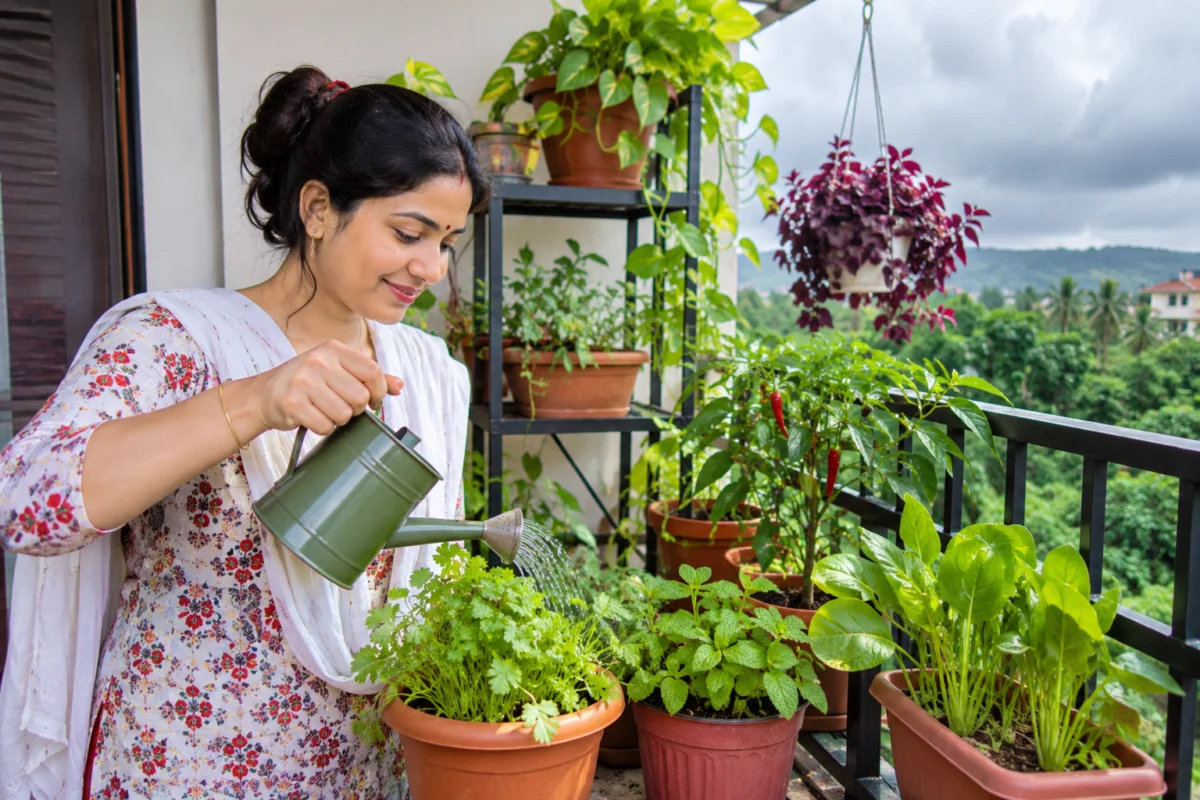
You do not need a large terrace or a backyard to grow herbs, leafy vegetables and a few flowering plants. A balcony, verandah or sunny window can become a small container garden if you match plants to the available light, use containers that drain properly and water according to the weather.
This beginner’s guide explains how to start a balcony garden in India with a small budget and a manageable number of plants. It covers sunlight, pots and grow bags, potting mix, easy plants, watering, seasonal care and common mistakes. It also includes practical precautions for apartments in Assam, where heavy rain, humidity and sudden storms make drainage and container safety especially important.
What is balcony gardening?
Balcony gardening is the practice of growing plants in pots, planters, grow bags or other suitable containers in a limited outdoor or semi-outdoor space. You can grow ornamental plants, herbs, leafy vegetables and some fruiting vegetables without a traditional garden bed.
Container gardening is flexible because you can move lightweight pots to follow sunlight, protect plants from heavy rain or rearrange the space as your plants grow. The main limits are light, container size, drainage, wind, safe load capacity and the time you can give to routine care.
Before buying plants: check your balcony
Spend two or three ordinary days observing the space before buying seeds or pots. The brightest part of a balcony may not receive direct sun for as long as you expect, particularly when nearby buildings, roofs or railings create shade.
- Track direct sunlight: note which areas receive direct sun and for roughly how many hours. Morning and afternoon exposure can differ.
- Check shade and reflected heat: a covered balcony may be bright but receive little direct sun. A glass wall or hot concrete surface can also increase heat.
- Observe wind and rain: note where gusts are strongest and where rainwater collects or blows into the balcony.
- Check drainage: identify where excess water will go. Do not allow runoff to stain or damage a neighbour’s balcony or the building exterior.
- Check safety and building rules: confirm whether pots, railing planters, screens or watering arrangements are permitted by your apartment association, landlord or building manager.
- Consider weight: wet soil, water-filled containers and large pots can be heavy. Do not assume a balcony or railing can support any arrangement you choose. Ask the building manager or a qualified structural professional if the load is uncertain.
Start with a few pots placed on the balcony floor or a stable surface. Avoid suspending heavy planters outside a railing or stacking containers where they could fall onto people below.
How much sunlight do balcony plants need?
Light requirements vary by plant and variety. As a broad starting point, many fruiting vegetables need several hours of direct sunlight, while some leafy greens, herbs and ornamental foliage plants can manage with less. The plant label or seed packet is more useful than applying one sunlight rule to every species.
| Balcony condition | Plants to consider | What to keep in mind |
|---|---|---|
| Several hours of direct sun | Chilli, tomato, brinjal, okra and many flowering plants | Use a sufficiently large container and provide support for taller or climbing plants. |
| Bright light with some direct sun | Coriander, methi, spinach, amaranth and some herbs | Watch for heat stress and adjust watering as the weather changes. |
| Bright shade or filtered light | Mint and shade-tolerant ornamental foliage plants | Growth may be slower; avoid placing sun-loving fruiting vegetables in deep shade. |
| Mostly shaded balcony | Suitable foliage plants and a small trial of shade-tolerant greens | Do not buy several vegetable seedlings until you have tested what can grow in that light. |
If the balcony receives very little natural light, focus on suitable foliage plants rather than expecting a large vegetable harvest. Rotate pots only when doing so is safe and does not expose shade-loving plants to sudden harsh sun.
Best beginner plants for an Indian balcony garden
Choose plants that suit your light, season, container depth and ability to water regularly. Start with two or three types rather than buying many seedlings at once.
1. Herbs and kitchen plants
- Coriander: useful for leaves in cooking. It generally does better when grown in a suitable season and may bolt quickly in hot conditions.
- Mint: grows well in a container and can spread quickly. Give it its own pot rather than letting it crowd slower plants.
- Green chilli: a compact plant can produce repeatedly when it receives adequate light and care.
- Tulsi: a familiar Indian balcony plant that needs suitable light and a pot with drainage.
- Spring onion: can be grown in a narrow container if it receives enough light and the growing medium does not stay waterlogged.
- Curry leaf: can be grown in a larger pot, but it needs space as it develops into a shrub.
2. Leafy vegetables
Methi, spinach, amaranth and mustard greens can be practical choices when the local season and balcony light are suitable. They are often easier for beginners than large fruiting crops because you can harvest leaves without waiting for a large plant to mature. Sow only the quantity you can use and follow the seed packet for spacing and season.
3. Fruiting vegetables
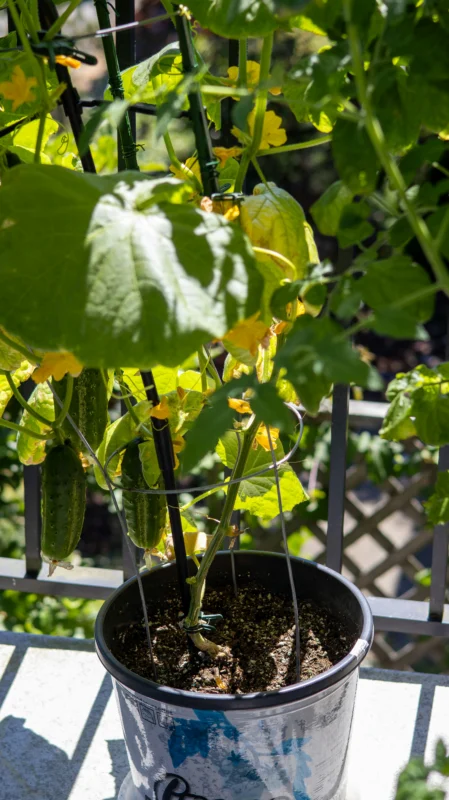
Tomato, brinjal, okra, beans and cucumber can grow in containers, but they generally need more light, root room and support than small herbs. Choose compact or container-suitable varieties where available. A climbing vegetable such as cucumber or beans needs a secure trellis or support that will not fall in wind.
4. Flowering and ornamental plants
Marigold, portulaca, hibiscus and other suitable local ornamentals can add colour to a balcony. Select varieties according to the available sunlight and season. Some flowering plants need full sun, while others prefer filtered light or shade.
The Government of India’s PM POSHAN kitchen-garden guidance lists a range of vegetables that can be grown in containers and advises choosing crops suited to local weather and topography, with help from a local Krishi Vigyan Kendra (KVK) or experienced growers. For an apartment balcony, use that as a starting reference, then scale the crop choice to your available pot size and light.
Choose the right pots, planters and grow bags
The container should give the roots enough room and allow excess water to escape. A pot without drainage holes can leave roots sitting in water, increasing the risk of root damage and fungal problems.
- Small pots: suitable for some herbs, seedlings and compact flowering plants.
- Medium pots: useful for many leafy greens, chillies and small vegetables, depending on the root system.
- Large pots or grow bags: better for plants that become taller or produce fruit, such as tomatoes, brinjal and some cucumbers.
- Railing planters: use only when they are specifically designed for the railing, secured according to their instructions and allowed by the building rules. Keeping containers inside the railing is safer than placing them on the outside edge.
Terracotta pots are porous and can dry faster, but they are heavy, especially after watering. Plastic pots and fabric grow bags are often lighter, although they still become heavier when filled with wet growing medium. Choose a stable base and avoid overcrowding the balcony.
You can reuse a clean bucket, tub or food-safe container if it is suitable for planting and has proper drainage. Never reuse a container that previously held kerosene, pesticides, industrial chemicals, paint solvents or other poisonous materials. The Government of India’s PM POSHAN guidance specifically warns against using containers that held toxic substances.
How to prepare potting mix for container plants
Plants in containers need a growing medium that holds enough moisture and nutrients while still allowing air and excess water to move through it. Heavy garden soil used on its own can compact inside a pot, especially after repeated watering.
For a simple beginner setup, use a good-quality ready-made potting mix suitable for the plant, or combine clean garden soil with mature compost and a lightweight aerating material such as cocopeat or another suitable component. The exact mix depends on the crop, local materials and how quickly the balcony dries out. Avoid using fresh, unfinished kitchen waste directly around roots.
- Garden soil: provides mineral material, but can be heavy in a container if used alone.
- Well-decomposed compost: contributes organic matter and nutrients. Use mature compost rather than fresh, hot or foul-smelling material.
- Cocopeat or another lightweight component: can improve moisture retention and reduce the weight of the mix, but it does not replace nutrients.
- Coarse material for aeration: a suitable horticultural material can help keep the mix open. Use clean material intended for gardening.
Do not fill the bottom of a pot with stones as a substitute for drainage holes. Keep the drainage openings clear and use a suitable growing medium throughout the container. Place a tray below the pot only if it can be emptied regularly; do not leave standing water for long periods.
How to start a balcony garden step by step
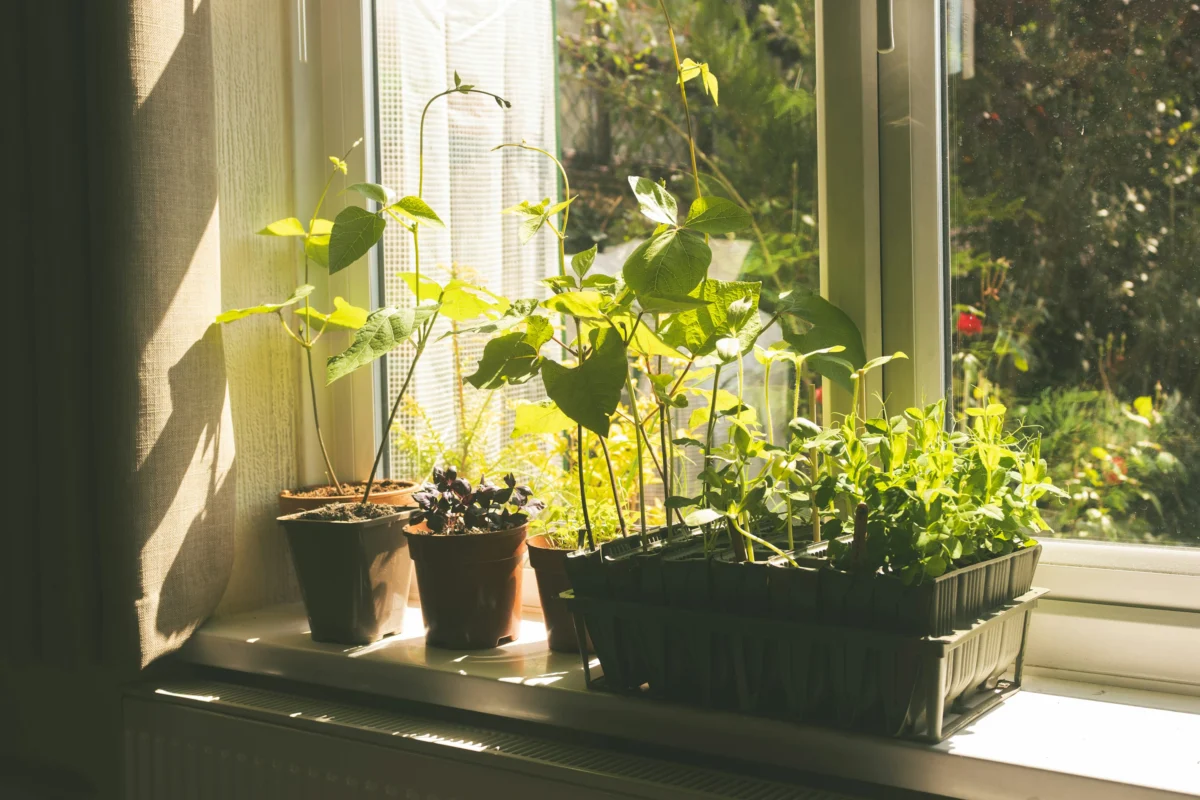
- Choose a small starting area: select a stable corner that receives suitable light and does not obstruct doors, walkways or emergency access.
- Pick two or three plants: choose easy herbs or leafy vegetables that match your light and the current local season.
- Buy suitable containers: check that each pot has drainage holes and enough depth for the plant.
- Prepare the growing medium: use a suitable potting mix and fill the container without packing it too tightly.
- Sow seeds or transplant seedlings: follow the seed packet or nursery instructions for depth, spacing and transplanting.
- Water gently after planting: moisten the growing medium without flooding it. Allow extra water to drain away.
- Label and observe: note the plant name and planting date. Check how the plant responds to its light and watering conditions.
- Add more only after the first plants settle: learn from the first few pots before expanding the garden.
How often should you water balcony plants?
There is no reliable rule that every balcony plant needs water once a day. Watering frequency changes with plant type, pot size, growing medium, sunlight, wind, temperature and rainfall. A small pot in hot sun may dry quickly, while a shaded pot during the monsoon may remain wet for several days.
Use this simple check before watering:
- Touch the top layer of the growing medium. For many plants, if the surface is dry, check slightly deeper with a finger.
- If the mix is still moist below the surface, wait and check again later rather than adding more water automatically.
- When watering is needed, water slowly around the root area until a little excess drains from the bottom.
- Empty excess water from trays and saucers so roots are not left standing in it.
- Recheck after rain. A pot exposed to heavy showers may not need additional water.
Water early in the morning when practical, so plants can take up water before the hottest part of the day. Avoid repeatedly splashing water on leaves late in the evening, especially where air circulation is poor. Do not let seedlings dry out completely, but avoid keeping the growing medium permanently saturated.
Balcony gardening during the Assam monsoon
In Assam, heavy rain and high humidity can make container drainage and airflow just as important as watering. The Assam Agricultural University Department of Horticulture’s roof and terrace gardening resource highlights the need for a strong, waterproof roof, proper slope and measures to avoid water stagnation in roof gardens. For a balcony gardener, the practical lesson is to prevent waterlogging and keep drainage paths clear.
- Check drainage holes and balcony outlets before the rainy season and after a storm.
- Move sensitive pots under a covered part of the balcony when prolonged heavy rain is expected.
- Use stable, secure containers and protect tall plants from strong gusts with suitable supports.
- Space plants so air can move between leaves and stems.
- Remove fallen leaves and rotting plant material regularly.
- Empty saucers, trays and unused containers after rain. Do not leave standing water where mosquitoes can breed.
- Water less often when the growing medium remains wet from rainfall.
Do not block a balcony drain or direct excess water onto a neighbour’s property. If water repeatedly collects around the balcony or enters the building, address the drainage issue rather than trying to solve it by adding more pots.
Which plants should you grow in each season?
India has several climate zones, so a planting calendar for one state may not suit another. Even within Assam, a sunny exposed balcony and a shaded covered balcony can behave differently. Use the seasonal recommendations on the seed packet and ask a local nursery, KVK or district horticulture office which varieties are suitable for your area.
As a general approach, try leafy greens and herbs when temperatures and sunlight suit them; grow heat-loving fruiting vegetables when your balcony receives adequate sun; and avoid starting delicate seedlings immediately before a period of intense heat, strong wind or prolonged heavy rain. Keep a small gardening notebook with sowing dates, rainfall, watering and harvest notes so you can learn which months work best in your own space.
Basic care: compost, feeding and pruning
Container plants have a limited amount of growing medium, so nutrients are gradually used or washed out. Follow the instructions for the potting mix and any fertiliser you choose. Mature compost can be added in modest amounts where appropriate, but more fertiliser does not mean faster or healthier growth.
- Use only well-decomposed compost or a fertiliser labelled for the plant and follow its directions.
- Avoid mixing several fertilisers or homemade chemical preparations without knowing their concentration.
- Remove dead leaves and damaged stems with clean tools.
- Give climbing plants a stable support before they become heavy.
- Check leaves regularly for pests, eggs or unusual spots.
- Isolate a plant with a serious pest problem while you identify the cause.
If you use a pesticide or plant-protection product, follow the label, wear the recommended protection and keep children and pets away as directed. For edible plants, check the label for permitted crops and the required waiting period before harvesting.
Common balcony gardening mistakes to avoid
- Buying too many plants at once: start small and learn the light and watering pattern first.
- Choosing plants before checking sunlight: match the crop to the actual light available rather than the appearance of the plant at the nursery.
- Using containers without drainage: roots need both water and air. Keep the drainage holes open.
- Overwatering: check the growing medium and rainfall before adding more water.
- Using heavy soil in every pot: a suitable container mix is easier to manage and usually provides better aeration.
- Placing heavy pots on railings: consider safety, wind, building rules and the balcony’s load capacity.
- Leaving standing water: empty saucers and unused containers after watering or rain.
- Overcrowding plants: leave room for mature leaves, airflow and access for watering.
- Applying too much fertiliser: follow product directions and avoid unmeasured homemade mixtures.
- Ignoring the local season: use seed-packet guidance and local horticulture advice for your area.
A simple first-month balcony gardening plan
| Week | What to do | Goal |
|---|---|---|
| Week 1 | Observe sunlight, wind and drainage. Check building rules and choose a safe area. | Understand the space before buying. |
| Week 2 | Set up two or three containers with suitable potting mix. Sow or transplant a few easy plants. | Start with a manageable garden. |
| Week 3 | Check moisture, inspect leaves and adjust plant positions if needed. | Learn the plants’ actual care needs. |
| Week 4 | Remove damaged leaves, tidy drainage and record growth. Add another plant only if the first ones are doing well. | Build a routine before expanding. |
Frequently asked questions about balcony gardening
Can I start a balcony garden without direct sunlight?
You can grow some foliage plants and selected shade-tolerant herbs or greens in bright shade, but many fruiting vegetables need several hours of direct sunlight. Observe your balcony first and choose plants accordingly.
Which vegetables are easiest for beginners in India?
Depending on season and sunlight, beginners can try coriander, methi, spinach, amaranth, chilli or compact leafy crops. Tomato, brinjal, okra, beans and cucumber may also grow in suitable containers but usually need more light, space or support.
Can I use old buckets and plastic containers as plant pots?
Yes, if they are clean, safe for gardening and have appropriate drainage holes. Never reuse containers that held kerosene, pesticides, industrial chemicals or other toxic materials.
Is garden soil enough for a balcony pot?
Garden soil alone can become heavy and compact in a container. Use a suitable potting mix or blend soil with mature compost and an appropriate lightweight aerating material.
How much does it cost to start a balcony garden?
It depends on how many pots you need, whether you reuse safe containers, the type of growing medium and whether you start from seed or buy seedlings. You can keep costs down by beginning with a few plants and adding supplies only when needed. There is no need to buy a large vertical garden rack or expensive tools at the beginning.
Can I grow vegetables in a small balcony?
Yes. Use compact varieties, small containers for suitable crops and vertical supports for climbers where safe. Start with a few herbs or greens before trying large fruiting plants.
How do I prevent mosquitoes in a balcony garden?
Do not leave water standing in pot saucers, trays, buckets or unused containers. Empty them after watering or rain, keep drains clear and avoid containers that collect rainwater.
Can I grow plants on a rented apartment balcony?
Usually small pots may be possible, but check your landlord or apartment association’s rules first. Avoid drilling, installing heavy structures or placing objects outside the railing without permission and a safe installation method.
Trusted gardening resources
| Resource | What it covers |
|---|---|
| Assam Agricultural University: Roof and Terrace Gardening | Assam-focused guidance on roof-garden planning, drainage, roof safety, plants and after-care. |
| Government of India: PM POSHAN Kitchen-Garden Guidelines | Container reuse, plant selection, climbers and vegetables suited to local conditions. |
| Central Public Works Department: Handbook of Landscape | General guidance on soil, fertiliser, watering and wind considerations in container and roof gardens. |
Editorial note: This guide provides general gardening information. Plant choice and care depend on local climate, sunlight, building conditions and the specific variety. For rooftop or balcony load concerns, structural safety, pesticide use or persistent plant disease, seek advice from the appropriate qualified professional or local horticulture expert.