
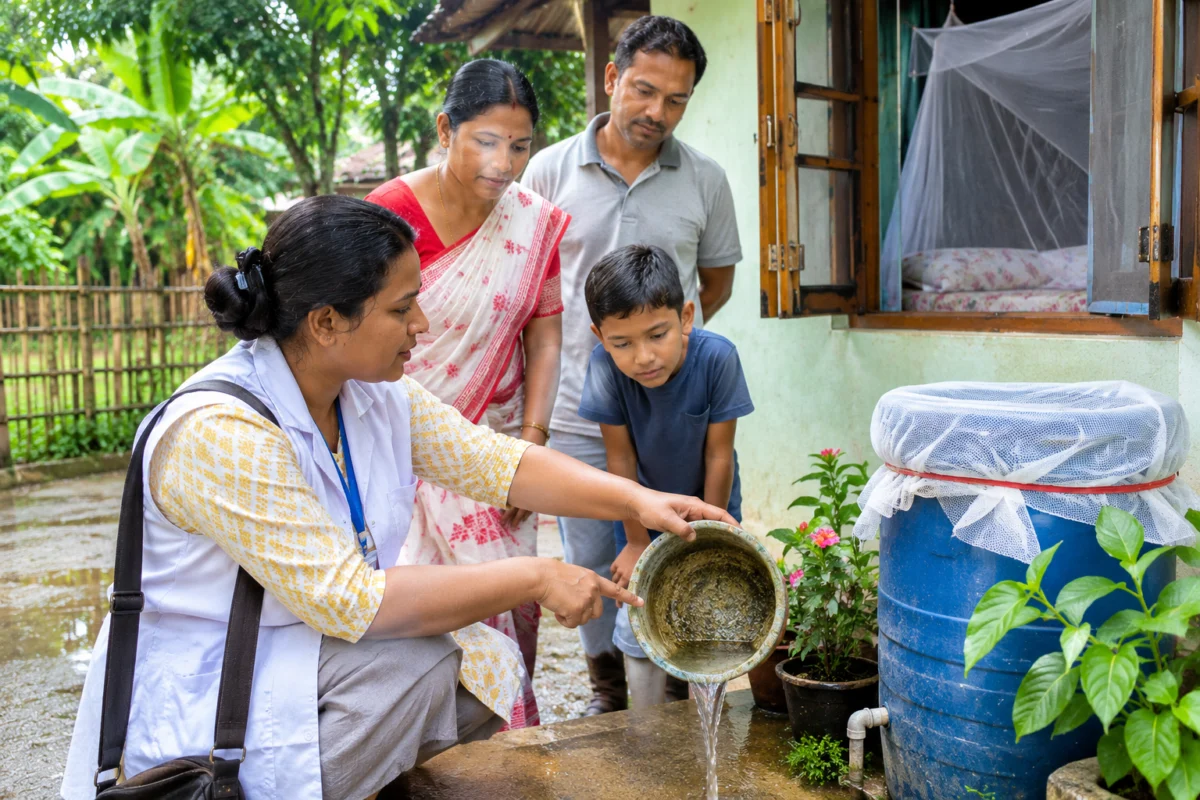
Dengue is a mosquito-borne viral infection that can cause high fever, severe headache, pain behind the eyes, muscle and joint pain, nausea and rash. It is a public-health concern in tropical and subtropical regions, including India. In Assam, household water storage, rain-filled containers and discarded items can create mosquito breeding places around homes, schools and workplaces.
One of the most important things families should know is that a person with dengue is not necessarily out of danger when the fever begins to fall. The critical phase can start around the time the fever settles, and warning signs may appear during this period. Severe abdominal pain, persistent vomiting, bleeding, breathing difficulty, unusual drowsiness, restlessness or cold, clammy skin require urgent medical assessment.
This guide explains dengue symptoms, the warning signs after fever drops, how doctors diagnose and monitor the illness, safe supportive care and practical mosquito-prevention steps for households in Assam. It is based on the World Health Organization (WHO) and India’s National Centre for Vector Borne Diseases Control (NCVBDC) guidance. It is not a substitute for a medical examination.
What is dengue fever?
Dengue is a viral infection transmitted to people through the bite of an infected female Aedes mosquito. Aedes aegypti is the main dengue vector in many parts of India. These mosquitoes commonly breed in man-made containers that hold water, including water drums, tanks, buckets, flower-pot trays, discarded bottles, tyres and roof gutters.
Dengue can affect people of any age. Some infected people have no symptoms or only mild illness. Others develop a fever and body aches, and a smaller proportion develop severe dengue that can become life-threatening without timely medical care.
Dengue does not spread directly from one person to another through ordinary touch, sharing food or sitting near an infected person. The usual transmission route is through an infected mosquito. Preventing mosquito bites and removing breeding places are therefore important parts of community prevention.
Why dengue prevention matters in Assam
Assam has a humid, rainy climate for much of the year, and rainwater can collect in containers, discarded materials, roof channels and other small spaces around homes. Water storage is also common in many households. These conditions can support Aedes mosquito breeding if containers are left uncovered or are not cleaned regularly.
Dengue prevention is not limited to government fogging or spraying. Household source reduction is essential: remove stagnant water, scrub containers, cover stored water and check the surroundings at least once a week. The NCVBDC recommends identifying and eliminating Aedes breeding sites, maintaining stored-water containers and involving the community in prevention.
Common symptoms of dengue fever
Symptoms usually begin about 4–10 days after infection. They commonly last 2–7 days, although recovery can take longer. Not every patient develops every symptom.
- High fever: A sudden fever that can be high.
- Severe headache: Persistent or intense headache.
- Pain behind the eyes: Pain around or behind the eyes, sometimes worse with eye movement.
- Muscle, bone and joint pain: Body aches that can feel severe.
- Nausea or vomiting: Feeling sick or vomiting.
- Skin rash: A rash may appear during the illness.
- Swollen glands: Some people develop enlarged lymph nodes.
- Weakness and tiredness: Fatigue can continue for weeks after the acute illness.
These symptoms can overlap with malaria, chikungunya, influenza, COVID-19 and other infections. Symptoms alone cannot confirm dengue. A person with fever in an area where dengue occurs should contact a healthcare professional for assessment, particularly if symptoms are worsening or warning signs appear.
Warning signs after dengue fever goes down
A falling temperature does not always mean that dengue is improving. In some patients, the critical phase begins around the time the fever subsides. WHO explains that severe dengue warning signs often appear after the fever has gone away. India’s national clinical-management guideline describes a critical phase that commonly begins after the third or fourth day of fever and may last around 24–48 hours, although the timing and course can vary.
Seek urgent medical assessment if a person with suspected or confirmed dengue develops any of these warning signs:
| Warning sign | What it may look like |
|---|---|
| Severe abdominal pain or tenderness | Strong or persistent stomach pain, especially if it is worsening. |
| Persistent vomiting | Repeated vomiting, inability to keep fluids down or worsening nausea. |
| Bleeding | Bleeding from the nose or gums, unusual vaginal bleeding, blood in vomit or stool, black tarry stools or fresh red spots on the skin. |
| Rapid or difficult breathing | Breathlessness, fast breathing or signs of respiratory distress. |
| Unusual tiredness, drowsiness or restlessness | The person becomes unusually sleepy, confused, agitated, difficult to wake or behaves differently. |
| Cold, pale or clammy skin | Skin feels cold and damp, the person looks very weak or appears faint. |
| Reduced urine output | Passing much less urine than usual or not passing urine for an unusually long period. |
| Severe thirst or marked weakness | The person appears dehydrated or becomes progressively weaker. |
Do not wait for all warning signs to appear. A single serious symptom can require urgent evaluation. Go to the nearest hospital or emergency department, especially for a child, older adult, pregnant person or anyone with a significant medical condition.
What is the critical phase of dengue?
Dengue illness is commonly described in three phases: the febrile phase, the critical phase and the recovery phase. The critical phase may occur as the fever settles. In some patients, blood-vessel leakage can cause fluid to move out of the circulation, leading to low blood pressure, shock, bleeding or organ complications.
Most people do not develop severe dengue, but the critical period needs attention because a patient’s condition can change quickly. A doctor may recommend observation, repeat clinical checks and blood tests based on symptoms, hydration, urine output and other findings.
Families should follow the follow-up plan given by the treating clinician even when the temperature is normal. Do not stop monitoring solely because the fever has reduced.
How is dengue diagnosed?
Dengue is diagnosed by a healthcare professional using the person’s symptoms, illness timeline, examination and laboratory tests where indicated. The appropriate test depends partly on how many days have passed since symptoms began. A doctor may consider an NS1 antigen test, an antibody test such as IgM, or a molecular test depending on the stage of illness and the local testing protocol.
There is no single blood test result that should be interpreted in isolation. A clinician may order a complete blood count (CBC), platelet count and haematocrit to monitor the patient’s condition. Additional tests or imaging may be needed if warning signs or complications are suspected.
What do platelet count and haematocrit mean?
Platelets help blood clot. The platelet count can fall during dengue, but a low platelet count by itself does not tell the whole story or determine whether a patient has severe dengue. Doctors also consider symptoms, blood pressure, circulation, bleeding, urine output, fluid accumulation and changes in haematocrit.
Haematocrit is a measure related to the proportion of red blood cells in blood. A rising haematocrit can be an important sign of plasma leakage when interpreted with the patient’s clinical condition. The NCVBDC guideline uses clinical and laboratory findings together to guide monitoring and treatment.
Do not decide to admit, discharge, transfuse platelets or change treatment based only on a number seen on a report or a social-media chart. The treating doctor must interpret the results in context.
How is dengue treated?
There is no specific antiviral medicine that cures dengue. Treatment is supportive and depends on the severity of the illness. Mild cases may be managed outside hospital with medical advice and follow-up. Patients with warning signs, poor oral intake, significant bleeding, shock or organ involvement may need hospital care and carefully monitored fluids or other treatment.
Do not try to treat suspected dengue only with home remedies. Contact a registered medical practitioner for diagnosis and an individual care plan.
Safe home care for dengue without warning signs
For a patient whom a clinician has assessed as suitable for home care, the following general measures may help support recovery:
- Rest: Take adequate rest and avoid strenuous activity during the acute illness.
- Maintain fluids: Drink fluids as advised by the healthcare professional. Oral rehydration solution or other suitable fluids may be recommended depending on the patient’s condition.
- Monitor symptoms: Keep track of temperature, fluid intake, vomiting, urine output and any new warning signs.
- Attend follow-up: Follow the schedule for reassessment and blood tests recommended by the clinician.
- Prevent mosquito bites: A person with dengue should avoid being bitten by mosquitoes, because a mosquito that bites an infected person can later transmit the virus to another person.
Infants, young children, pregnant people, older adults and people with chronic illnesses may need closer medical supervision. Do not force excessive fluids; the right amount depends on age, weight, health conditions and clinical assessment.
Which medicines should be avoided in suspected dengue?
India’s NCVBDC clinical-management guideline advises avoiding aspirin and non-steroidal anti-inflammatory drugs (NSAIDs) in dengue because they can increase bleeding risk. Medicines such as ibuprofen and aspirin should not be taken for dengue symptoms unless a clinician specifically directs otherwise.
Paracetamol may be used for fever or pain when a clinician considers it appropriate and gives the correct instructions for the patient’s age, weight, liver health and other medicines. Do not exceed the recommended dose or combine multiple products that contain paracetamol. Children should not be given adult doses.
Do not self-start antibiotics, steroids, platelet-raising supplements or other medicines for dengue. Antibiotics do not treat dengue virus, and treatment decisions should be made by a healthcare professional.
How to prevent dengue mosquitoes around your home
The Aedes mosquito can breed in small collections of water in and around homes. It is active during the day, so protection should not be limited to bedtime. The NCVBDC recommends source reduction, proper covering of stored water and personal protection against mosquito bites.
1. Follow a weekly dry-day routine
- Empty, scrub and dry water-storage containers at least once a week.
- Change water in flower vases and plant trays regularly, and clean the containers.
- Turn over or dispose of unused buckets, tins, bottles, tyres and coconut shells.
- Check refrigerator drip trays, coolers, roof gutters and other places where water can collect.
- Do not leave discarded plastic cups, food containers or other waste outdoors.
2. Cover stored water
Keep overhead tanks, drums, buckets and household water containers tightly covered. Repair leaking pipes and taps, prevent overflow and clear roof channels where water collects. If a container cannot be emptied, ask the local health or vector-control team about the appropriate approved treatment rather than adding chemicals yourself.
3. Protect yourself from mosquito bites
- Wear long-sleeved shirts, long trousers and socks when practical.
- Use a mosquito repellent according to its label instructions and age-related precautions.
- Use window and door screens where possible.
- Use mosquito nets for infants and people sleeping during the day, as well as for anyone who needs extra protection.
- Do not rely on mosquito coils or indoor sprays as a substitute for removing breeding places.
4. Check the surroundings with neighbours
Dengue prevention works best when nearby households, schools, workplaces and community spaces are checked together. Ask neighbours and local authorities to remove water-holding waste, maintain drains and inspect common areas. If mosquito breeding is widespread, contact the relevant municipal body, panchayat or local health office for vector-control assistance.
Can dengue spread from one family member to another?
Dengue is not usually spread through ordinary person-to-person contact. The usual route is the bite of an infected Aedes mosquito. However, if a mosquito bites a person who has dengue and later bites another person, the infection can spread. This is why a person with suspected dengue should also be protected from mosquito bites during the illness.
When should you go to a hospital?
Seek medical assessment if fever is accompanied by severe headache, pain behind the eyes, body aches, rash or vomiting, particularly in an area where dengue is circulating. Seek urgent hospital care immediately if any warning sign appears, including severe abdominal pain, persistent vomiting, bleeding, breathing difficulty, unusual drowsiness or restlessness, cold clammy skin, fainting or markedly reduced urine output.
Do not wait for a platelet report or a fever to return before seeking help. The patient’s symptoms and clinical condition matter more than a single number.
Frequently asked questions about dengue fever in Assam
What are the first symptoms of dengue?
Common symptoms include sudden fever, severe headache, pain behind the eyes, muscle and joint pain, nausea, vomiting and rash. Symptoms vary, and a medical assessment is needed because other infections can look similar.
Can dengue become dangerous after the fever goes down?
Yes. The critical phase can begin around the time the fever settles. Severe abdominal pain, persistent vomiting, bleeding, breathing difficulty, unusual drowsiness or restlessness and cold clammy skin are warning signs that require urgent medical assessment.
How many days does dengue fever usually last?
Symptoms commonly last 2–7 days, while weakness and fatigue can continue for several weeks. The course differs from person to person.
Which mosquito spreads dengue in India?
Dengue is transmitted by infected female Aedes mosquitoes. Aedes aegypti is the main vector in many Indian urban areas, and Aedes albopictus is also involved in several states.
Does dengue spread by touching or sharing food?
No. Ordinary touch, sharing meals or sitting near a person with dengue does not usually spread the infection. Transmission occurs mainly through infected mosquito bites.
Which test confirms dengue?
Doctors choose tests based on the number of days since symptoms began and the clinical situation. Tests may include NS1 antigen, IgM antibody or molecular testing. A clinician should decide which test is appropriate and interpret the result.
Does a low platelet count always mean severe dengue?
No. Platelets are only one part of the assessment. Doctors also examine warning signs, circulation, blood pressure, urine output, bleeding, haematocrit trends and other clinical findings.
Can I take ibuprofen or aspirin for dengue fever?
India’s NCVBDC guideline advises avoiding aspirin and NSAIDs such as ibuprofen in dengue because of bleeding risk. Ask a clinician which fever medicine is appropriate.
Can I recover from dengue at home?
Some patients with mild dengue can be managed at home after a clinician’s assessment, with fluid advice, rest and scheduled follow-up. Warning signs or a worsening condition require urgent medical care.
How can I prevent dengue in an Assam household?
Cover stored water, empty and scrub containers weekly, remove tyres and discarded items that collect rainwater, clear gutters, use repellents and wear protective clothing. Community-wide removal of breeding places is important.
Can dengue happen more than once?
Yes. Infection with one dengue virus type does not provide complete protection against all other types. A later infection with a different dengue virus type can increase the risk of severe dengue.
Should a person with dengue use a mosquito net?
Protecting the patient from mosquito bites is important. Use screens, repellents according to label guidance and a mosquito net where appropriate, including for daytime rest.
Official dengue resources
| Resource | What it explains |
|---|---|
| WHO: Dengue and severe dengue | Symptoms, warning signs, transmission, diagnosis and prevention. |
| NCVBDC: National Guidelines for Clinical Management of Dengue Fever 2023 | Clinical phases, warning signs, monitoring and management guidance for health professionals. |
| NCVBDC: Vector of Dengue | Aedes mosquito behaviour and common breeding places. |
| NCVBDC: Vector Control Measures | Personal protection, environmental management and source reduction. |
| NCVBDC: Guidelines for Source Reduction | Cleaning containers, covering tanks and removing breeding sites. |
Final thoughts
Dengue prevention in Assam starts with reducing mosquito breeding around homes and protecting people from bites. Learn the common symptoms, but pay particular attention when the fever drops: this can coincide with the critical phase, not just recovery. Seek urgent medical help if warning signs appear, follow the clinician’s monitoring plan and avoid aspirin or NSAIDs in suspected dengue. Communities can reduce risk by covering stored water, cleaning containers weekly and removing items that collect rainwater.
Health information notice: This article is for general education and does not diagnose or treat an individual. Anyone with suspected dengue should seek advice from a registered medical practitioner. Warning signs require urgent medical assessment.