India’s Digital Payment Revolution: Aiming for a Billion Daily Transactions with AI
India’s digital payment landscape is witnessing a remarkable transformation, with the Unified Payment Interface (UPI) climbing to over 750 million daily transactions. Dilip Asbe, Managing Director and CEO of the National Payments Corporation of India (NPCI), which manages UPI, has ambitious plans to push this figure to over a billion transactions daily, leveraging artificial intelligence (AI) to fuel user growth, enhance fraud prevention, and improve credit distribution.
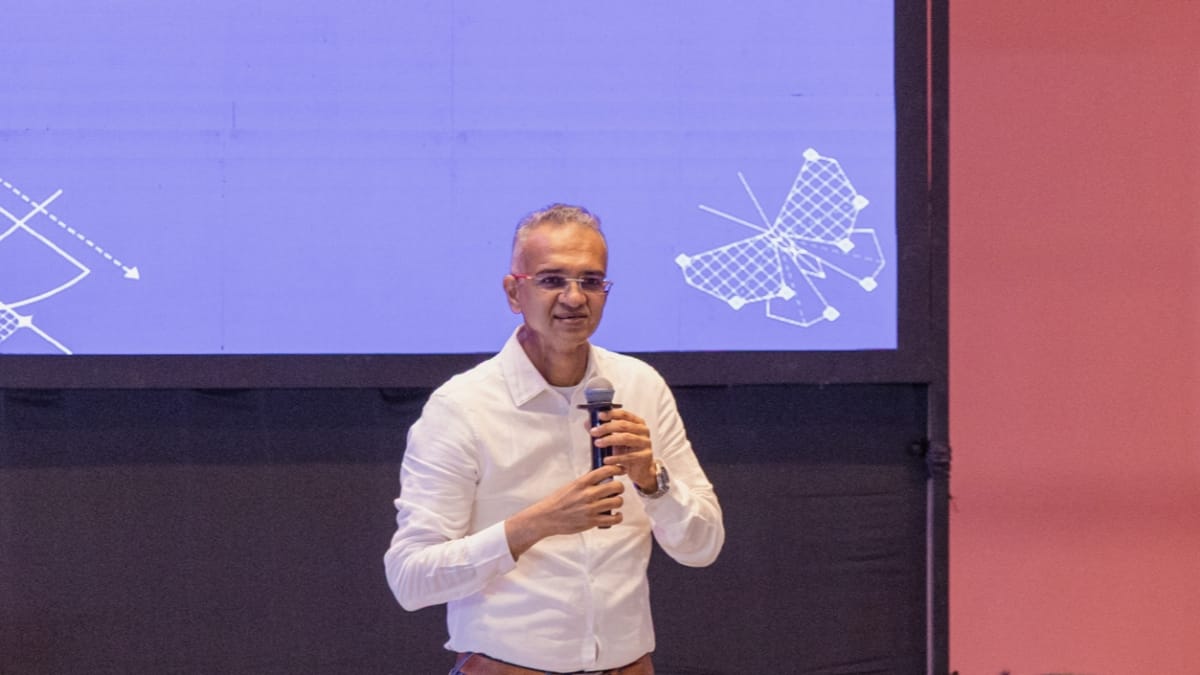
In a recent discussion with TechCrunch during Mumbai Tech Week (MTW) 2026, Asbe emphasized that AI plays a critical role in reaching the next wave of UPI users, with collaborative efforts from NPCI, India’s central bank, and government bodies. “AI will be used very effectively when we look at the next wave of UPI,” he noted, adding that the technology must address fraud detection and facilitate credit access for users and merchants alike. “We must use AI to look at the voice and multilingual solutions to make onboarding simpler,” he elaborated.
Voice technology has been flagged as a significant interface in India for users interacting with businesses and services. However, Asbe acknowledged that current models are still evolving and require greater accuracy. NPCI’s launch of a voice assistant-based interactive system in 2023 hasn’t seen widespread adoption yet, but Asbe believes it could become a crucial part of the payment ecosystem with the right applications.
The Role of AI in Finance and Regulatory Actions
Across the globe, financial startups and established firms alike are racing to incorporate AI into their services. Companies like Coinbase and Robinhood now allow AI to manage trades on users’ behalf, while OpenAI’s ChatGPT can now analyze personal financial data for users. NPCI has also demonstrated promises of AI in agentic commerce and payments in collaboration with Razorpay, though these solutions have not seen a broad implementation.
Asbe envisions that with a robust regulatory framework in place, India can effectively embrace AI-powered financial services. He stressed that user protection is paramount, and any AI-driven system must be transparent, ensuring users are informed about decisions made on their behalf.
With the proliferation of AI models, Asbe sees an opportunity for the Indian finance ecosystem to develop small, specialized language models. “The models will differentiate based on the datasets available to them,” he mentioned, highlighting the rich dataset that exists in India’s financial ecosystem. He believes this presents a significant opportunity for local banks and FinTech companies to create highly targeted AI solutions.
Last year, NPCI introduced a model named FIMI to address user disputes, servicing over a million users in canceling mandates and resolving issues. This service is scaling rapidly, showcasing the potential of AI in enhancing user experience.
Competition in the UPI Sector
Despite NPCI’s goal of fostering healthy competition within the UPI realm, data reveals that apps like PhonePe, owned by Walmart, and Google Pay dominate the market with over 80% share. Upcoming regulatory changes set to cap UPI app market share at 30% are planned to take effect on December 31, 2026, unless postponed.
Asbe pointed out that UPI apps typically involve low switching costs and exhibit overlapping features, which has contributed to the market concentration. He noted that companies like PhonePe and Google have invested heavily in their platforms to bolster their positions. However, Asbe believes that as new apps carve out viable business models within the FinTech landscape, they are likely to gain market share. “The availability of a viable commercial model is crucial, and once it emerges, I believe newer players will start investing significantly,” he said.
In 2024, NPCI spun off the BHIM UPI app to enhance its competitiveness and increase usage. Although it has seen growth in transaction volume, it currently holds about 1% of the overall market share. Asbe reassured that NPCI aims to develop BHIM into a secure, reliable alternative to existing apps without targeting a specific market share.
As India emerges as one of the leading digital economies worldwide, global investors are keenly watching the regulatory environment for emerging FinTech solutions, anticipating a more competitive landscape in the near future.
For ongoing updates on the digital payment landscape and advances in AI, stay tuned to our website.