Nuro Secures Permit for Driverless Testing of Lucid Gravity SUVs in California
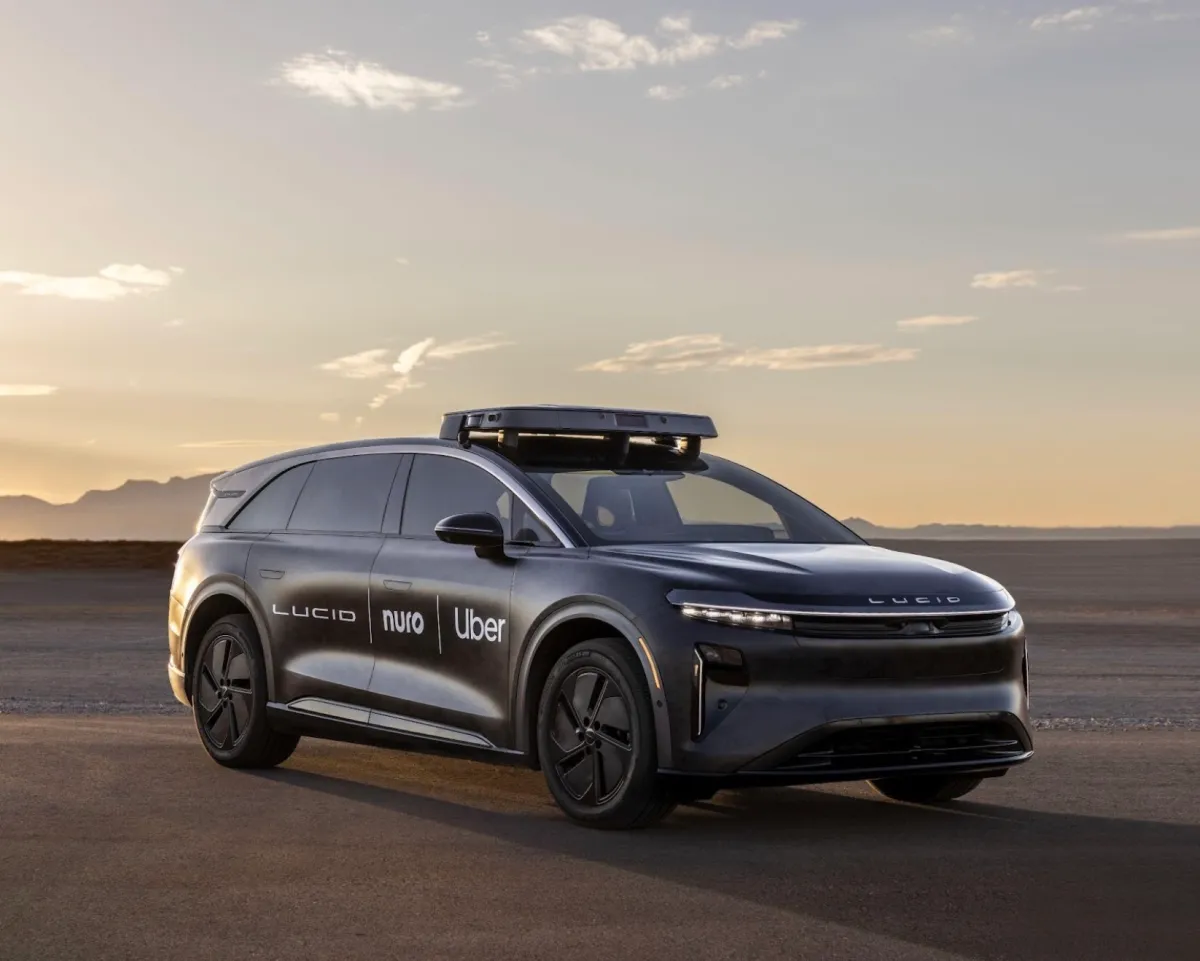
Nuro has received approval to start testing its driverless technology with the Lucid Gravity SUVs on public roads in California. These vehicles are set to play a vital role in Uber’s premium robotaxi service. However, the California-based startup, supported by tech giants Nvidia and Uber, isn’t ready to launch testing just yet.
On Tuesday, the California Department of Motor Vehicles (DMV) confirmed to TechCrunch that it has updated Nuro’s driverless autonomous vehicle (AV) permit to include these Lucid Gravity models. This milestone represents a significant step forward for both Nuro and Uber as they inch closer to launching fully autonomous rideshare services.
A Shift in Strategy
Nuro had previously held a driverless permit for six years, but it was exclusively for low-speed delivery vehicles. Recently, the company pivoted its strategy to focus on licensing its technology to various partners, including Uber, which has led to this new permit for testing more sophisticated vehicles like the Gravity SUVs.
This new permit allows Nuro to conduct tests with these SUVs without a human safety operator behind the wheel— a significant advancement in their autonomous vehicle development. Nuro spokesperson David Salguero informed TechCrunch that the company plans to commence driverless testing later this year, although specific timelines were not disclosed.
Road Ahead for Uber’s Robotaxi Service
Despite this progress, Nuro faces several regulatory hurdles before Uber can fully deploy its premium robotaxi service. Aside from the recent permit from the DMV, Nuro will need to obtain a driverless ride-hailing permit from the California Public Utilities Commission as well as a deployment permit from the DMV.
For now, Nuro and Uber are able to test the Gravity vehicles in autonomous mode, but a human safety operator remains in the driver’s seat. Just last month, testing parameters expanded, allowing Uber employees to request autonomous rides via the Uber app—while still maintaining the presence of a human operator.
Uber’s Investment in Lucid Electric Vehicles
In an exciting development, Uber has also reinforced its investment in Lucid. Announced in July 2025, Uber initially committed $300 million to Lucid and planned to buy 20,000 robotaxi-ready Gravity vehicles. This deal has since evolved, with Uber increasing its investment to $500 million and raising the order to a minimum of 35,000 robotaxis. This now includes a combination of at least 10,000 Gravity SUVs and 25,000 electric vehicles built on Lucid’s upcoming mid-size platform.
The upcoming EVs will integrate Nuro’s state-of-the-art autonomous vehicle system, which relies on Nvidia’s Drive AGX Thor computer. The self-driving Lucid Gravity robotaxi is equipped with advanced technology, including high-resolution cameras, solid-state lidar sensors, and radar systems that enable it to navigate and understand its environment.
Current Testing and Future Prospects
Lucid has already delivered 75 engineering vehicles to Nuro and Uber, and a mileage accumulation process is underway across several United States cities. According to updates from Lucid during its first-quarter earnings call, the company is on track to commence commercial robotaxi operations by late 2026. However, these operations might not be entirely driverless and could face limitations based on regulatory approvals.
Despite these challenges, Lucid’s executives expressed optimism during the earnings call, indicating that all development stages and certifications are progressing as planned.
Nuro’s journey to integrate autonomous technology into the rideshare landscape is emblematic of the rapidly changing boundaries in transportation. As regulatory frameworks evolve, the promise of driverless cars may soon move from the drawing board to the streets, paving the way for a new era of mobility.
When you purchase through links in our articles, we may earn a small commission. This doesn’t affect our editorial independence.