Most people think of global trade as a simple journey from a factory to a shop. In reality, many of the world’s goods travel thousands of kilometres by ship, passing through a small number of narrow waterways that connect major oceans and trading regions. These strategic passages are known as maritime shipping chokepoints.
The Suez Canal, Strait of Hormuz, Strait of Malacca and Panama Canal are among the best-known examples. A disruption at any one of them can force ships to take longer routes, delay deliveries, raise fuel and insurance costs, and affect the prices of goods and energy far beyond the region where the disruption occurs.
This guide explains what shipping chokepoints are, where the four major routes are located, what moves through them and why their stability matters to the global economy, including countries such as India.
What Is a Global Shipping Chokepoint?
A shipping chokepoint is a narrow sea passage or canal through which a large volume of maritime traffic must pass to travel efficiently between important regions. Some are natural straits between land masses, while others are man-made canals built to shorten ocean journeys.
They matter because the geography of the oceans gives ships only a limited number of practical routes. A vessel travelling between Asia and Europe, for example, can use the Suez Canal to avoid sailing around the southern tip of Africa. If that route becomes unsafe or unavailable, the alternative can add thousands of kilometres and many days to a voyage.
UN Trade and Development (UNCTAD) describes maritime chokepoints as critical links in global shipping networks. Since more than four-fifths of world trade by volume is carried by sea, disruption at a major passage can affect supply chains, energy markets and food security.
Why Are Shipping Chokepoints So Important?
- They connect major markets: Chokepoints link manufacturing centres, ports, energy exporters and consumer markets across continents.
- They reduce travel time: Canals and straits can provide shorter routes than sailing around entire continents.
- They carry energy supplies: Oil, petroleum products and liquefied natural gas move through several strategic passages.
- They influence shipping costs: Delays, rerouting, fuel use, insurance and port congestion can raise transport costs.
- They affect delivery schedules: Manufacturers and retailers depend on predictable arrival times for components, raw materials and finished products.
- They have strategic importance: Governments and shipping companies monitor these routes because security, diplomacy and regional stability can affect access.
1. Suez Canal: The Shortcut Between Europe and Asia
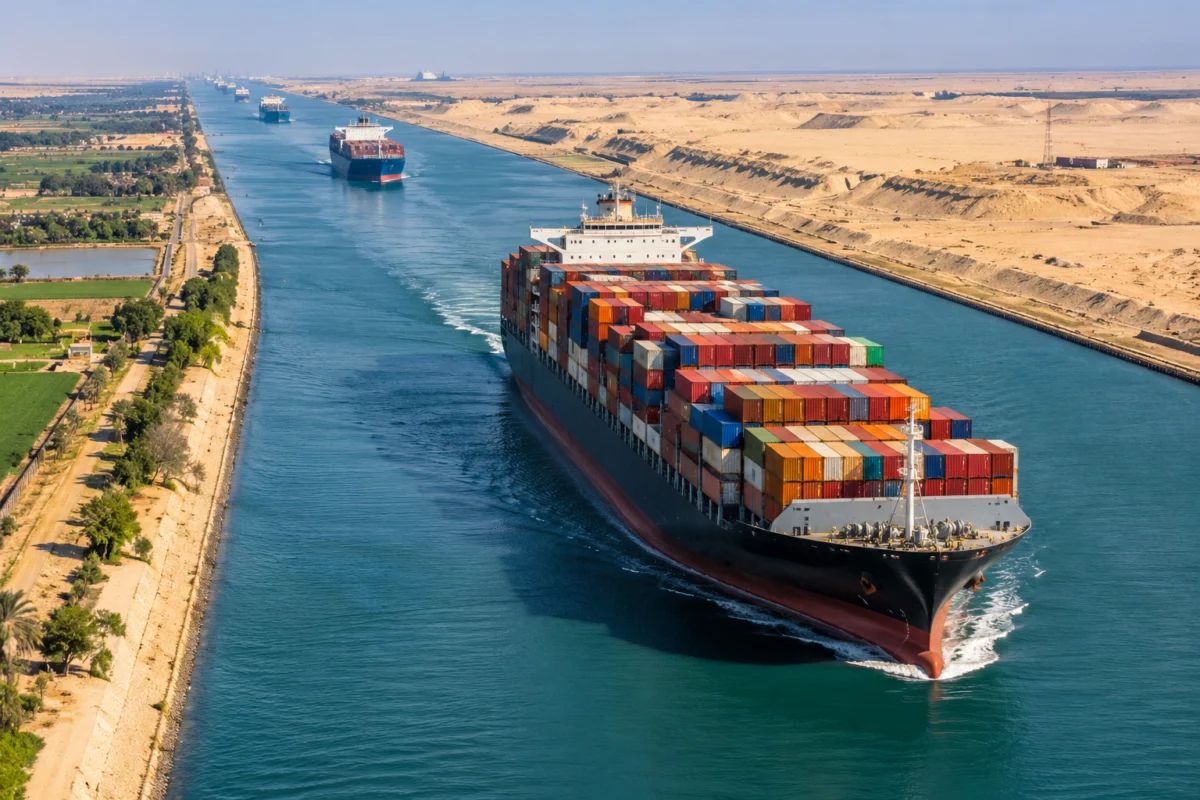
The Suez Canal is in Egypt and connects the Mediterranean Sea with the Red Sea. It provides a direct maritime route between Europe and Asia without requiring ships to travel around the Cape of Good Hope at the southern tip of Africa.
The canal is particularly important for container shipping, manufactured goods, petroleum products and other cargo moving between Asian, European and Mediterranean markets. It also forms part of a wider route that connects with the Bab el-Mandeb Strait at the southern entrance to the Red Sea.
When ships avoid the Red Sea and Suez route because of security risks, many services divert around Africa. That can extend voyage times, increase fuel consumption and reduce the effective capacity of the global shipping fleet because each ship spends longer completing a journey.
The 2021 grounding of the container ship Ever Given demonstrated how a single incident can interrupt traffic through the canal. More recent Red Sea security disruptions have shown that risks outside the canal itself can also affect traffic using the route.
Why it matters: The Suez Canal is a key link for trade between Asia and Europe. Disruption can affect delivery schedules, freight rates and the movement of energy and consumer goods.
2. Strait of Hormuz: A Critical Route for Global Energy
The Strait of Hormuz lies between Iran to the north and Oman and the United Arab Emirates to the south. It connects the Persian Gulf with the Gulf of Oman and the Arabian Sea. It is one of the world’s most important routes for seaborne oil exports.
Major energy producers in the Persian Gulf use this passage to send crude oil, petroleum products and liquefied natural gas to customers around the world. The U.S. Energy Information Administration (EIA) identifies Hormuz as one of the two most important oil transit chokepoints by volume, alongside the Strait of Malacca.
Because a large amount of energy cargo passes through a geographically narrow route, heightened regional tensions or restrictions on shipping can create uncertainty in energy markets. Even the risk of disruption can influence tanker insurance, freight rates and oil prices.
Why it matters: Countries that import oil and gas can be exposed to price and supply risks if traffic through Hormuz is interrupted. Energy-market effects can spread well beyond the Persian Gulf.
3. Strait of Malacca: A Major Link Between the Indian and Pacific Oceans
The Strait of Malacca runs between the Malay Peninsula and the Indonesian island of Sumatra, with Singapore located near its southeastern entrance. It connects the Indian Ocean with the South China Sea and the wider Pacific region.
It is one of the busiest maritime passages in the world and a major route for ships travelling between the Middle East, South Asia, Southeast Asia, China, Japan and South Korea. Large volumes of energy cargo and manufactured goods pass through this corridor.
The EIA’s 2026 analysis, using first-half 2025 data, estimated that around 23.2 million barrels per day of petroleum and other liquids moved through the Strait of Malacca. That made it the largest oil transit chokepoint in the table for that period.
Its importance also comes from geography. Ships travelling between the Indian Ocean and major East Asian ports can use the strait rather than taking longer routes through other Indonesian passages. Congestion, accidents, security concerns or navigational restrictions can therefore affect a wide range of trade routes.
Why it matters: Malacca is a central corridor for Asian trade and energy transport. A major disruption could affect supply chains connecting the Middle East, India and East Asian economies.
4. Panama Canal: Connecting the Atlantic and Pacific Oceans
The Panama Canal crosses Panama in Central America and connects the Atlantic Ocean, through the Caribbean Sea, with the Pacific Ocean. It allows ships to avoid the much longer voyage around Cape Horn at the southern end of South America.
The canal is important for container ships, dry-bulk cargo, petroleum products and liquefied natural gas, although the types and sizes of vessels that can transit depend on canal dimensions, water levels and operating rules.
The Panama Canal relies on freshwater to operate its lock system. Drought and low water levels can reduce the number of daily transits or the maximum draft and size of ships permitted. Restrictions can create queues, raise booking costs and encourage some cargo owners to consider alternative routes or transport modes.
The Panama Canal Authority reported 13,951 vessel transits in fiscal year 2026, an increase of 4.1% from fiscal year 2025. This shows the canal’s continuing role in maritime trade while water management and climate conditions remain important operational considerations.
Why it matters: The canal saves time for ships travelling between the Atlantic and Pacific. Water availability, capacity limits and operational restrictions can influence shipping schedules and costs.
Quick Comparison of the Four Major Shipping Chokepoints
| Chokepoint | Location | Connects | Main importance |
|---|---|---|---|
| Suez Canal | Egypt | Mediterranean Sea and Red Sea | Trade between Asia and Europe, container cargo and energy shipments |
| Strait of Hormuz | Between Iran and Oman | Persian Gulf and Gulf of Oman | Crude oil, petroleum products and LNG exports |
| Strait of Malacca | Between the Malay Peninsula and Sumatra | Indian Ocean and South China Sea | Asian trade and high-volume energy transport |
| Panama Canal | Panama | Atlantic and Pacific Oceans | Shorter routes between the east and west coasts of the Americas and global markets |
What Happens When a Shipping Chokepoint Is Disrupted?
The consequences depend on the location, duration and scale of the disruption. A temporary closure may cause queues and missed schedules, while a prolonged security threat can lead shipping companies to avoid an entire region.
- Ships take alternative routes: Vessels may sail around a continent or use a different passage, adding distance and time.
- Fuel and operating costs rise: Longer voyages consume more fuel and require additional crew time and vessel capacity.
- Freight rates can increase: When ships spend longer at sea, fewer vessels are available to carry the same volume of cargo on a regular schedule.
- Insurance costs may change: War-risk premiums and other insurance costs can rise for vessels operating in higher-risk areas.
- Ports and warehouses face delays: Arrivals become less predictable, which can affect port planning, inventory and onward transport.
- Consumers and businesses may pay more: Some additional transport costs can be passed through supply chains into the prices of imported goods and materials.
These effects are not automatic or identical for every product. Companies may use existing inventory, alternative suppliers, different routes or long-term freight contracts to reduce the impact. The final effect depends on how long the disruption lasts and how much spare capacity exists elsewhere.
How Do Shipping Chokepoints Affect India?
India is connected to international markets through the Indian Ocean and several important maritime routes. The Strait of Hormuz is particularly relevant to energy imports from the Persian Gulf. The Strait of Malacca is important for trade between India and East Asian economies. Routes through the Red Sea and Suez Canal are relevant to shipping between India, Europe and parts of the Mediterranean region.
A disruption in one of these corridors can affect the cost and timing of imported crude oil, gas, fertilisers, electronics, machinery and other products. Indian exporters may also face longer transit times or higher freight costs when vessels are diverted.
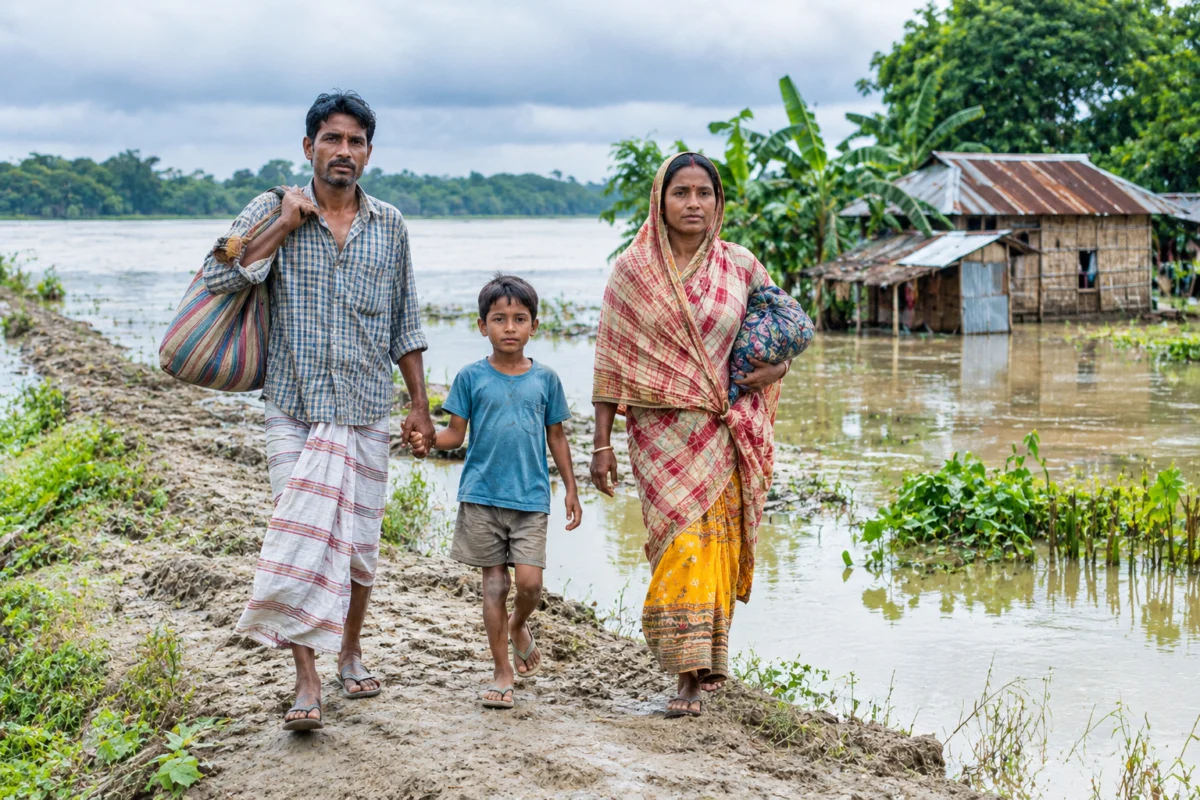
The impact on a household in Assam or another inland state is indirect but can still matter. Imported fuel, industrial inputs, consumer products and components move through several stages of transport and distribution before reaching local markets. Higher logistics costs can put pressure on businesses and, in some cases, retail prices.
Can Ships Avoid These Chokepoints?
Sometimes, but alternatives are often slower, more expensive or limited by geography and vessel requirements.
- Avoiding Suez: Ships can sail around the Cape of Good Hope, adding substantial distance to many Asia-Europe voyages.
- Avoiding Hormuz: Some pipelines provide alternatives for certain oil exports, but they cannot replace all shipping capacity or all cargo flows.
- Avoiding Malacca: Some vessels can use alternative Indonesian passages, depending on draft, vessel size, destination and operating conditions.
- Avoiding Panama: Ships can travel around the southern tip of South America, but the route is much longer and can involve challenging sea conditions.
Alternative routes do not always have enough capacity to absorb diverted traffic. They may also introduce new risks, port requirements or fuel costs. For this reason, shipping companies consider safety, distance, vessel size, cargo, schedule reliability and total cost before changing a route.
What Could Make Shipping Chokepoints More Vulnerable?
Several factors can threaten the reliability of maritime passages:
- Geopolitical tensions and conflict: Security incidents can make routes unsafe or lead operators to suspend transits.
- Climate change and extreme weather: Drought can reduce water availability for canals, while storms and changing sea conditions can disrupt operations.
- Accidents and technical failures: Groundings, collisions and equipment problems can temporarily block narrow passages.
- Congestion: High traffic volumes can increase waiting times and reduce schedule reliability.
- Infrastructure limitations: Canal dimensions, lock capacity, maintenance and water-management systems can restrict the number or size of ships that pass.
How Can Global Trade Become More Resilient?
There is no single solution to the risks surrounding maritime chokepoints. Governments, port authorities, shipping companies and cargo owners can reduce exposure through several complementary measures.
- Develop alternative ports, routes and transport connections where practical.
- Improve maritime safety, navigation systems, incident reporting and regional cooperation.
- Maintain adequate inventories of critical goods and diversify suppliers.
- Invest in reliable canal infrastructure, water management and climate adaptation.
- Improve transparency in shipping schedules and supply-chain risk information.
- Coordinate international responses to emergencies and restore safe passage as quickly as possible.
Building resilience does not mean avoiding every chokepoint. These routes are efficient and often essential. The goal is to make trade networks better prepared when a key passage is disrupted.
Frequently Asked Questions
Which is the most important shipping chokepoint in the world?
There is no single answer because importance depends on what is being measured. The Strait of Malacca and Strait of Hormuz are especially important for oil transit, while the Suez and Panama Canals are major shortcuts for global container and other cargo routes.
Why is the Strait of Hormuz important to oil prices?
A large share of seaborne oil exports from the Persian Gulf passes through Hormuz. A serious disruption can raise concerns about supply availability, tanker costs and delivery schedules, which may influence global oil markets.
Why do ships use the Suez Canal instead of sailing around Africa?
The Suez Canal provides a shorter route between the Mediterranean and Red Sea. Avoiding it often means sailing around the Cape of Good Hope, which can add considerable time, fuel use and operating cost.
Why does drought affect the Panama Canal?
The canal uses freshwater to operate its locks. When water levels are low, the Panama Canal Authority may limit vessel draft or the number of daily transits to manage available water resources.
Does a shipping chokepoint closure stop all global trade?
No. Ships can sometimes use alternative routes, and trade can continue through other ports and corridors. However, alternatives may be longer, more expensive or unable to handle all diverted traffic.
How do shipping disruptions affect ordinary consumers?
Longer routes and higher freight costs can increase the cost of importing goods and raw materials. Businesses may absorb some costs, while others may pass part of them to customers. The effect varies by product and duration of disruption.
Final Thoughts
Global shipping chokepoints are small geographical passages with an outsized influence on the world economy. The Suez Canal and Panama Canal shorten major ocean journeys, while the Strait of Hormuz and Strait of Malacca are vital corridors for energy and international trade. Their importance becomes most visible when conflict, drought, accidents or congestion disrupt normal traffic. Understanding these routes helps explain why an event in one narrow waterway can affect fuel markets, factories, retailers and consumers thousands of kilometres away.
Sources and Further Reading
The following official sources provide data and background on maritime trade, oil transit routes, canal operations and shipping disruptions.
| Source / Organisation | Information covered | Official link |
|---|---|---|
| UN Trade and Development (UNCTAD) | Global maritime trade, shipping chokepoints, rerouting, freight costs and supply-chain impacts. | Review of Maritime Transport 2025 |
| U.S. Energy Information Administration (EIA) | Oil and petroleum transit volumes through Hormuz, Malacca, Suez, Panama and other global chokepoints. | World Oil Transit Chokepoints |
| Panama Canal Authority | Official canal operations, transit statistics, water management and capacity updates. | Panama Canal Authority |
| Suez Canal Authority | Canal navigation information, services, regulations and official operational updates. | Suez Canal Authority |
| International Maritime Organization (IMO) | International maritime safety, security and shipping regulations. | International Maritime Organization |